From breakfast to dinner, from wholesome meals to indulgent desserts, Nexa Recipes offers quick, easy, and delicious ideas for every occasion and every moment.



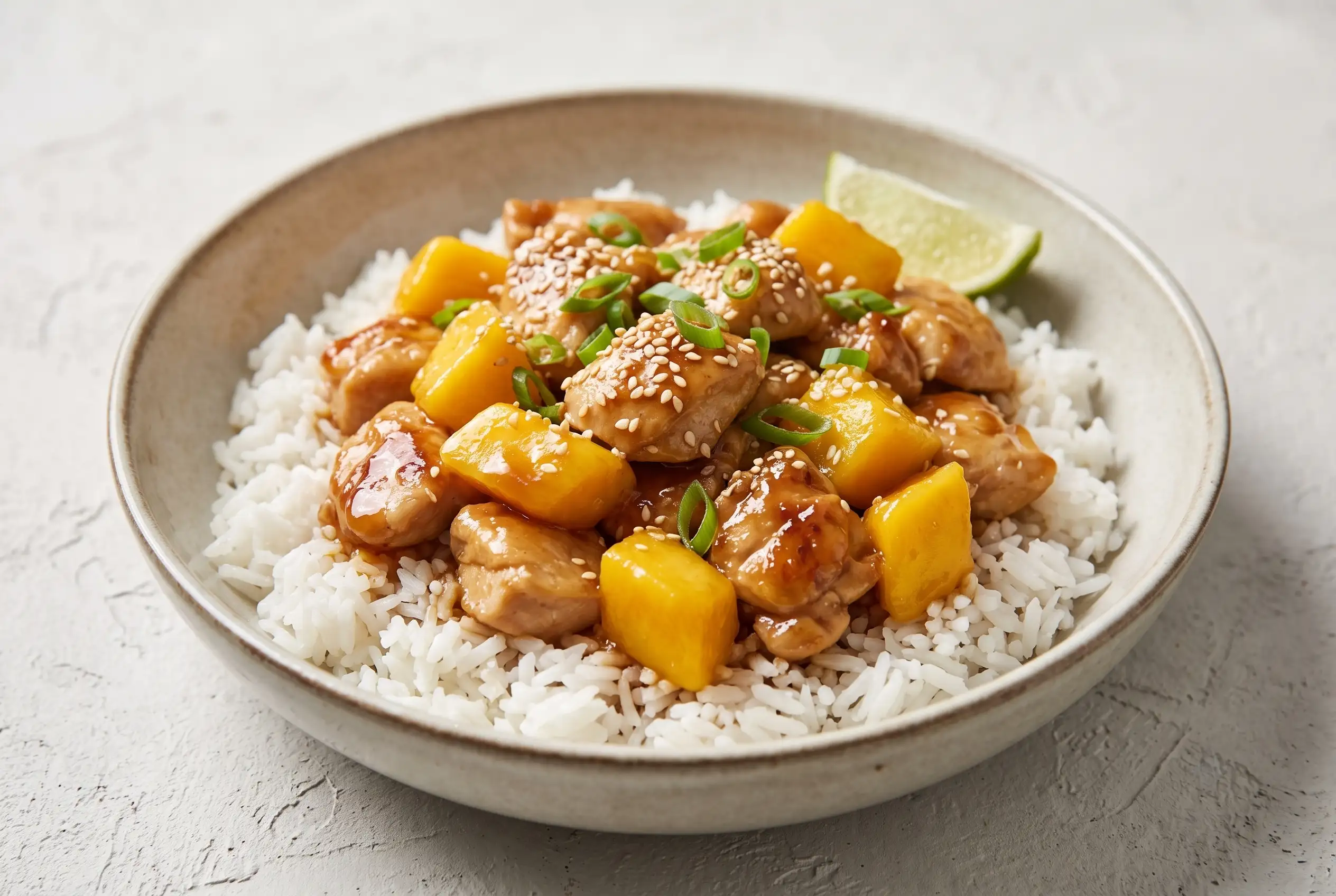 This Recipe
Mango chicken teriyaki brings together a smooth sweet-savory sauce, tender chicken pieces, and bright fruit flavor in a quick skillet dinner. The combination of blended dates, reduced sodium soy sauce, garlic, ginger, and rice vinegar creates a rich teriyaki-style base, while mango chunks add a fresh contrast that keeps the dish from feeling heavy.
Built around simple pantry-friendly techniques, this sesame mango chicken uses a homemade sauce that coats every bite. The approach keeps the focus on balance: the sauce needs enough body to cling to the chicken, the mango needs enough time to warm through, and the toppings should highlight the flavors already developed in the pan.
Mango Chicken Teriyaki Balances Sweet Heat and Savory Depth
The flavor structure of mango chicken teriyaki comes from the relationship between salty soy sauce, natural sweetness, aromatic seasonings, and the gentle acidity of rice vinegar. Each part works together to create a glaze-like sauce that feels complete without requiring a long ingredient list.
Chicken provides a mild base that allows the sauce to stand out. Cutting the chicken into bite-sized pieces creates more surface area for the flour coating and the blended teriyaki mixture, helping the savory flavors reach each portion.
Serving the finished chicken over rice gives the sauce a practical place to collect, turning the extra glaze into part of the meal instead of leaving it behind in the pan. Sesame seeds, green onions, sesame oil, fish sauce, or lime can be used as finishing touches depending on the flavor direction you prefer.
Date Blended Teriyaki Sauce Creates a Smooth Glaze Foundation
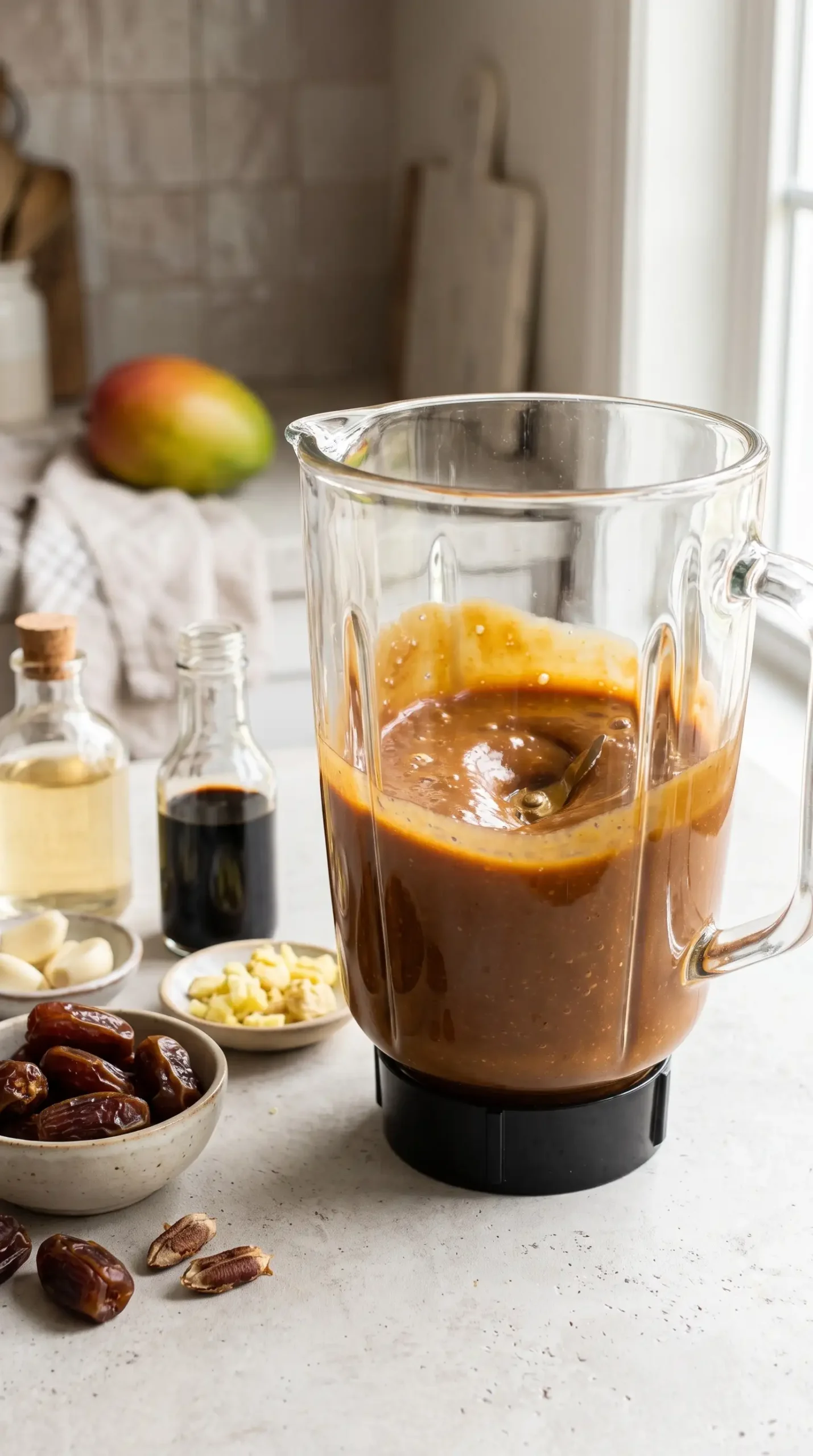
The most distinctive ingredient decision in this chicken teriyaki with mango is using soaked dates as the sweet element. Blending the softened dates with soy sauce, vinegar, garlic, ginger, and their soaking liquid creates a smooth sauce with sweetness built directly into the mixture.
Fresh ginger and garlic are especially important because the sauce is not relying only on sweetness. Their sharp aromatic qualities help balance the richness of the dates and create the familiar savory character associated with teriyaki flavors.
A sugar substitution can work when needed, but the preparation changes slightly. The sauce benefits from additional simmering time so the sugar dissolves fully and the mixture develops a thicker texture before it combines with the chicken.
Mango Chunks Bring Fresh Contrast to the Teriyaki Pan
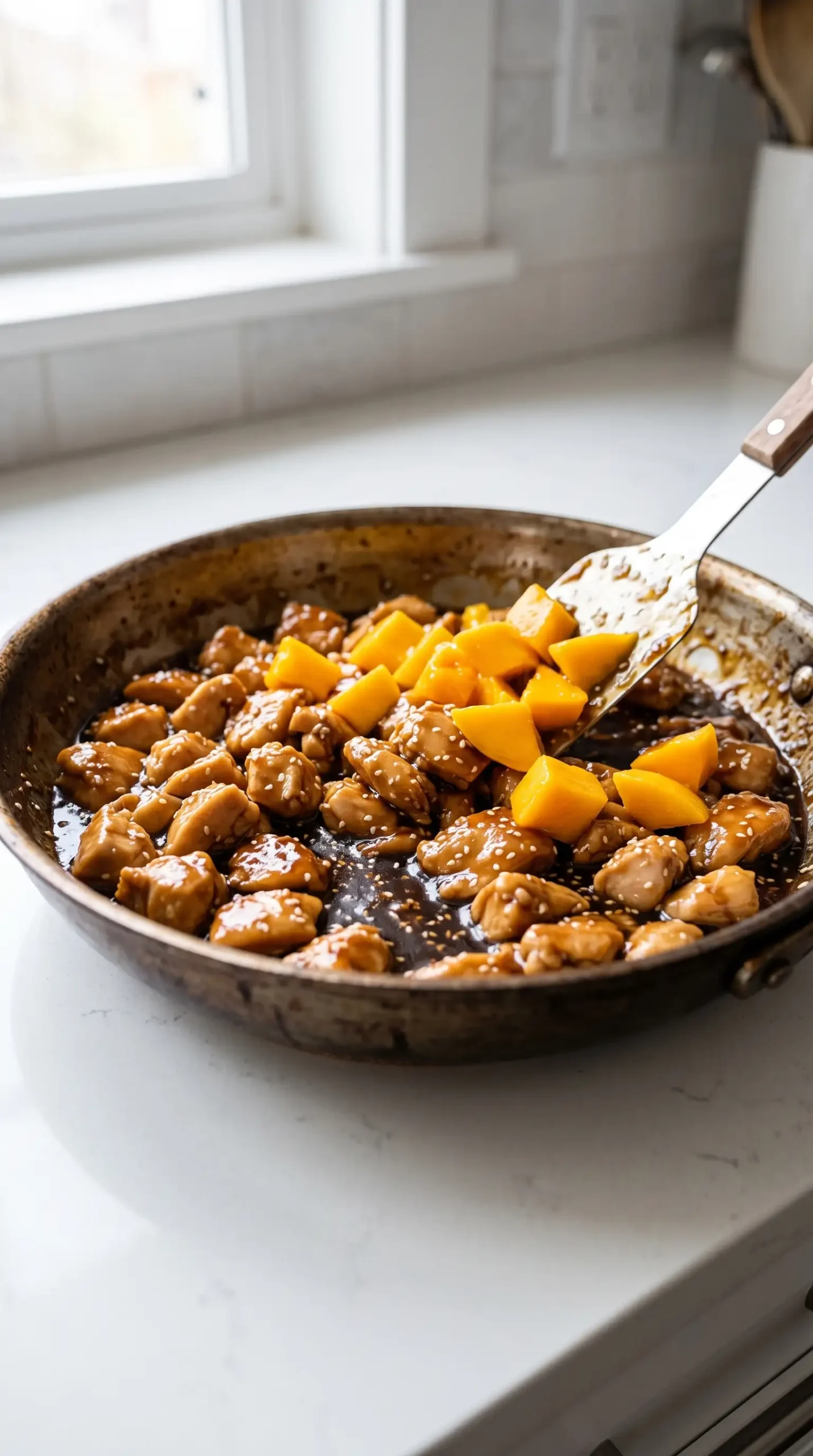
Mango changes the personality of the dish by adding fruit-forward flavor after the savory sauce has already developed. Frozen mango works well because it is convenient and can be added directly to the simmering pan, while fresh mango can also be used when available.
The timing of the mango addition matters because the fruit should warm through while maintaining some recognizable texture. Adding it near the end of cooking allows the pieces to blend with the sauce without disappearing completely.
| Mango option | Best use | Texture result |
|---|---|---|
| Frozen mango chunks | Quick weeknight preparation | Softens while keeping distinct pieces |
| Fresh mango chunks | Seasonal preparation | Brighter fruit texture |
| Extra mango topping | Serving variation | Adds a fresher finishing note |
Flour Coating Helps Chicken Hold the Sauce
A light flour coating creates a surface that helps the teriyaki sauce cling to the chicken pieces. The coating also allows the chicken to develop color during the initial pan cooking before the sauce is introduced.
Cooking Controls Keep Sesame Mango Chicken Tender and Coated
The most important cooking choices happen before the sauce fully surrounds the chicken. Medium-high heat helps the chicken and onions begin developing flavor, while lowering the heat before adding liquid reduces splattering and keeps the sauce easier to manage.
Once the sauce enters the pan, the cooking focus shifts from browning to gentle simmering. A covered simmer allows the flavors to combine and gives the sauce time to move around the chicken pieces.
Checking the sauce texture during cooking helps guide the result. If the mixture becomes thicker than desired, additional chicken broth can loosen it while keeping the teriyaki flavor intact.
- Rice timing: Start cooking rice early so the base is ready when the chicken finishes.
- Chicken spacing: Keep the pieces arranged so they can brown before the sauce is added.
- Sauce adjustment: Add broth gradually if the glaze needs a thinner consistency.
Common Mango Chicken Teriyaki Mistakes That Affect the Sauce
Mango chicken teriyaki depends on a few small details, and mistakes usually appear as texture or sauce problems. A sauce that feels uneven, chicken that lacks color, or fruit that loses its character can often be traced back to timing choices.
- Over-thick sauce: A concentrated glaze may need a splash of broth to return to a coating consistency.
- Weak browning: Crowding the pan can limit contact with heat, making the chicken less flavorful before the sauce arrives.
- Lost mango texture: Cooking the fruit too long can make the pieces blend completely into the sauce.
Sesame Mango Chicken Fits Flexible Weeknight Serving Ideas
The core flavors work with different serving styles because the sauce is designed to coat rather than overwhelm. Serving the chicken in chicken and rice bowls keeps the teriyaki glaze distributed through the meal, especially when rice, vegetables, and toppings are added together.
Adjusting the amount of chicken changes how much sauce remains available for serving. A larger chicken quantity creates a more evenly coated dish, while a smaller amount leaves more sauce that can mix with rice and vegetables.
Simple Variations Keep Chicken Teriyaki With Mango Adaptable
The recipe can shift slightly while maintaining its central flavor profile. Additional vegetables can be included when you want a more complete skillet meal, especially when extra sauce is available to coat the added ingredients.
Seasoning adjustments can also change the finished dish. Lime juice adds brightness, fish sauce adds a deeper savory note, and sesame oil provides a toasted finishing aroma when used at serving time.
| Adjustment | When to use it | Expected change |
|---|---|---|
| More broth | Sauce needs thinning | Looser glaze for rice |
| Lime juice | Flavor needs brightness | Sharper finish |
| Extra vegetables | Creating a larger meal | More texture and volume |
Homemade Teriyaki Sauce Offers Better Flavor Control
Preparing the sauce from individual ingredients gives more control over sweetness, acidity, and seasoning. The blended mixture allows the cook to adjust the texture before it reaches the pan, which is useful when serving preferences vary.
Understanding teriyaki sauce balance helps explain why adjusting sweet, salty, and acidic ingredients creates a more controlled homemade glaze.
The sauce also highlights how simple ingredients can create complexity. Dates, soy sauce, vinegar, garlic, and ginger each contribute a different part of the finished flavor without requiring a prepared bottled sauce.
Chicken Preparation Choices Shape the Finished Skillet
Boneless skinless chicken breasts are well suited for this preparation because they cook quickly once cut into smaller pieces. The size of the chicken pieces influences how easily they absorb the sauce and how evenly they cook.
Using a light seasoning layer before the chicken reaches the pan creates a foundation for the later sauce. Salt, pepper, and chili powder support the savory profile while adding a mild warmth.
Storage and Reheating Preserve the Teriyaki Texture
Leftover sesame mango chicken can be stored and reheated carefully to protect the sauce texture. Gentle reheating helps prevent the chicken from becoming dry while allowing the glaze to loosen again.
Rice and chicken are often best stored separately when possible because the sauce can be distributed again during reheating. A small splash of broth can help restore the consistency if the chilled sauce becomes thicker.
Mango Chicken Teriyaki Finishes With a Balanced Skillet Sauce
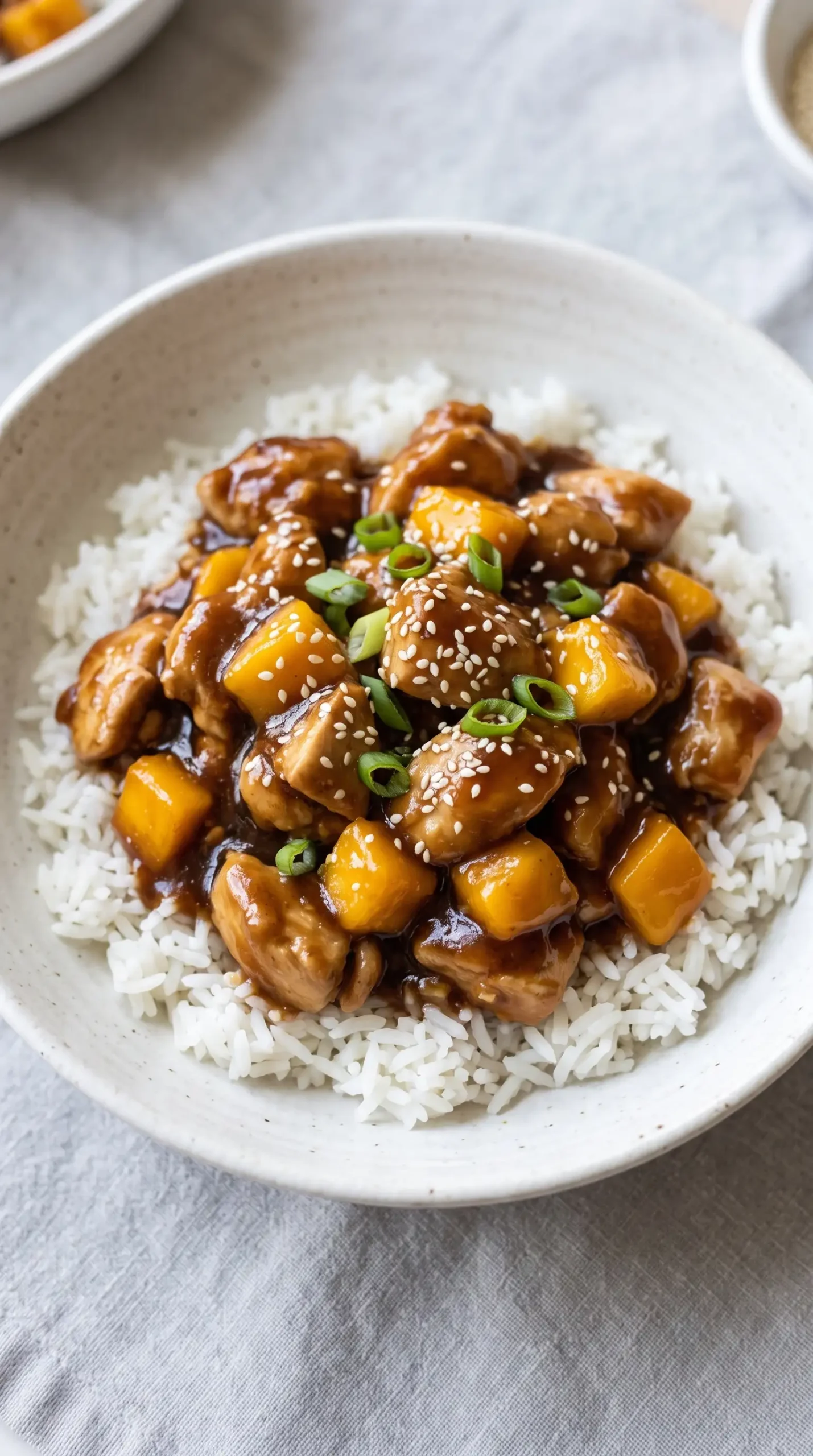
The sauce texture determines the success of mango chicken teriyaki because every part of the meal depends on the glaze coating the chicken and blending with the rice underneath. A smooth date-based sauce, properly timed mango addition, and careful heat control create the balance that defines the dish.
Chicken pieces with a light coating, a savory fruit-forward sauce, and fresh toppings create a meal where each element has a clear purpose. The strongest results come from protecting those contrasts while cooking.
Mango Chicken Teriyaki Questions About Sauce, Storage, and Swaps
Can the sauce be made sweeter without dates?
Yes. Sugar can replace the dates, but the sauce should be simmered so the sweetness dissolves fully and the texture develops before it is combined with the chicken.
Why does my teriyaki sauce become too thick?
The sauce can concentrate as it simmers, especially when the blended ingredients reduce. Adding chicken broth gradually can bring it back to a smoother coating consistency.
Can I use fresh mango instead of frozen mango?
Fresh mango works well when available. Add it near the end of cooking so the pieces warm through while keeping some of their fresh fruit character.
How can I add vegetables to this chicken teriyaki?
Vegetables can be added when you want a larger skillet meal, especially if you keep enough sauce available to coat both the chicken and the added ingredients.
What toppings work best with sesame mango chicken?
Sesame seeds, green onions, sesame oil, fish sauce, and lime juice each provide different finishing notes, so the best choice depends on whether you want more freshness, savoriness, or toasted flavor.
Mango Chicken Teriyaki with Sesame and Mango Chunks
Mango Chicken Teriyaki is a quick, flavorful skillet meal with tender chicken pieces, a smooth sweet-savory sauce, and juicy mango contrast. It is an easy weeknight dinner option when you want a balanced homemade meal with bold flavor.
Ingredients
Method
Preparation
- Prepare rice according to package instructions if serving with rice.
- Blend the soaked dates with their soaking water, soy sauce, rice vinegar, garlic, and ginger until the mixture is very smooth. Set the sauce aside.
- Thinly slice the onion. Cut the chicken breasts into small pieces. Mix the flour, salt, pepper, and chili powder in a shallow dish, then coat each chicken piece lightly with the flour mixture.
Cooking
- Warm the oil in a large pan over medium-high heat. Add the onions and cook for a few minutes, stirring as they soften.
- Add the coated chicken pieces and cook for a few minutes, stirring, until the chicken is browned.
- Reduce the heat to limit splattering, then add the sauce and chicken broth. Add more broth if needed to thin the sauce. Cover and simmer for 10 minutes.
- Stir in the mango chunks. Cover and continue simmering for another 5-10 minutes.
Serving
- Serve the chicken and sauce over rice with desired toppings such as sesame seeds, green onions, sesame oil, fish sauce, or lime juice.
Notes
For a more even sauce-to-chicken ratio, use 1 1/2 or 2 pounds of chicken. If adding vegetables and keeping extra sauce for coating, 1 pound of chicken can work. To replace the dates with sugar, use about 1/2 cup; blend the sauce as directed, then simmer it for about 15 minutes to help the sugar dissolve and thicken the sauce before adding it to the chicken.