From breakfast to dinner, from wholesome meals to indulgent desserts, Nexa Recipes offers quick, easy, and delicious ideas for every occasion and every moment.



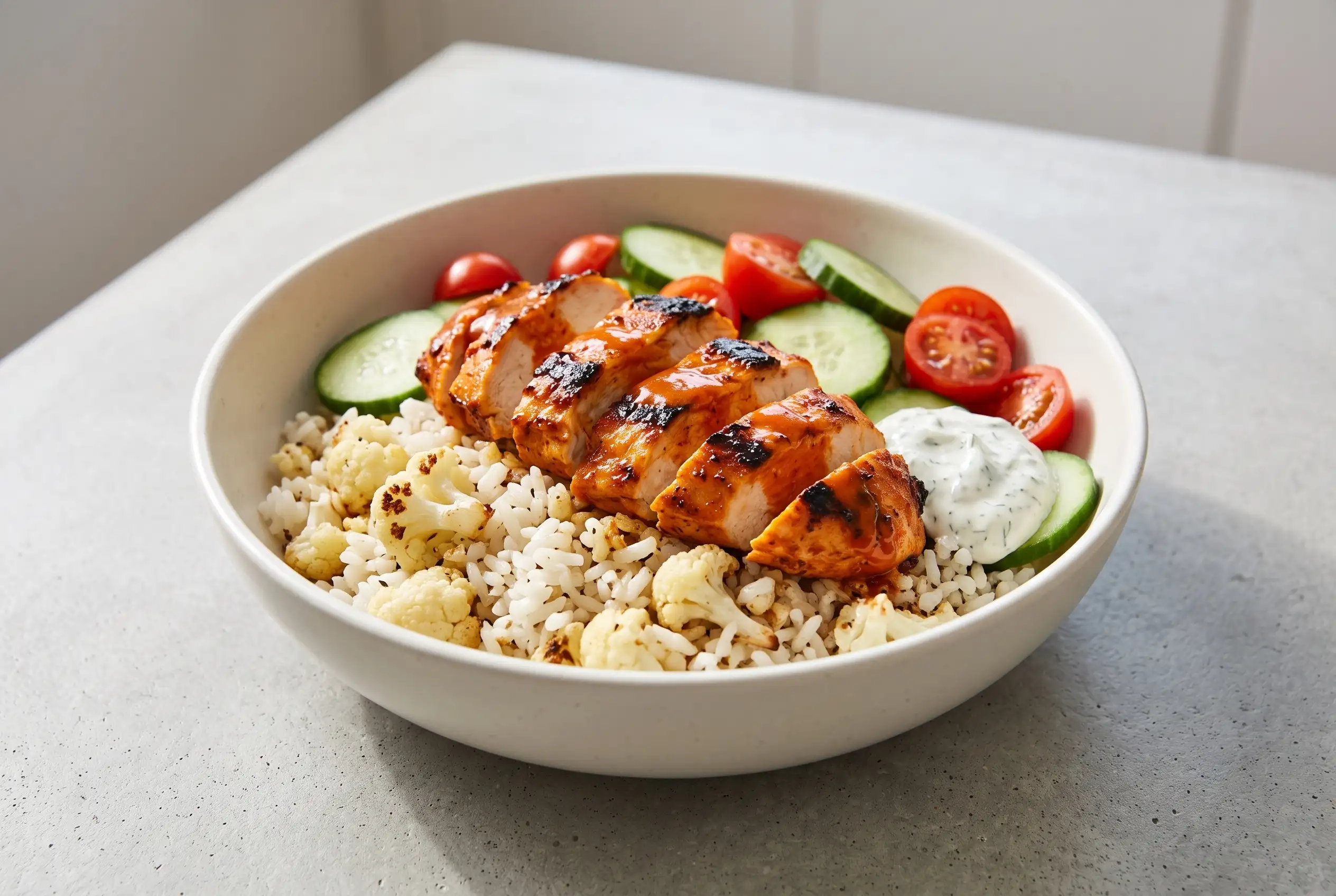 This Recipe
Buffalo chicken bowls combine spicy marinated chicken, roasted cauliflower garlic rice, crisp vegetables, and a creamy finishing sauce into a balanced meal that brings familiar buffalo flavors into an easy bowl format. The combination works because the chicken carries the bold seasoning while the rice mixture creates a satisfying base that absorbs flavor without becoming heavy.
Designed around practical cooking decisions, buffalo chicken bowls rely on a few important details: thin chicken pieces for even browning, roasted cauliflower for deeper flavor, and fresh toppings added at serving time. Each layer has a purpose, creating a meal that feels complete while remaining flexible for busy schedules.
Buffalo Chicken Bowls Bring Heat and Balance to Meal Prep
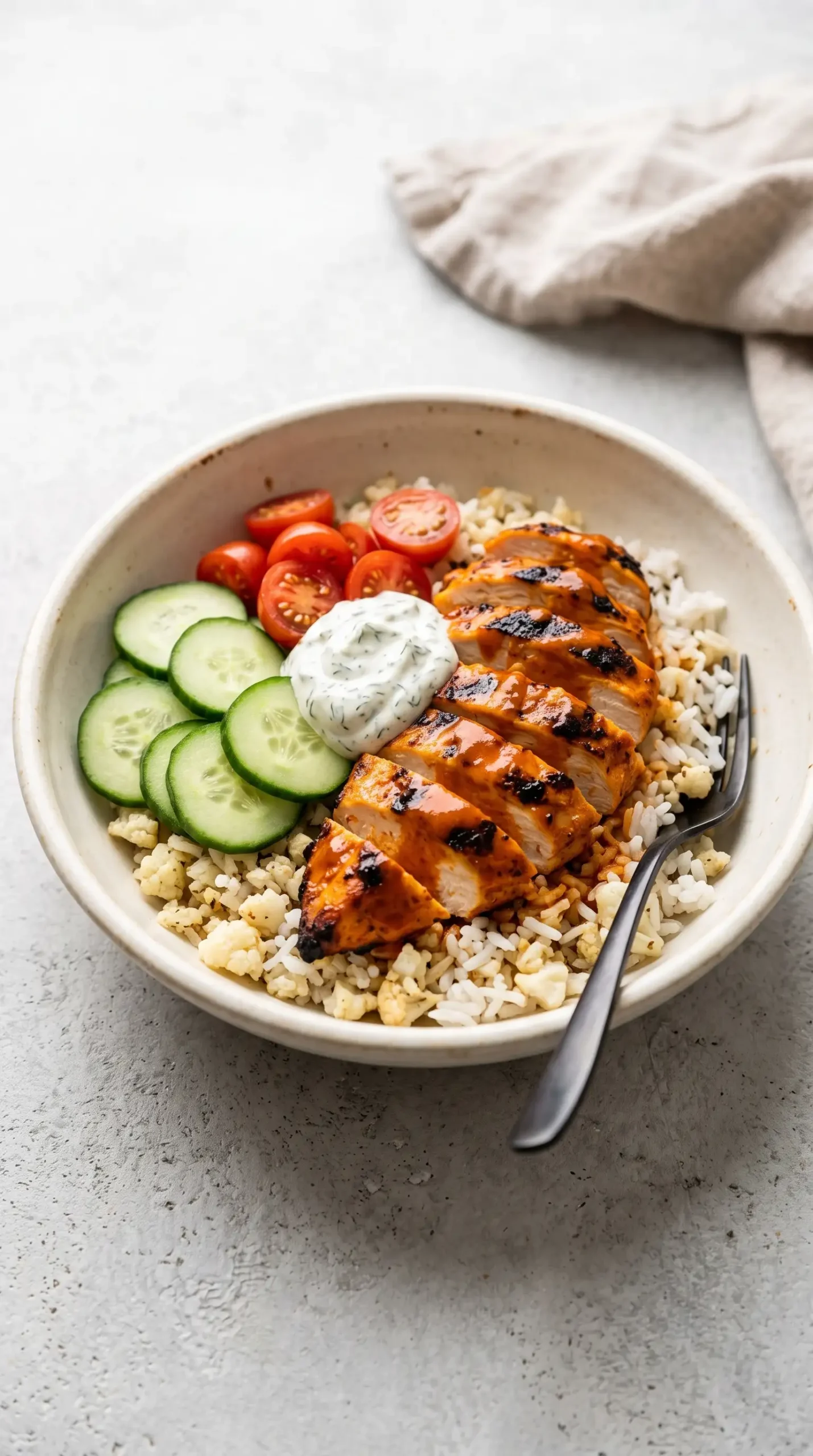
Buffalo chicken rice bowls succeed because the spicy elements are balanced with cooling and fresh textures. The hot sauce and honey marinade creates a sweet-and-spicy profile, while cucumber, tomatoes, and a creamy dip soften the stronger flavors.
Unlike a traditional buffalo chicken plate, these bowls combine protein, grains, vegetables, and sauce in one serving. The rice and cauliflower mixture provides a foundation that catches juices from the chicken and gives every bite a mix of textures.
Many chicken meal prep bowls become repetitive when the ingredients lack contrast. Here, the roasted cauliflower, crisp vegetables, and creamy topping create different sensations that keep the bowl interesting after reheating.
Thin Chicken Creates the Texture Behind Buffalo Flavor
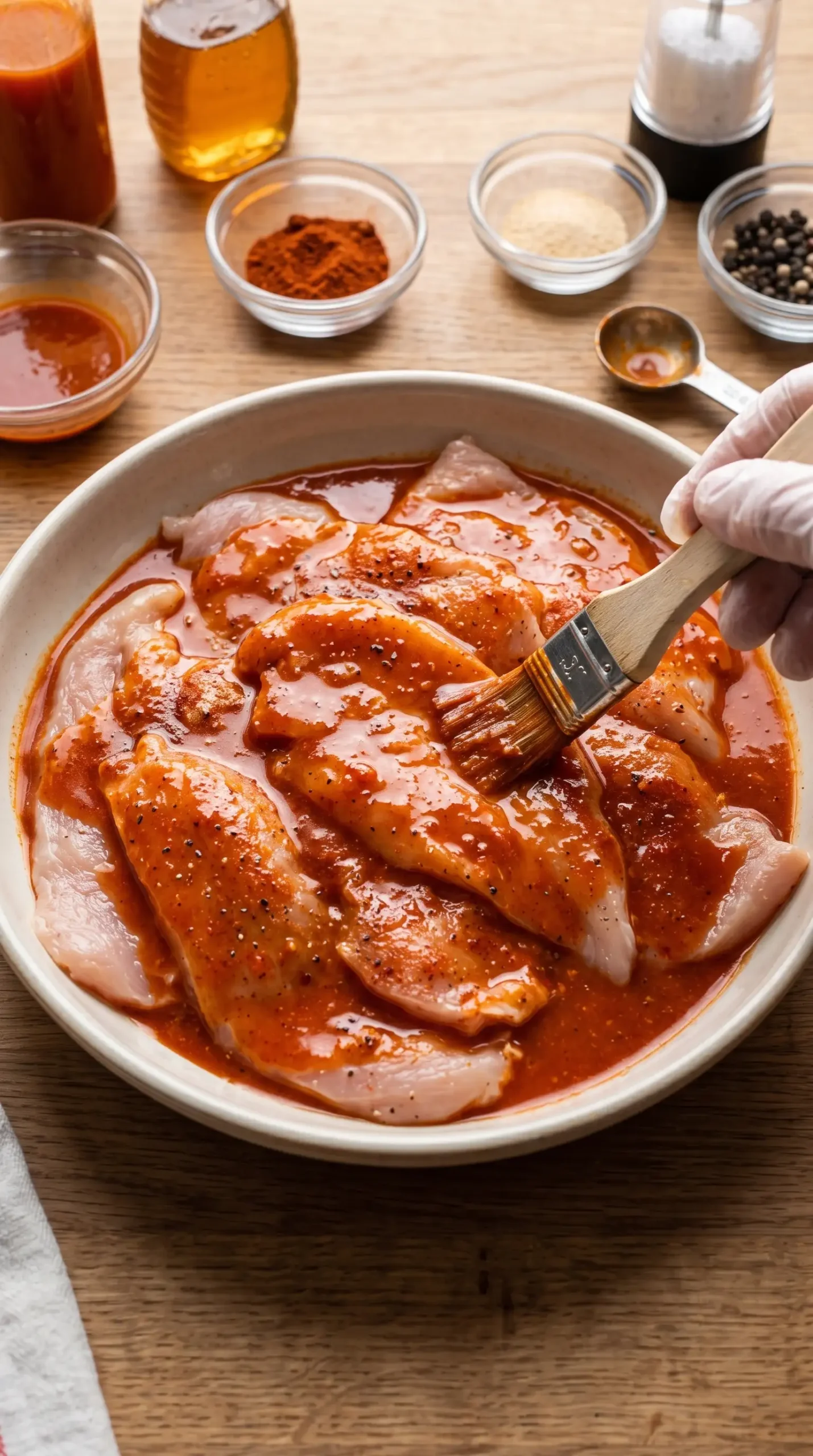
Chicken breast fillets work especially well when they are pounded or sliced lengthwise into thinner pieces. A flatter shape helps the meat cook more evenly and creates more surface area for the marinade and browned exterior.
Marinated chicken develops its best texture when the pieces are not overcrowded during cooking. Space allows the outside to brown, giving the buffalo seasoning a deeper cooked flavor instead of leaving the chicken with a pale surface.
Careful slicing after resting also matters. Letting cooked chicken sit briefly helps retain moisture before it is arranged over the cauliflower rice mixture.
Roasted Cauliflower Garlic Rice Changes the Bowl Structure
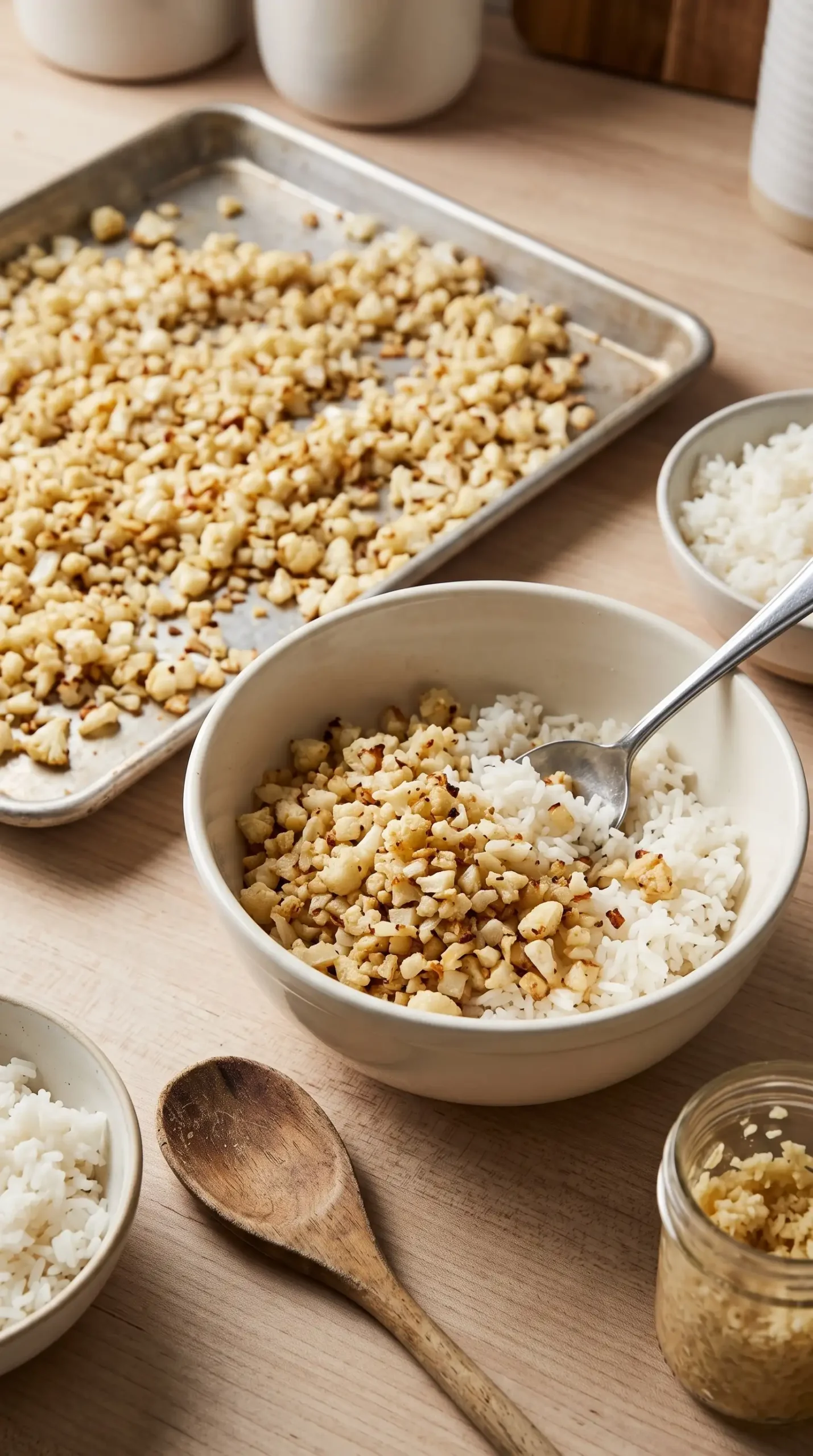
The cauliflower rice portion is more than a simple substitute or addition. Roasting it before combining it with cooked white rice creates a lightly browned flavor and firmer texture that supports the rest of the bowl.
Combining roasted cauliflower with rice creates buffalo chicken cauliflower rice bowls that feel hearty while adding a vegetable-forward element. The roasted pieces bring a slightly nutty character that works well with spicy chicken and creamy toppings.
Seasoning choices can be adjusted after roasting. Garlic powder, lemon juice, parsley, or parmesan can add another layer of flavor while still allowing the buffalo chicken to remain the main focus.
Marinade Choices Shape These Buffalo Chicken Rice Bowls
The chicken marinade determines how the main protein tastes from the first bite. Hot sauce provides the buffalo foundation, while honey rounds out the heat and helps create a balanced coating.
Simple seasoning additions support the sauce without competing with it. Garlic powder, paprika, onion powder, salt, and pepper build a savory background that works with the creamy dressing served at the end.
- Hot sauce balance: Creates the recognizable buffalo character without requiring a separate sauce layer.
- Honey adjustment: Softens sharp heat and adds a subtle sweetness to the chicken.
- Seasoning coverage: Helps each sliced piece carry flavor throughout the bowl.
Resting the chicken after cooking also protects the finished texture. The sliced pieces stay more tender when they are allowed to settle before being combined with the rice and toppings.
Cooking Controls Keep Chicken Juicy and Rice Balanced
Successful buffalo chicken bowls depend on controlling moisture at each stage. The chicken needs enough heat to brown, while the roasted cauliflower needs enough time to lose excess moisture and develop flavor.
Using a hot grill pan helps create a browned exterior on the marinated chicken. Extra marinade should be discarded before cooking so the surface can sear instead of steaming.
Roasting vegetables in a single layer helps develop better texture and prevents excess steaming. Roasting the cauliflower rice separately gives it a different texture from the cooked white rice. Adding it afterward preserves the contrast between the softer grains and the roasted pieces.
Assembly timing can change the eating experience. Keeping crunchy vegetables and creamy toppings separate until serving prevents them from losing their fresh texture.
Buffalo Chicken Bowls Avoid These Common Mistakes
Several small choices can affect the final result of buffalo chicken bowls. The most common problems come from moisture control, uneven chicken thickness, and adding fresh toppings too early.
- Skipping chicken flattening: Thick areas may cook unevenly while thinner sections dry out.
- Overcrowding the pan: Chicken may release moisture and lose the browned surface that adds flavor.
- Mixing toppings too soon: Cucumbers and tomatoes can become less crisp when stored with warm ingredients.
- Under-roasting cauliflower: The rice mixture may taste softer and less developed without the roasted texture.
Fixing these issues starts with preparation. Even chicken pieces, separated cooking stages, and late topping additions create a bowl with better texture and stronger flavor.
Fresh Toppings Complete the Buffalo Chicken Cauliflower Rice Bowls
Cucumber and cherry tomatoes provide the fresh contrast that makes the spicy chicken feel balanced. Their crisp texture creates a lighter element against the warm rice and roasted cauliflower.
The creamy topping is also an important part of the bowl design. Dill dip or avocado cilantro dressing adds richness and helps connect the spicy chicken with the milder rice base.
Meal Prep Storage Keeps Components Ready
Buffalo chicken bowls can be prepared in advance by storing the warm components together and keeping fresh additions separate. This approach helps maintain the contrast between heated ingredients and crisp toppings.
| Component | Storage approach | Serving adjustment |
|---|---|---|
| Chicken and rice mixture | Store together in individual containers | Warm before adding fresh toppings |
| Cucumber and tomatoes | Keep separate from warm foods | Add after reheating |
| Dill dip or dressing | Store separately | Spoon on just before eating |
Separate storage protects the textures that make these bowls enjoyable. The chicken and rice reheat well together, while the vegetables and sauce maintain their best quality when added later.
Flavor Variations Fit Different Dinner Preferences
The structure of buffalo chicken bowls allows small changes without losing the identity of the meal. Different toppings or sauces can shift the flavor while keeping the chicken and cauliflower rice foundation intact.
For a milder version, reducing the hot sauce or adding more creamy dressing can soften the heat. Extra vegetables can also create more freshness without changing the main cooking process.
Alternative finishes should support the buffalo profile. A creamy sauce, fresh herbs, or a squeeze of citrus can brighten the bowl while keeping the spicy chicken as the centerpiece.
Serving Details Make Chicken Meal Prep Bowls More Flexible
Serving these bowls in separate layers creates a better eating experience. Placing rice at the base, chicken on top, and fresh ingredients around the edges allows each person to combine flavors according to preference. A chicken bowl with layered components keeps the protein, grains, and toppings distinct until serving.
Portioning the components individually also makes the meal easier to adapt for different schedules. Some servings can be enjoyed immediately, while others can be packed for later without sacrificing the texture of the toppings.
Choosing the Right Dip Changes the Finish
The sauce choice influences the overall character of the bowl. Dill dip creates a tangy finish, while avocado cilantro dressing adds a smoother, herb-focused flavor that pairs with buffalo seasoning.
Buffalo Chicken Bowls Work for Weeknight Planning
Prepared ingredients make buffalo chicken bowls a practical option when a flavorful dinner needs to come together without complicated steps. The recipe format separates cooking tasks so each part can reach its best texture.
Buffalo Chicken Bowls Depend on Texture Balance
Buffalo chicken bowls deliver their strongest result when the browned chicken, roasted cauliflower garlic rice, crisp vegetables, and creamy topping remain distinct. The combination succeeds because every layer contributes a different texture and flavor direction.
Careful preparation choices, especially chicken thickness and topping storage, determine how satisfying each serving feels. A balanced bowl keeps the buffalo flavor bold while giving the meal enough freshness and contrast to feel complete.
Common Questions About Buffalo Chicken Bowls and Meal Prep
Can buffalo chicken bowls be made ahead for lunches?
Yes, the chicken and rice mixture can be prepared ahead and stored together, while cucumbers, tomatoes, and dressing should remain separate until serving. This keeps the fresh ingredients crisp after reheating.
How can the cauliflower rice texture stay better?
Roasting the cauliflower rice before combining it with cooked rice helps remove excess moisture and creates a more flavorful texture. Mixing it after roasting preserves the browned pieces.
Can the chicken be cooked without a grill pan?
A skillet or another heavy pan can be used to cook the marinated chicken. The important factor is maintaining enough heat for browning while allowing the chicken to cook evenly.
What makes these bowls less spicy?
Reducing the hot sauce amount or adding more creamy topping can lower the heat level. The honey in the marinade already helps balance the sharpness of the buffalo flavor.
What toppings work well with buffalo chicken bowls?
Cucumber, tomatoes, and creamy dips complement the existing flavors because they add freshness and richness. Additional toppings can be chosen based on whether a lighter or more indulgent bowl is preferred.
Buffalo Chicken Bowls with Cauliflower Garlic Rice
Buffalo chicken bowls combine tender, flavorful chicken with roasted cauliflower garlic rice, crisp vegetables, and a creamy topping for a fresh, hearty meal. These easy bowls are perfect for a flavorful weeknight dinner or meal prep option.
Ingredients
Method
Preparation
- Combine chicken, hot sauce, honey, garlic powder, paprika, salt, onion powder, and black pepper in a bowl or bag. Refrigerate for 30 minutes to 2 hours to marinate.
Cooking
- Prepare the white rice according to the package directions.
- Spread cauliflower rice on a sheet pan, drizzle with olive oil, and season with salt. Roast at 425°F (218°C) for 20-30 minutes until partially browned and lightly roasted. Stir the roasted cauliflower rice into the cooked rice. Add optional seasonings if desired.
- Heat a grill pan over high heat. Add a small amount of olive oil if needed, then cook the marinated chicken after removing excess marinade. Cook for a few minutes per side until browned and no longer pink inside. Remove from the pan and rest briefly.
Assembly
- Slice the chicken and serve over the cauliflower rice mixture. Add cucumber slices, halved cherry tomatoes, and a dollop of dill dip or avocado cilantro dressing.
Notes
The nutrition label does not include dip or dressing. For meal prep, package the rice and chicken together in individual containers, keep the cucumber, tomato, and dip separate, and add the fresh toppings after reheating.