From breakfast to dinner, from wholesome meals to indulgent desserts, Nexa Recipes offers quick, easy, and delicious ideas for every occasion and every moment.



 This Recipe
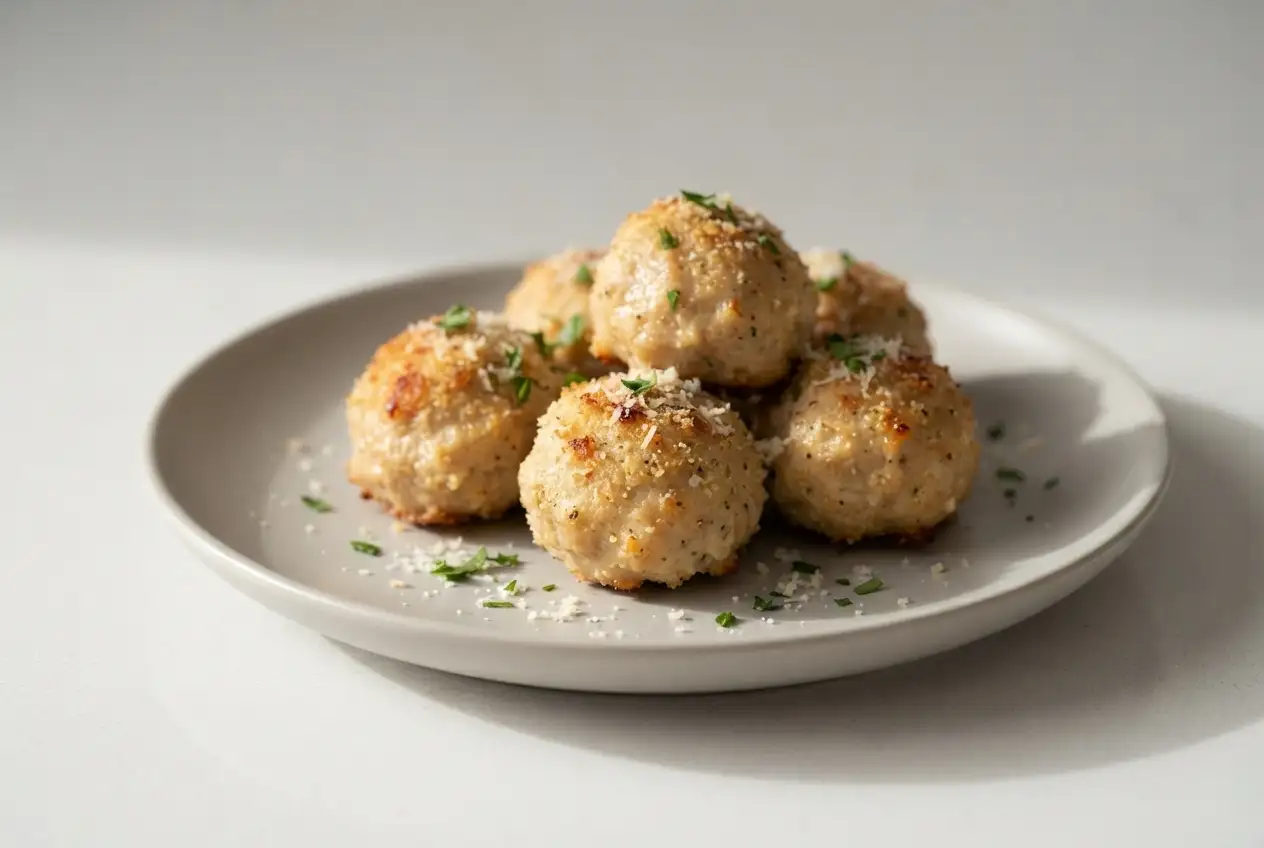
Baked chicken meatballs bring together lean ground poultry, Parmesan, and a crisp breadcrumb base for a dependable meal that works beyond a single occasion. These easy baked chicken meatballs rely on simple preparation choices that protect moisture while creating a tender bite. With a savory coating from pantry-friendly seasonings and a straightforward oven approach, the dish fits weeknight dinners, meal planning, and flexible serving ideas.
Baked Chicken Meatballs Create Tender Texture From Simple Choices
Tender results begin with how the mixture is handled before it reaches the oven. Ground chicken or turkey can become firm if compressed too much, so a light touch during mixing helps maintain a softer texture. The egg and breadcrumbs work together to hold the small portions together while keeping the interior pleasant after baking.
Ground poultry gives these meatballs a mild foundation that welcomes different flavor directions. The Parmesan and seasonings create a savory profile, while the optional olive oil contributes additional richness to the mixture. That balance makes chicken meatballs with parmesan useful for many meals without requiring a heavy sauce or complicated preparation.
Balanced texture also comes from the relationship between the outside and inside of each piece. Smaller portions allow the oven heat to reach the center efficiently, creating evenly cooked meatballs with a lightly browned surface. The result is a versatile protein that can be served immediately or adapted into another meal.
Parmesan and Panko Shape the Meatball Structure
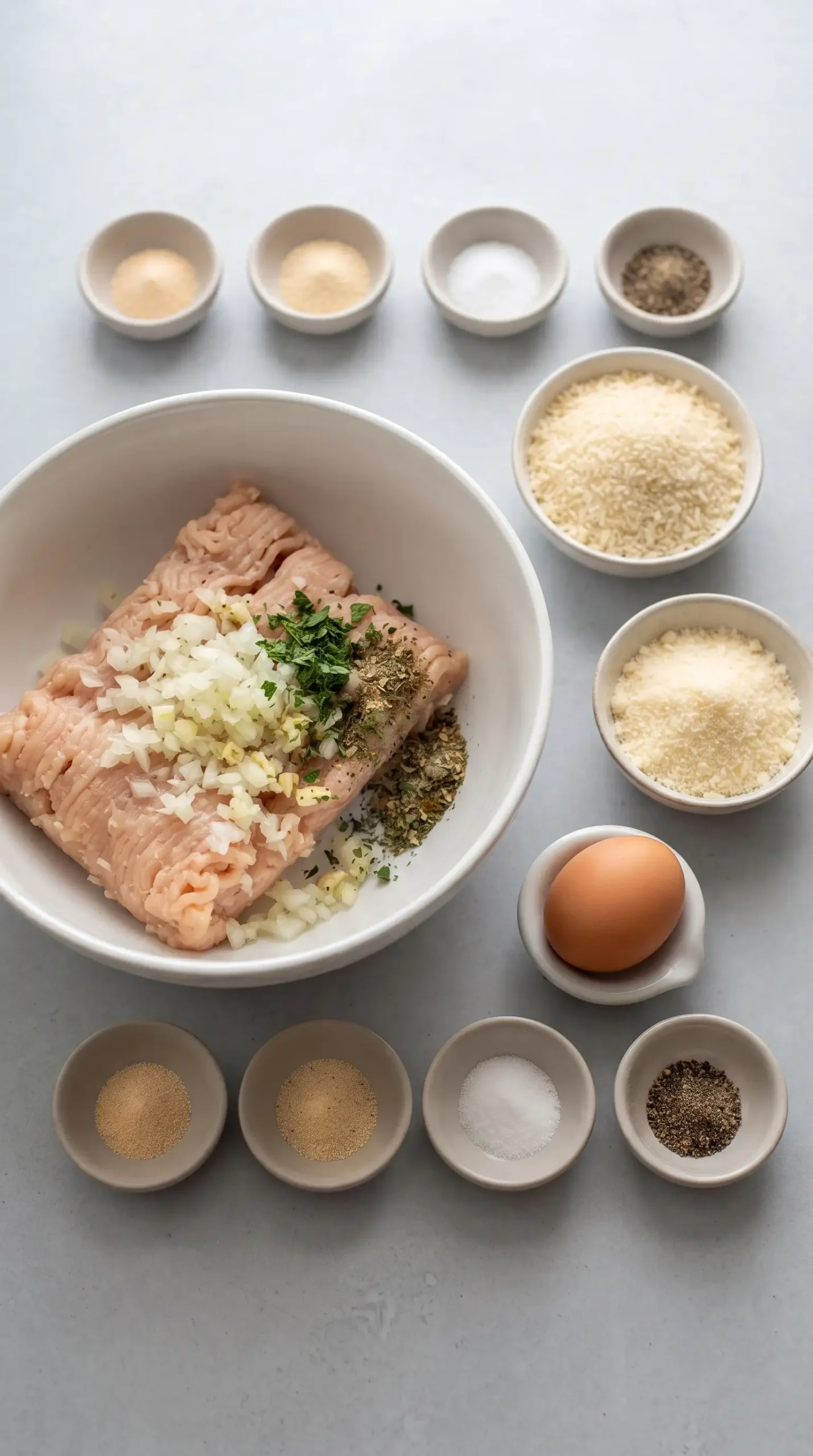
Panko crumbs provide more than a simple filler in oven baked chicken meatballs. Their larger, lighter texture helps create a mixture that is easier to shape while supporting the moisture released during cooking. Using the breadcrumbs as part of the structure keeps the meatballs from becoming overly dense.
Parmesan cheese brings a salty, savory quality that works especially well with ground poultry. The cheese integrates into the mixture, adding flavor throughout instead of relying only on toppings or sauces after baking. Recipes such as baked chicken parmesan use the same cheese-forward direction while pairing it with a structured coating and hearty serving style. Combined with garlic powder, onion powder, and pepper, it creates a balanced seasoning base.
Optional additions should support the existing flavor instead of covering it completely. A small amount of extra dried herbs, spices, or other seasonings can change the character of the meatballs while keeping the core texture intact. Consider these adjustments according to how the finished meatballs will be served.
| Choice | Effect on Meatballs | Best Use |
|---|---|---|
| Panko breadcrumbs | Creates a lighter interior structure | Soft, tender meatballs |
| Parmesan cheese | Adds savory depth | Simple pasta or vegetable meals |
| Olive oil | Provides extra moisture and richness | Lean poultry mixtures |
Hands-On Mixing Keeps Chicken Meatballs Consistent
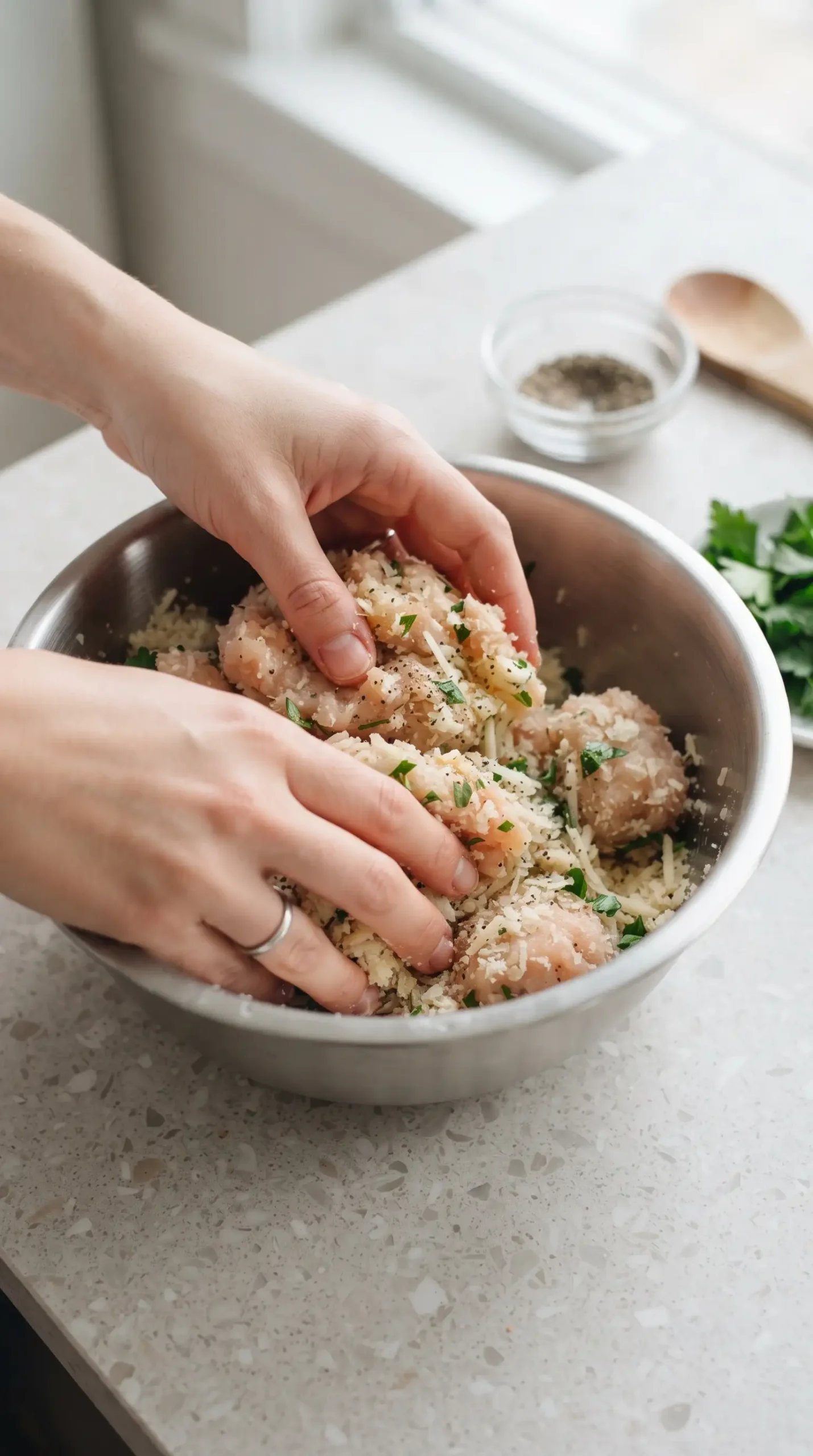
Hands-on mixing can make portioning easier because the ingredients distribute evenly through the ground poultry. Clean hands and a gentle approach allow the breadcrumbs, cheese, and seasonings to blend without compacting the mixture too much.
Oven Heat Controls the Baked Chicken Meatball Finish
Oven heat plays a major role in how these meatballs develop their texture. A preheated oven allows the outside to begin cooking immediately, while the moderate baking temperature supports even progress through the center. Consistent heat also helps prevent the outside from drying before the inside is ready.
Baking time depends on the size of the meatballs and how evenly they are formed. Smaller portions generally cook more predictably because there is less distance for heat to travel. Checking that the meatballs are fully cooked through helps ensure a safe and satisfying result.
Baking time depends on the size of the meatballs and how evenly they are formed. Smaller portions generally cook more predictably because there is less distance for heat to travel. Checking that the meatballs are fully cooked through helps ensure a safe and satisfying result, with ground poultry at 165°F as the recommended internal temperature for safety.
Careful spacing on the baking sheet improves the cooking environment around each piece. Leaving room between meatballs allows heat to circulate and encourages more even browning. A lightly prepared baking surface also makes cleanup easier after the cooking process is complete.
Common Baked Chicken Meatball Mistakes That Affect Texture
Avoiding common baked chicken meatball mistakes starts with recognizing how small choices change the finished dish. Too much pressure while shaping can create a firm texture, while unevenly sized portions may lead to some pieces cooking faster than others.
Overworking the mixture is one issue that can make poultry meatballs feel dense. Combining the ingredients until they are distributed is enough; excessive handling can change the texture before baking even begins.
Uneven portions create another challenge because smaller meatballs may finish before larger ones. Creating similarly sized pieces helps the batch cook more consistently and makes serving easier. If a few pieces are larger, checking those pieces first can help avoid undercooked centers or overly dry edges.
Finished Meatballs Adapt to Many Serving Styles
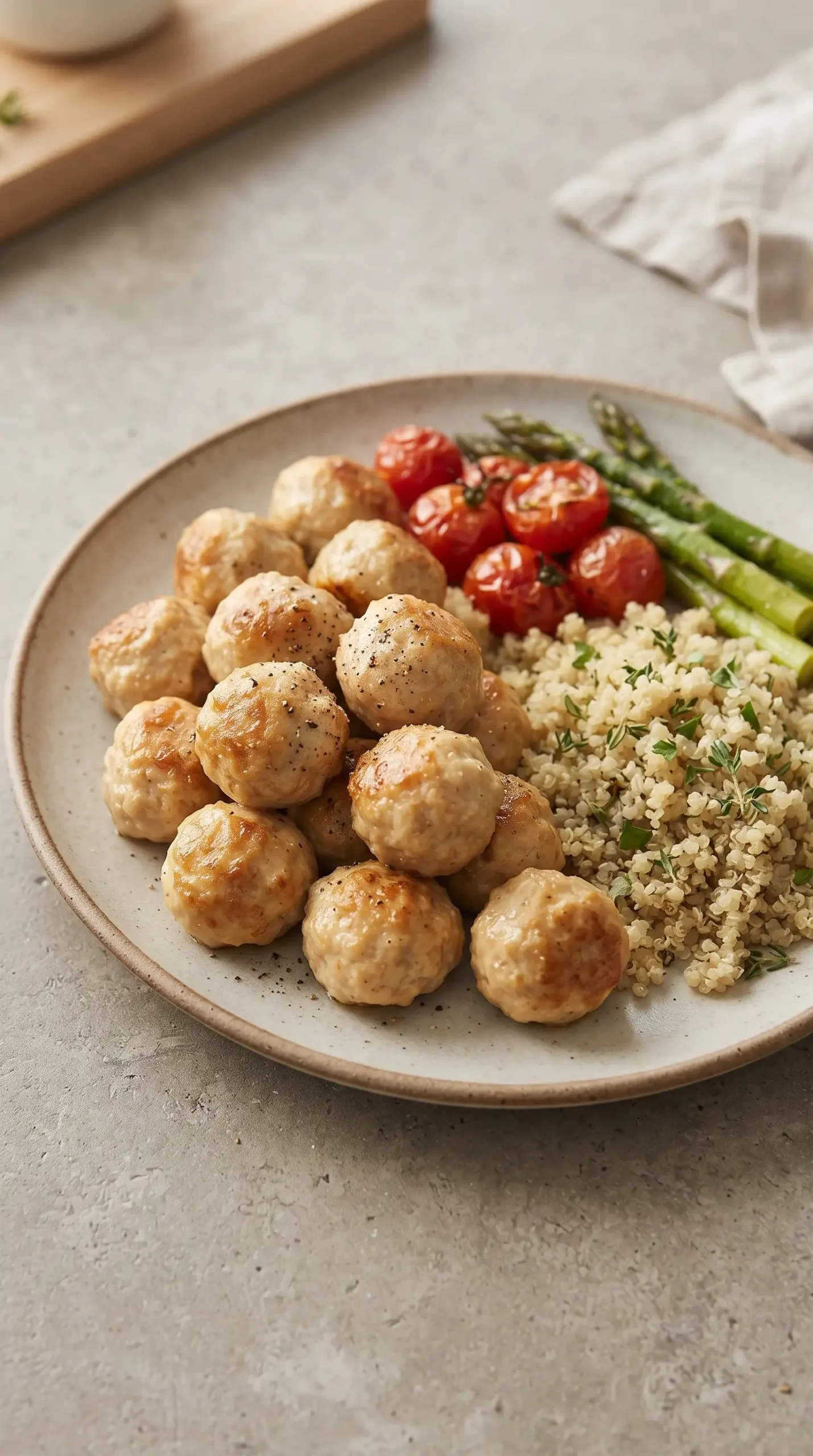
Finished meatballs can move easily between different meals because their mild flavor works with a variety of accompaniments. They can be paired with sauces, grains, vegetables, or served as a simple protein option when a flexible dinner component is needed.
Flavor Additions Expand Chicken Meatball Possibilities
Flavor additions allow the same basic mixture to match different menus without changing the core preparation. Extra seasonings can introduce new directions while keeping the tender poultry base recognizable.
Garlic powder and onion powder create the starting savory profile, but additional seasonings can shift the personality of the meatballs. Herbs can create a brighter finish, while stronger spices can make the flavor more noticeable alongside simple sides.
Seasoning adjustments work best when they consider the way the meatballs will be served. A strongly seasoned sauce may call for a lighter meatball mixture, while a simple vegetable side may benefit from a more pronounced seasoning blend.
- Herb additions: Add freshness when serving with lighter sides or simple sauces.
- Spice adjustments: Increase warmth or intensity while keeping the poultry base balanced.
- Cheese focus: Highlight the Parmesan flavor for a more savory bite.
Small Meatballs Improve Portioning and Cooking Control
Small meatballs make this dish practical because each piece is easy to serve, portion, and combine with other foods. Their compact shape also supports more predictable cooking compared with larger meatballs that require more time for heat to reach the center.
Baked Chicken Meatballs Support Flexible Meal Planning
Meal planning becomes simpler when a prepared protein can appear in different formats throughout the week. Baked chicken meatballs can complement pasta dishes, salads, roasted vegetables, or grain bowls without requiring a separate cooking method.
Family plates can be customized by changing the sides and sauces around the meatballs. Someone looking for a lighter meal can pair them with vegetables, while another serving approach can include a richer accompaniment for a more comforting dinner.
Different sauces also change the overall experience while keeping the meatball preparation consistent. Tomato-based sauces, creamy options, or simple dipping sauces can each highlight the Parmesan and poultry flavors in a different way.
Simple Pairings Complete Baked Chicken Meatball Meals
Simple pairings help these meatballs become a complete meal without competing with their seasoning. Pasta, vegetables, rice, or fresh greens can all provide a useful contrast to the tender poultry texture and savory cheese notes.
Baked Chicken Meatballs Storage Depends on Safe Handling
Proper storage keeps baked chicken meatballs ready for future meals while maintaining their quality. Allow cooked meatballs to cool appropriately before placing them into a covered container, then refrigerate them for later use.
Reheating works best with gentle heat that warms the meatballs without drying the lean poultry. Adding sauce or serving them with a moist accompaniment can help restore a pleasant eating texture.
Moist Baked Chicken Meatballs Depend on Balanced Preparation
Moist meatballs come from balancing the ground poultry mixture, the supporting ingredients, and the cooking approach. The breadcrumbs and Parmesan help shape the texture, while careful handling and even baking protect the tenderness that makes these meatballs useful for many meals.
Reliable results appear when each decision supports the next one. A balanced mixture, consistent portions, and thoughtful seasoning create chicken meatballs that stay approachable while offering enough flexibility for different serving ideas.
Baked Chicken Meatballs Questions About Moist Texture
How do I keep meatballs moist?
Moisture comes from using the egg, breadcrumbs, and optional olive oil together with gentle mixing. These elements help support a softer texture while preventing the ground poultry from becoming overly compact during preparation.
Can I use turkey instead of chicken?
Turkey options work well because the recipe is designed around ground poultry. The same supporting ingredients and baking approach can be used with ground turkey while maintaining the savory Parmesan flavor.
Why are my meatballs too firm?
Firm results often happen when the mixture is handled too aggressively or the portions are packed tightly. Mixing just until combined and shaping with a lighter touch helps preserve a more tender bite.
What sauces pair well with these meatballs?
Sauce choices depend on the meal style you want to create. Tomato sauces provide a familiar pairing, while creamy sauces or simple dipping options can highlight the Parmesan and seasoning profile in different ways.
Can I change the seasonings?
Seasoning changes are a simple way to adjust the flavor while keeping the same structure. Herbs, spices, or additional savory ingredients can be added according to the sides and sauces planned for serving.
Baked Chicken Meatballs with Parmesan and Breadcrumb Base
Baked chicken meatballs are tender, savory bites made with a Parmesan and breadcrumb base for a simple, versatile meal. They are easy to prepare and perfect for weeknight dinners or flexible meal options.
Ingredients
Method
Preparation
- Preheat the oven to 400°F (204°C). Line a baking sheet with foil and coat it lightly with cooking spray.
- Combine all ingredients in a mixing bowl until evenly incorporated.
- Shape the mixture into about 30 small meatballs and arrange them on the prepared baking sheet.
Baking
- Bake the meatballs for 25-30 minutes.
Serving
- Serve and enjoy.
Notes
For mixing, remove rings, wash hands, and combine the mixture by hand for easier blending.