From breakfast to dinner, from wholesome meals to indulgent desserts, Nexa Recipes offers quick, easy, and delicious ideas for every occasion and every moment.


 This Recipe
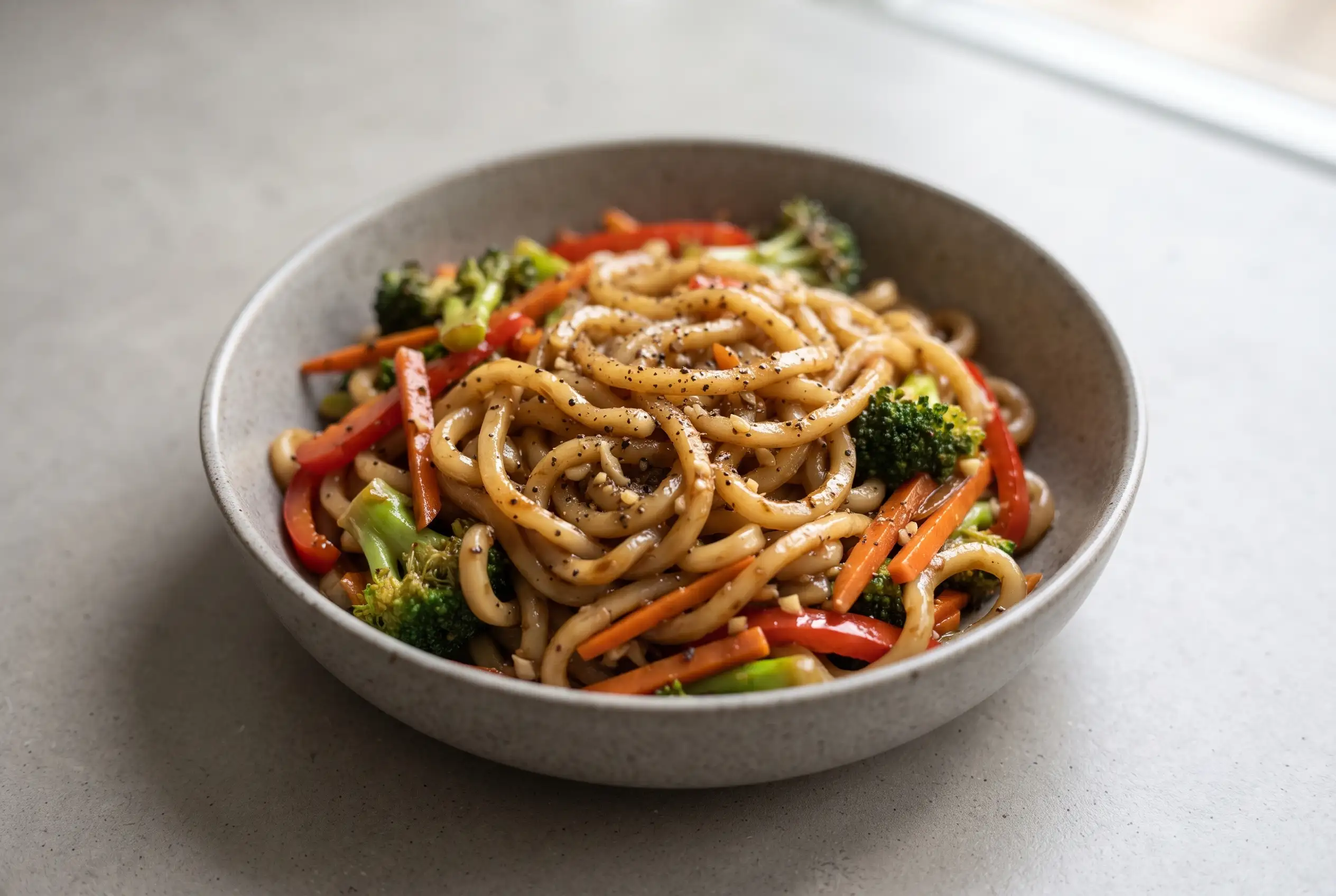
Black pepper udon brings chewy noodles, a savory sauce, crisp-tender vegetables, and bold pepper aroma together in a quick stir-fry that feels satisfying without complicated preparation. The dish works because each part has a clear role: the udon carries the glossy sauce, the vegetables add contrast, and freshly ground black pepper creates the signature finish.
Unlike many noodle dishes that rely on long simmering, black pepper udon gets its character from a short pan transformation. The sauce clings to the noodles as they warm, allowing the sugars and savory ingredients to create a lightly caramelized surface while the noodles remain soft and springy.
Soy Sauce and Pepper Shape the Udon Flavor Profile
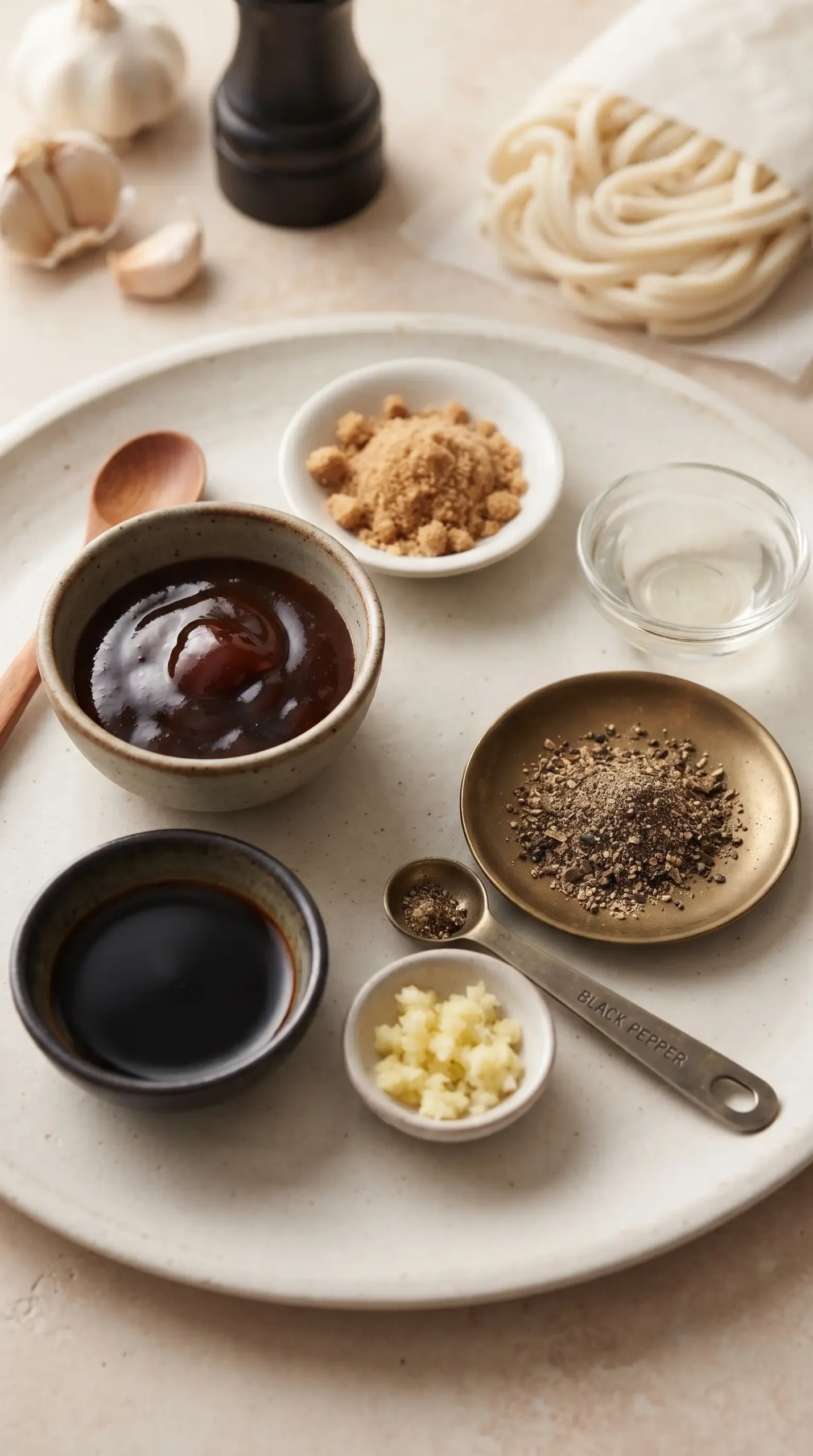
The most important flavor decision in black pepper udon comes from balancing the dark soy sauce, oyster sauce, brown sugar, and rice vinegar. The combination creates a sauce that is salty, lightly sweet, and bright enough to keep the noodles from tasting heavy.
Dark soy sauce gives the noodles their deeper color and richer savory character. Oyster sauce adds another layer of concentrated flavor, while brown sugar helps the sauce develop a sticky coating when it meets the hot skillet. Rice vinegar provides a small amount of acidity that keeps the finished noodles balanced.
Freshly ground black pepper is not only a seasoning added at the end; it defines the identity of the dish. A generous amount creates warmth and fragrance that stands apart from the sweeter elements of the sauce.
- Dark soy sauce: creates the deep savory base and darker appearance.
- Oyster sauce: adds richness that helps the noodles taste full and rounded.
- Rice vinegar: brings brightness to the sticky sauce.
- Fresh pepper: delivers the sharp aroma that makes the udon memorable.
Caramelized Noodles Depend on Smart Pan Control
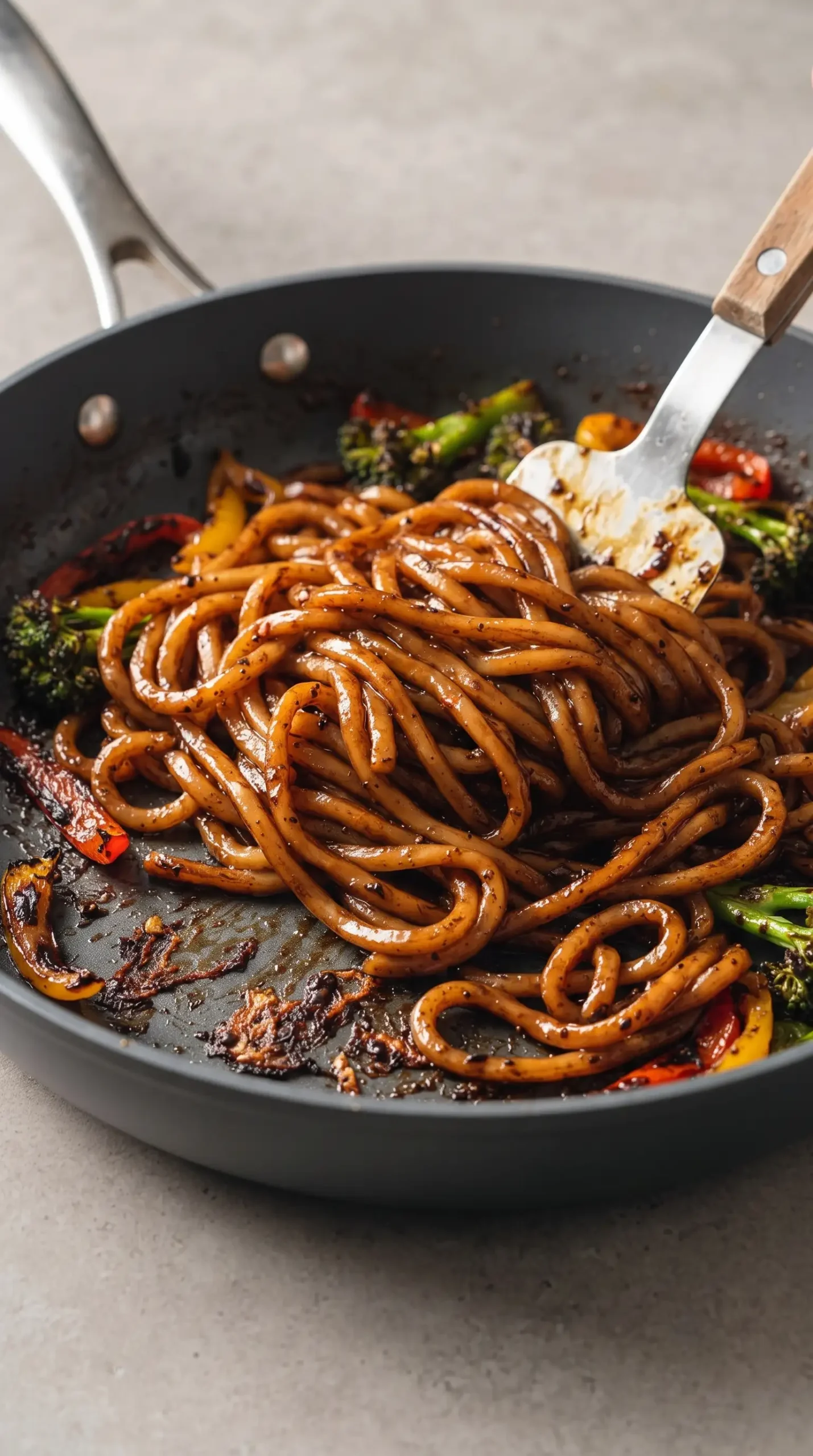
The skillet technique determines whether stir fried udon noodles become glossy and browned or simply warmed through. Leaving portions of the noodles in contact with the hot nonstick surface allows small areas to caramelize and develop deeper flavor.
Heat management matters because the sauce contains sugar. The noodles need enough time to pick up color, but extended untouched contact can move the surface from caramelized to burnt. Moving the noodles at the right moment keeps the sticky coating pleasant.
A crowded pan can also change the result by reducing direct contact between the noodles and the cooking surface. Working with space for the noodles to spread helps the sauce coat evenly and encourages the browned edges that make this style of udon appealing.
Vegetable Texture Keeps Stir Fried Udon Noodles Balanced
The vegetables provide contrast against the soft, chewy udon noodles. A frozen stir-fry vegetable blend works well because it offers variety while keeping preparation simple, and the pieces can warm through in the same skillet as the noodles.
Sauce Storage Makes Extra Batches More Useful
Preparing additional sauce can make future noodle meals faster because the mixture keeps ready-to-use flavor components together. Extra sauce can be stored for another batch when more udon noodles are available.
| Sauce component | Role in the dish | Cooking consideration |
|---|---|---|
| Dark soy sauce | Deep savory flavor and color | Pairs with sweet ingredients for a balanced coating |
| Oyster sauce | Rich savory body | Helps create a fuller tasting noodle sauce |
| Brown sugar | Sticky sweetness | Needs careful heat control to avoid burning |
| Rice vinegar | Fresh acidity | Prevents the sauce profile from feeling too heavy |
Common Black Pepper Udon Mistakes That Ruin the Finish
Black pepper udon depends on a few small choices, and mistakes usually appear in the texture or sauce coating. Recognizing the signs early makes it easier to adjust the cooking process.
- Burning the sauce: Leaving sugary noodles untouched too long can create a bitter burnt layer. Keep an eye on the color as the noodles caramelize.
- Using overcooked dry noodles: Dry udon should stay slightly firm before entering the skillet so it can finish cooking with the sauce.
- Adding pepper too early: Freshly ground pepper stirred in after cooking keeps its aroma more noticeable.
- Overlooking extra sauce: Using more sauce than needed can overwhelm the noodles. Add enough to coat and save the remainder if needed.
Choosing Udon Noodles Changes the Stir-Fry Result
The type of udon used affects the texture of the finished dish. Different udon noodle forms offer different textures, with cooked thick udon providing the soft and chewy bite associated with this style while dry noodles require more attention before they reach the skillet.
| Noodle option | Texture expectation | Preparation choice |
|---|---|---|
| Cooked udon noodles | Soft, thick, and chewy | Add directly to the stir-fry after loosening if needed |
| Dry udon noodles | Firmer before pan cooking | Cook slightly less than package directions so they finish in the sauce |
| Extra udon noodles | Ready for another meal | Prepare additional sauce for future batches |
Garlic and Pepper Timing Builds the Aromatic Finish
The finishing step creates the strongest aroma of black pepper udon. Freshly grated garlic added after removing the skillet from heat releases a bright fragrance that combines with the pepper for a bold final impression.
Adding the garlic at this stage keeps its fresh character noticeable. The pepper also remains prominent because it is allowed to stand out after the savory sauce has already coated the noodles.
Serving Adjustments Make the Dish Easier to Share
The amount of black pepper can be adjusted depending on who is eating. A portion can be separated before adding the extra pepper if a milder noodle dish is needed, allowing the remaining pan to receive the stronger seasoning.
Frozen Vegetables Work Well With This Noodle Style
Frozen stir-fry vegetables fit naturally into black pepper udon because they simplify preparation while still contributing different textures. They only need to become tender and combine with the noodles before serving.
Vegetable choices can vary within a stir-fry blend, but the important factor is maintaining contrast. Pieces that hold their shape help balance the soft noodles and glossy sauce.
Family Spice Adjustments Keep Pepper Manageable
Black pepper udon can be customized at the finishing stage, which makes it easier to serve different preferences from the same skillet. Keeping the pepper addition flexible allows a gentler version and a more intense pepper-forward version without changing the sauce foundation.
Udon Noodles With Black Pepper Sauce Fits Flexible Meals
Udon noodles with black pepper sauce work well when a quick meal needs strong flavor without a long ingredient list. A stir-fried noodle meal with tofu and vegetables can add variety to the table while keeping the focus on balanced sauce, tender vegetables, and satisfying noodle texture.
The same sauce approach also supports repeat cooking because extra noodles can become another meal with minimal preparation. Keeping the sauce components balanced is what allows the dish to remain useful beyond a single serving.
Black Pepper Udon Succeeds Through Controlled Heat and Timing
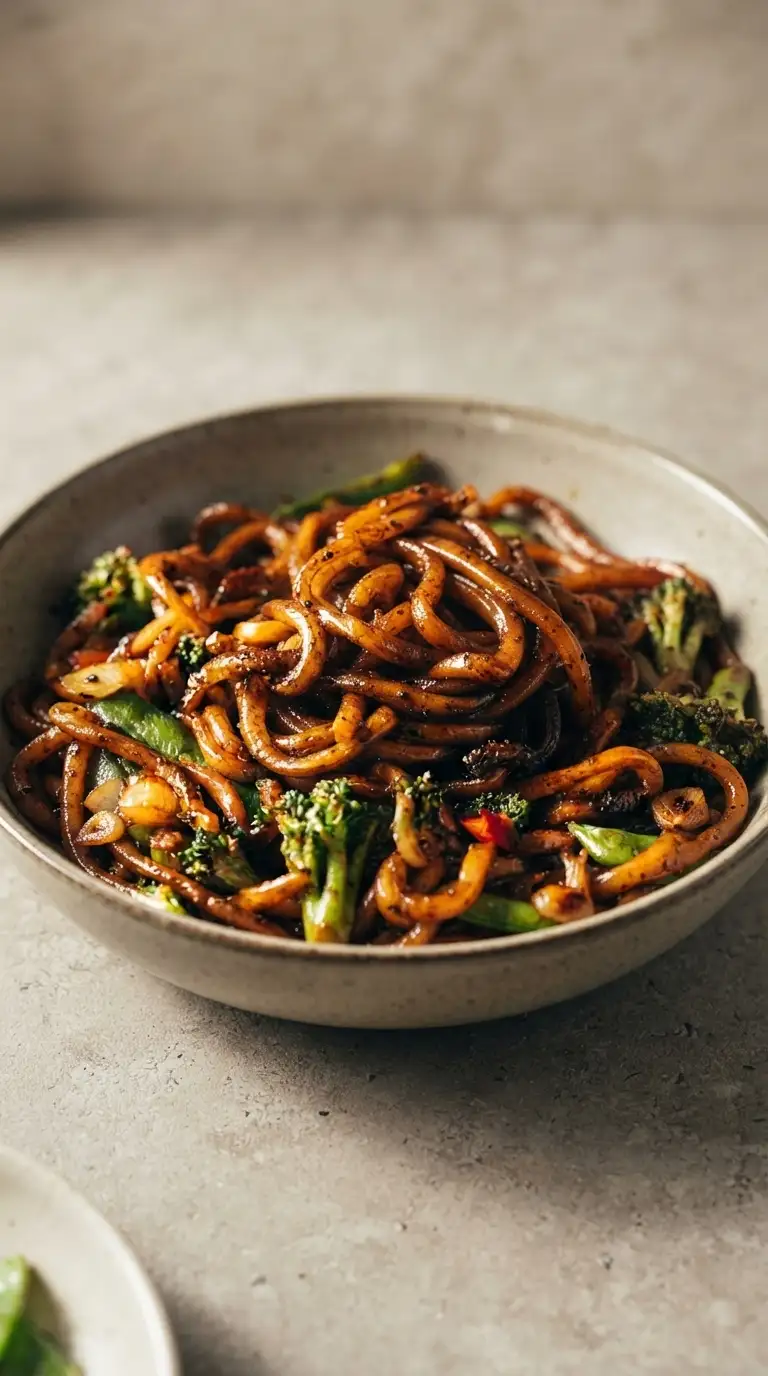
Black pepper udon succeeds when the noodles spend enough time with the sauce to become glossy and lightly caramelized while the sugary coating remains smooth. The skillet decisions matter most: enough heat for browning, enough attention to prevent burning, and a finishing touch of fresh garlic and pepper for aroma.
The balance between chewy udon, savory sauce, vegetables, and pepper creates a stir-fry where simple ingredients produce a distinct result. Careful handling of the pan turns a quick noodle meal into one with deeper flavor and texture.
Black Pepper Udon Sauce Questions and Answers
Can regular soy sauce replace dark soy sauce?
Regular soy sauce can be used when dark soy sauce is unavailable, though the noodles may have a lighter color and slightly different depth. Adjusting the overall seasoning carefully helps maintain the savory balance.
Why do my udon noodles become too soft?
Udon can become overly soft if it is cooked too long before stir-frying. When using dry noodles, stopping earlier allows the skillet and sauce to complete the cooking process.
How much black pepper should be added?
The pepper amount depends on personal preference, but the dish is designed around a generous amount of freshly ground pepper. Adding it gradually at the end makes it easier to control the intensity.
Can I make the sauce ahead of time?
Yes, preparing extra sauce ahead can simplify another noodle meal. Keeping the sauce ready means additional udon noodles can be transformed quickly when needed.
What makes the noodles caramelize?
The combination of heat, sauce, and brief undisturbed contact with the skillet helps the noodles develop browned areas. Watching the timing prevents that caramelized surface from becoming burnt.
Black Pepper Stir Fried Udon with Sauce and Vegetables
Black pepper udon is a quick stir-fried noodle dish with chewy udon, glossy sauce, and bold pepper flavor. It is an easy weeknight meal when you want a satisfying noodle dish with rich savory appeal.
Ingredients
Method
Preparation
- Combine all sauce ingredients in a jar and shake until mixed.
Cooking
- Warm a nonstick skillet over medium-high heat. Add a small amount of oil, then add the noodles and enough sauce to coat them. Stir-fry until the noodles are heated through and lightly caramelized, allowing them to rest briefly against the pan for browning if desired.
- Add the vegetables and more sauce as needed. Toss for 2-3 minutes until the vegetables are fork-tender and the noodles are browned, sticky, and coated.
- Remove the skillet from the heat and mix in the freshly minced garlic and a generous amount of freshly ground black pepper.
Notes
If you have extra udon noodles or want to prepare this more than once, double or triple the sauce so it is ready for another batch. The sauce contains sugar, so avoid leaving the noodles undisturbed in the hot pan too long to prevent burning. When using dry udon noodles, cook them for less time than the package recommends so they finish cooking in the skillet with the sauce.