From breakfast to dinner, from wholesome meals to indulgent desserts, Nexa Recipes offers quick, easy, and delicious ideas for every occasion and every moment.



 This Recipe
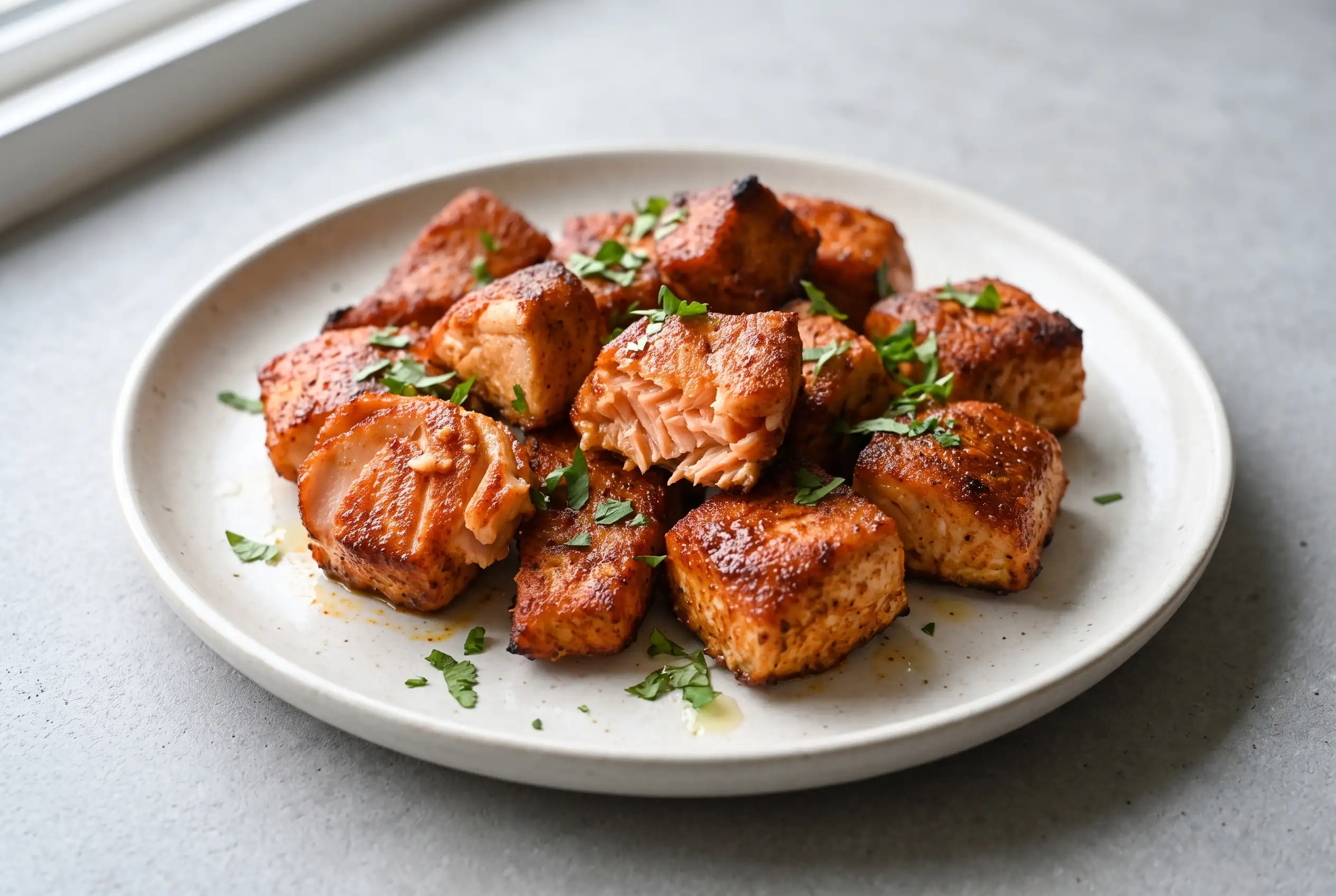
Air fryer salmon turns a simple piece of fish into a meal with a deeply seasoned surface, a tender center, and the kind of texture that makes weeknight cooking feel effortless. This air fryer salmon approach uses bite-sized pieces, a smoky spice blend, and the circulating heat of the appliance to create a satisfying contrast between lightly crisp edges and juicy salmon inside.
Air Fryer Salmon Bites Create Fast Texture Contrast
Air fryer salmon bites work because smaller pieces expose more surface area to the hot air moving through the basket. Each cube has more room for the paprika, garlic, onion, and brown sugar seasoning to cling to, creating flavorful edges while keeping the inside soft.
The cube shape also changes the eating experience compared with a traditional full salmon fillet. Individual pieces can pick up more seasoning, cook evenly, and make it easy to portion the fish across bowls, salads, or plates with vegetables.
A good air fryer salmon recipe depends on respecting the natural texture of the fish. Salmon contains enough richness to stay moist during a short cook, but the exterior benefits from a dry surface before seasoning so the spices can form a better coating.
Salmon Cubes Make Seasoning and Cooking More Predictable
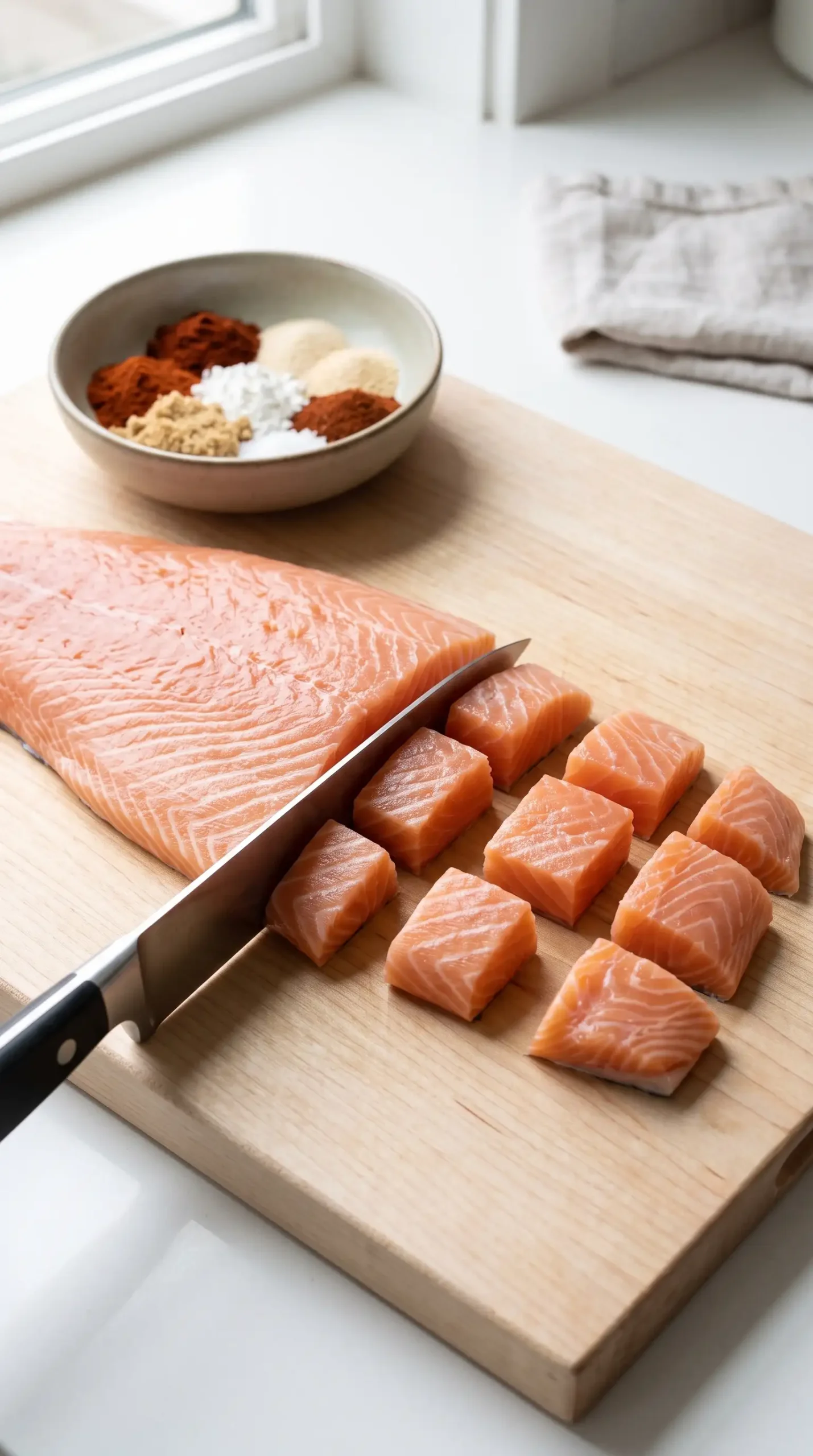
Cutting salmon into evenly sized pieces helps each portion move through the cooking process at a similar pace. Thick, boneless, skinless salmon works especially well because it can be divided into cubes that hold their shape while cooking.
Brown Sugar and Smoked Paprika Shape the Crispy Finish
The seasoning blend creates the signature character of these salmon pieces by combining sweet, smoky, savory, and gently spicy notes. Brown sugar encourages a flavorful surface, while paprika and smoked paprika bring color and depth without requiring a complicated sauce.
Cornstarch plays an important supporting role by helping the seasoning cling to the salmon and contributing to the lightly textured outside. A small amount of oil helps distribute the spices across the cubes so every piece receives a balanced coating.
Dry spices can behave differently depending on their texture and freshness. Breaking apart any clumps in brown sugar before mixing allows the seasoning to spread more evenly, preventing concentrated sweet spots and helping the salmon develop a consistent finish.
| Seasoning element | Purpose in the salmon | Cooking consideration |
|---|---|---|
| Brown sugar | Adds gentle sweetness and surface flavor | Mix well so it coats evenly |
| Smoked paprika | Creates smoky depth and warm color | Pairs well with the quick air fryer cook |
| Cornstarch | Helps build a lightly textured coating | Combine thoroughly with spices before adding |
The Air Fryer Basket Controls the Salmon Texture
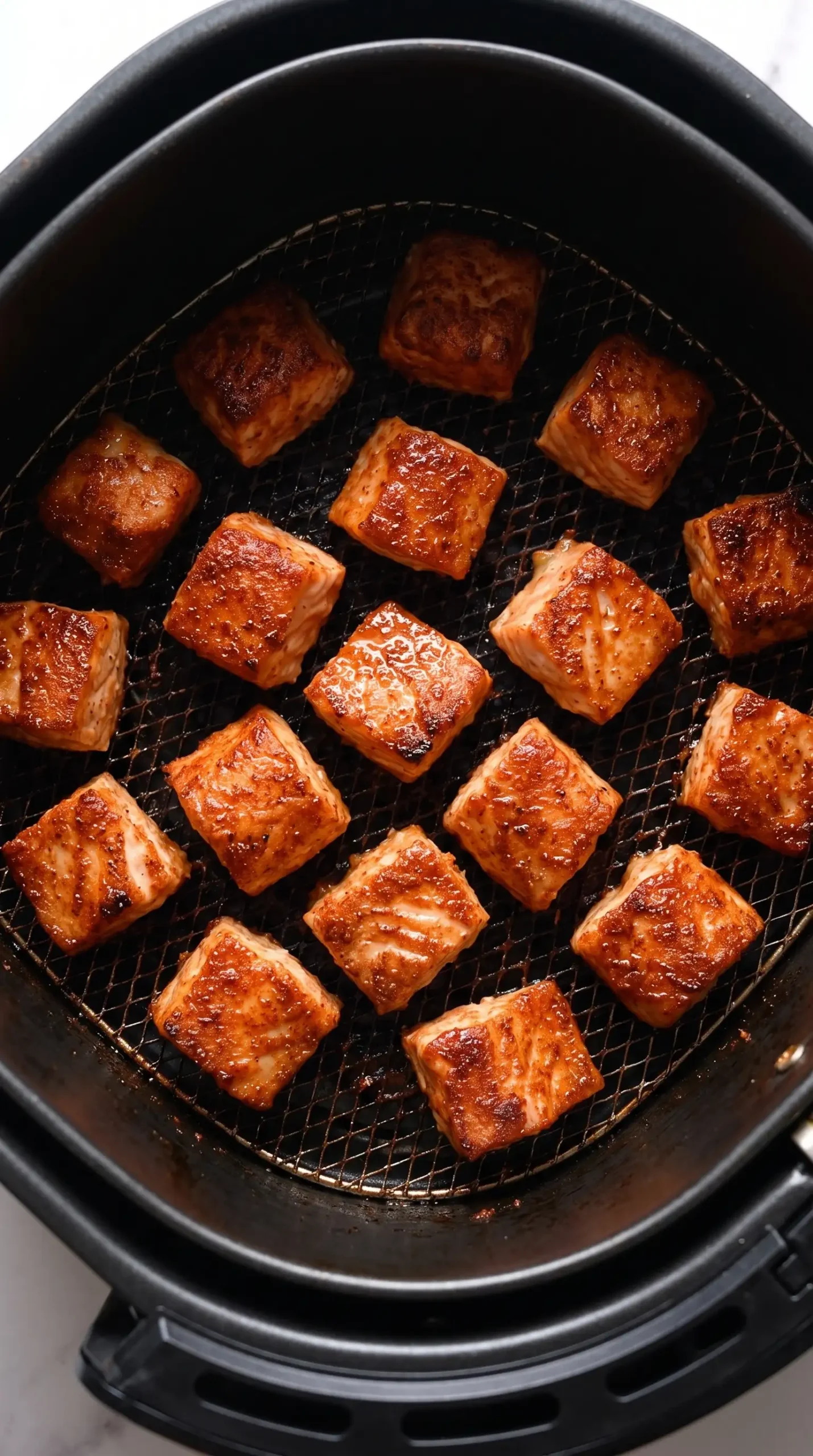
The most important cooking control for air fryer salmon is giving the pieces enough space for hot air to circulate. A crowded basket can reduce the dry heat reaching each surface, which affects the texture of the seasoned exterior.
Air Fryer Salmon Mistakes That Ruin the Juicy Center
Several small choices can determine whether air fryer salmon comes out tender or disappointing. The most common problems come from moisture, uneven sizing, or pushing the fish beyond the texture you prefer.
- Wet salmon surface: Excess moisture can weaken the seasoning coating and limit browning. Patting the fish dry before cutting helps the spices stay attached.
- Uneven cubes: Large differences in piece size can leave some portions finished before others. Similar pieces make it easier to judge doneness.
- Overcrowded basket: When salmon pieces sit tightly together, the outside may not develop the same texture. Spreading them apart supports more consistent cooking.
Another mistake is assuming salmon needs a long cooking time to become flavorful. The spice coating already provides strong flavor, and a short air fryer cook protects the buttery interior that makes salmon appealing.
Choosing a preferred level of doneness also matters. Some cooks enjoy a slightly softer center, while others prefer a firmer texture with more defined flakes. Watching the fish closely near the end allows the texture to match personal preference.
Choosing Salmon Cuts for Air Fryer Salmon Success
A thick boneless, skinless salmon piece is a practical choice for this preparation because it is easy to portion into cubes. A seafood counter may also help with trimming or cutting the fish before bringing it home.
Small Salmon Choices Change the Bite and Seasoning Coverage
The amount of salmon used can affect how heavily the seasoning coats each piece. A smaller batch receives a stronger layer of spices, while a larger amount spreads the same mixture across more surface area and may need a seasoning adjustment after cooking.
Crispy Air Fryer Salmon Fits More Than Dinner Plates
Crispy air fryer salmon can move easily between different meals because the seasoned cubes work with many textures and flavors. The smoky coating pairs naturally with fresh vegetables, grains, creamy sauces, and bright toppings.
Serving the salmon in bowls creates an easy combination of components without requiring extra preparation. The cubes can sit alongside rice, greens, roasted vegetables, or a salmon rice bowl with fresh toppings that balance the rich flavor of the fish.
Air fryer salmon also works well when a meal needs a protein that feels special without complicated cooking. The quick preparation style makes it suitable for casual lunches, family dinners, or flexible meal combinations built around what is available.
Seasoning Adjustments Keep Salmon Balanced
The spice blend can be adapted while keeping the same cooking approach. Adding more or less chili powder changes the heat level, while adjusting smoked paprika can shift the flavor toward a stronger smoky profile.
Storage and Reheating Protect Cooked Salmon Quality
Cooked salmon is best handled carefully after serving because its texture can change with repeated heating. Allowing leftovers to cool promptly and storing them properly helps preserve the moisture that makes salmon enjoyable.
Reheating works best with gentle heat because aggressive reheating can make fish dry. Short warming periods and lower temperatures help maintain the tender center while refreshing the seasoned exterior.
Leftover salmon cubes can also be repurposed in cold or room-temperature meals. Adding them to salads, grain bowls, or vegetable plates provides another way to enjoy the smoky seasoning without needing to prepare another protein.
| Use for leftover salmon | Texture advantage | Serving approach |
|---|---|---|
| Salad topping | Keeps the seasoned pieces intact | Pair with fresh greens and crisp vegetables |
| Grain bowl addition | Works with warm or cool ingredients | Combine with grains and sauces |
| Quick lunch plate | Requires minimal preparation | Serve with simple sides |
Serving Ideas Bring Air Fryer Salmon Recipe Flexibility
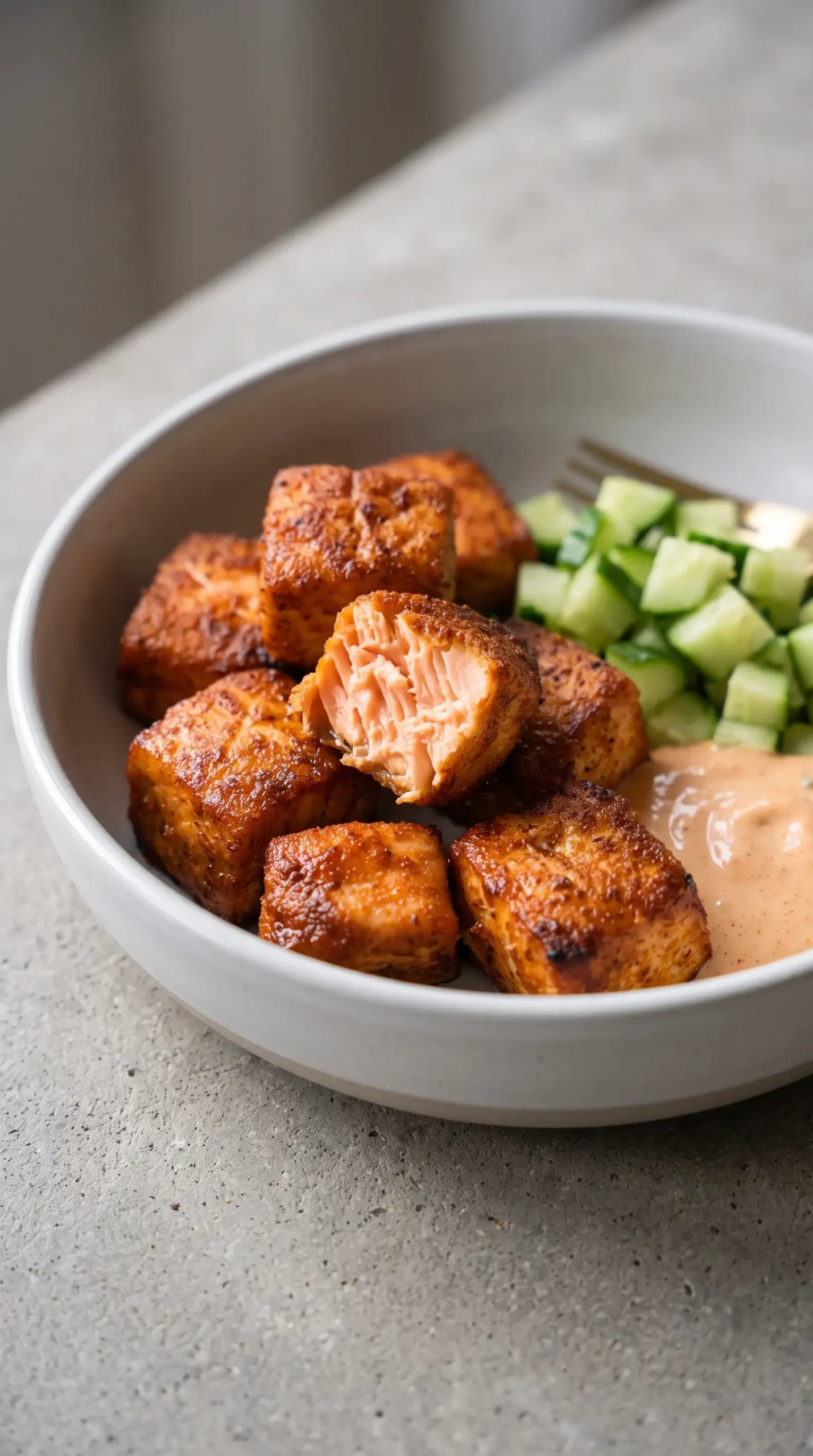
An air fryer salmon recipe becomes especially useful when the same seasoned fish can support different meals. The cubes can be served with vegetables, tucked into bowls, or enjoyed with dipping sauces that complement the smoky coating.
Cooking Details Keep Air Fryer Salmon Recipe Results Consistent
Small observations during cooking make a major difference. The salmon should develop a seasoned exterior while remaining moist enough inside to separate easily with a fork.
The appliance, salmon thickness, and preferred doneness can influence the exact texture. Checking the fish as it approaches completion helps prevent losing the delicate quality that makes salmon popular.
For a clear doneness check, salmon is safely cooked when it reaches a 145°F internal temperature, measured with a food thermometer at the thickest part of the fish.
Reliable results come from combining a dry surface, balanced seasoning coverage, and careful attention to texture. Those choices matter more than adding extra steps or complicated techniques.
Air Fryer Salmon Keeps Its Best Qualities Through Simple Controls
Air fryer salmon succeeds because the fish, seasoning, and cooking environment work together. The cubes provide more seasoned edges, the spice blend builds a flavorful coating, and the short cooking approach protects the moist interior.
The most important judgment is recognizing when the salmon has reached the texture you enjoy. A lightly crisp outside with a tender center comes from preparation choices made before the basket ever starts cooking.
Air Fryer Salmon Questions About Doneness and Storage
How do I know when air fryer salmon is done?
Air fryer salmon is ready when the pieces have a flavorful exterior and the inside separates easily with a fork. The texture should match your preference, with some people choosing a softer center and others preferring a firmer flake.
Can I use frozen salmon for this recipe?
Fresh or thawed salmon is the easiest option because it can be dried, cut, and coated evenly. Frozen salmon should be fully thawed before preparing the cubes so excess moisture does not interfere with the seasoning.
Why are my salmon pieces not getting a textured outside?
A lack of surface texture can happen when the salmon is too wet, the pieces are packed too closely together, or the seasoning does not coat the fish evenly. Drying the salmon and allowing air space in the basket supports better results.
What sides pair well with air fryer salmon bites?
Air fryer salmon bites pair well with fresh salads, roasted vegetables, grains, and bowls because the smoky seasoning works with both light and hearty additions.
How should leftover air fryer salmon be reheated?
Leftover salmon is best reheated gently so the fish keeps its moisture. Short warming periods help maintain the tender texture while keeping the seasoned surface enjoyable.
Air Fryer Salmon Bites with Smoky Spice Blend Recipe
Air Fryer Salmon Bites are a quick, flavorful seafood dish with a smoky seasoned coating and tender, juicy centers. They are perfect for easy weeknight meals when you want a satisfying recipe with bold flavor and great texture.
Ingredients
Method
Preparation
- Remove the salmon skin if needed, then pat the fish dry with paper towels. Cut the salmon into 1 to 2 inch cubes.
- Combine the spices in a small bowl until evenly mixed.
- Add the salmon cubes and oil to the seasoning mixture, then toss until the pieces are coated.
Cooking
- Arrange the seasoned salmon pieces in the air fryer basket with space between them so they are not stacked closely together. Air fry at 400 degrees F (204 degrees C) for 8 minutes.
- Check the salmon texture before serving. The outside should be textured and golden while the inside remains juicy and flakes easily with a fork. For a softer medium doneness, cook for 6-7 minutes instead.
Notes
For the salmon, a thick boneless, skinless piece works well because it can be cut into cubes easily. The seasoning amount works for 1 to 1.5 pounds of salmon; if using closer to 1.5 pounds, the coating will be lighter and you may want to adjust the salt after tasting. If the brown sugar is dry or clumpy, break it apart before mixing so it combines more evenly with the other spices.