From breakfast to dinner, from wholesome meals to indulgent desserts, Nexa Recipes offers quick, easy, and delicious ideas for every occasion and every moment.



 This Recipe
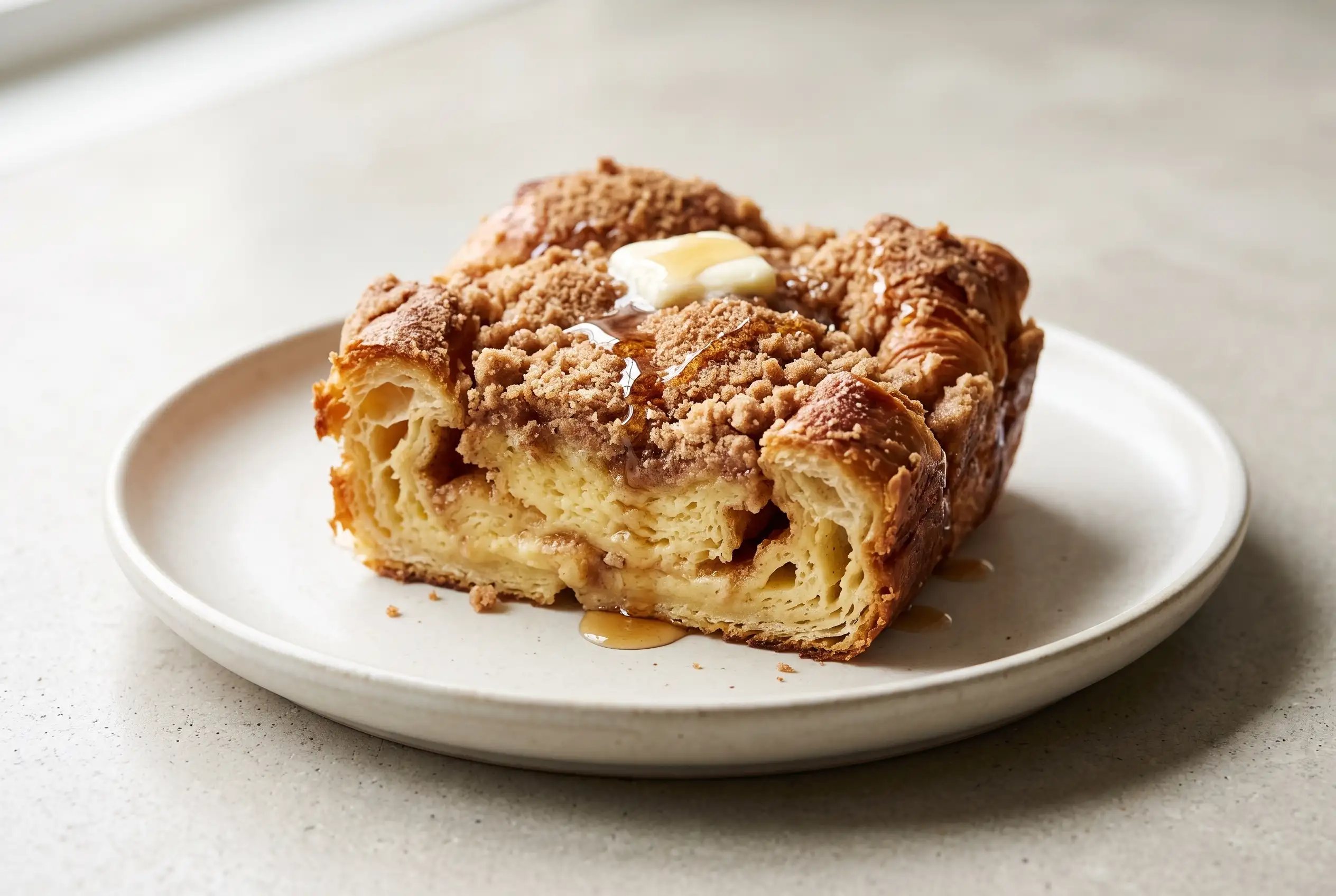
Croissant french toast transforms a few days-old pastry into a rich breakfast bake with buttery layers, cinnamon sweetness, and a soft custard center. Using torn croissants instead of traditional bread creates a different texture because the flaky pieces absorb the egg mixture while keeping some of their pastry character.
The appeal of baked croissant french toast comes from balancing moisture and structure. The croissants need enough time to soak up the custard, but the finished dish should still have a lightly crisp surface and a tender middle. Careful baking and a simple cinnamon crumb topping help create that contrast.
Croissant French Toast Turns Stale Pastry Into Morning Bake
Older croissants are especially useful for a croissant cinnamon french toast bake because their drier texture allows them to capture the milk, eggs, yogurt, sugar, and vanilla mixture. Fresh croissants can still work, but slightly stale pastry usually absorbs liquid more evenly without becoming overly fragile.
The torn pieces create natural spaces throughout the pan where the custard can settle. Those irregular layers give each serving a mix of flaky edges, soft interior bites, and pockets of cinnamon topping.
An overnight croissant french toast casserole also makes the pastry easier to prepare ahead because the soaking time happens before baking. The chilled mixture has time to develop a consistent texture before the crumb topping is added.
Stale Croissants Create the Right Texture Foundation
The best texture comes from treating croissants as a layered pastry instead of simply replacing ordinary bread. Their buttery structure changes how the custard moves through the bake, creating a richer result with fewer dense areas. The flaky structure of croissants makes them useful beyond sweet bakes, and breakfast sandwiches with croissants rely on the pastry’s layered texture to hold fillings while adding a buttery base.
Choosing croissants that have lost some moisture helps the pieces remain recognizable after soaking. If the pastry is extremely fresh and delicate, it may absorb liquid quickly and lose some of the contrast between the soft center and baked surface.
A small baking dish supports this style of breakfast because the pieces stay close together while the custard cooks around them. The result is a cohesive bake that can be served in portions without losing its pastry layers.
Yogurt and Cinnamon Shape the Flavor Balance
The combination of Greek yogurt, vanilla, cinnamon, and brown sugar gives baked croissant french toast a flavor profile that feels richer than a basic custard bake. The yogurt joins the eggs and milk to create a creamy mixture, while cinnamon in the topping brings warmth through each layer.
Overnight Soaking Builds a Croissant Cinnamon French Toast Bake
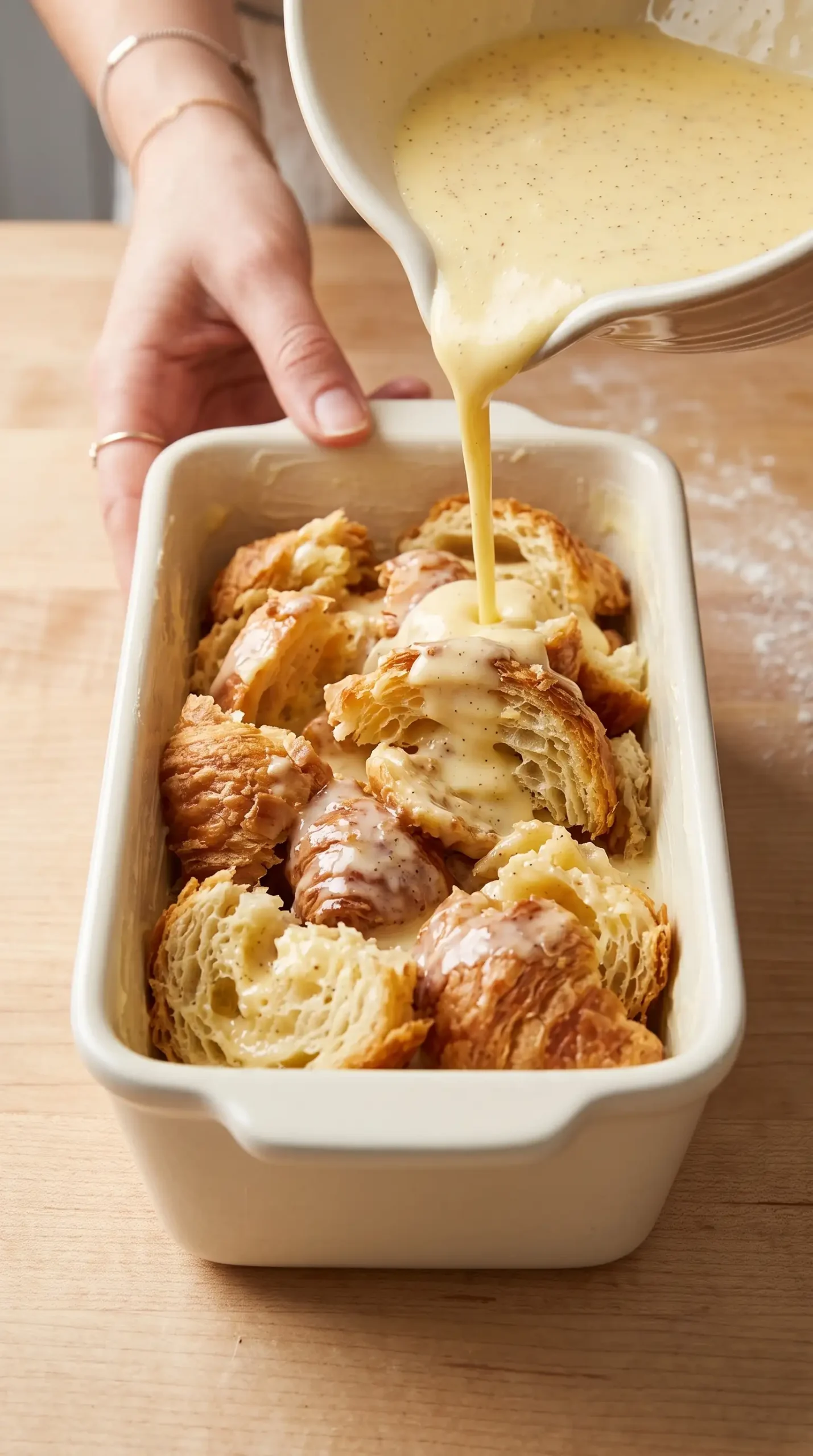
The soaking stage is where the croissants change from separate pastry pieces into a unified breakfast dish. The egg mixture needs enough contact time with the torn pieces so the center develops a soft, custardy texture during baking, similar to the role of French toast custard in creating the final texture.
Covering the pan and refrigerating it for several hours also separates preparation from baking. That makes the dish useful for mornings when the assembly can happen ahead of time and the oven work can happen later.
Shorter soaking is possible when time is limited, but the texture may vary because the liquid has less opportunity to move through the pastry layers. Watching the center during baking remains important because the top can appear finished before the inside has fully set.
Baking Control Keeps the Center Set and Soft
The oven stage determines the difference between a creamy breakfast bake and a dry one. A moderate baking temperature allows the custard to cook through while the crumb topping develops color and texture.
Checking the middle of the pan matters more than judging the surface alone. The top receives direct heat and can look ready while the interior still needs additional time to finish cooking.
The topping should be added after the soaked croissants have rested so the flour, brown sugar, cinnamon, and butter mixture remains distinct during baking. Cutting cold butter into small crumbs helps create the textured layer that contrasts with the soft pastry underneath.
Small Pan Choice Changes the Finished Texture
A compact baking pan keeps the croissant pieces arranged in a thicker layer, which affects how much custard remains around the pastry as it cooks. A loaf-style dish can work well when a smaller batch with defined layers is preferred.
Croissant French Toast Mistakes That Ruin the Bake
Several problems with croissant french toast come from ignoring the relationship between pastry, liquid, and heat. The ingredients are simple, but the texture depends on keeping each stage balanced.
- Fresh pastry overload: Very soft croissants may absorb the custard differently and lose some flaky structure.
- Uneven soaking: Large dry pieces can create sections that stay firmer than the rest of the bake.
- Early topping judgment: A browned crumb layer does not always mean the custard center is ready.
Fixing these issues starts with observing the pan instead of relying only on appearance. Evenly torn pieces, sufficient soaking, and a careful center check help avoid the most common texture problems.
Adding the crumb mixture at the proper point also protects the topping from becoming absorbed into the custard. The separate layers are what make this breakfast feel like both a pastry and a French toast casserole.
Crumb Topping Adds a Crisp Cinnamon Finish
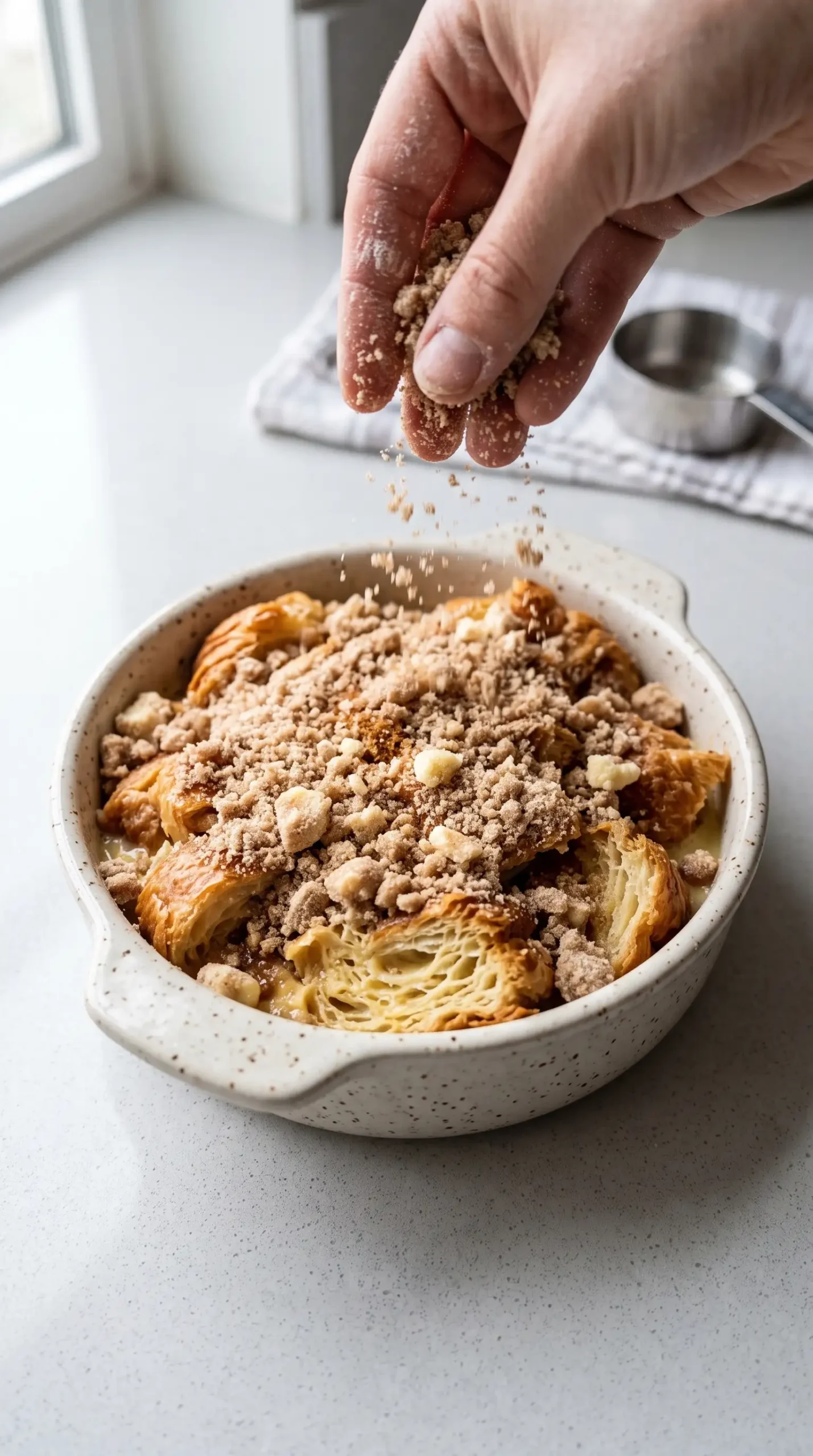
The flour, brown sugar, cinnamon, salt, and butter topping creates a contrasting surface for the tender croissant base. Small butter-coated crumbs bake into a sweet layer that complements the soft custard without overwhelming the pastry.
Serving Choices Highlight the Warm Pastry Layers
Warm slices pair naturally with butter and maple syrup because the toppings melt into the cinnamon-scented surface. Keeping additional toppings simple allows the croissant texture and baked custard to remain the focus.
Storage and Reheating Preserve the Baked Texture
After cooling, leftover portions should be covered and refrigerated to maintain quality. The baked layers may soften over time because the custard continues to influence the pastry texture.
Reheating gently helps bring back some of the contrast between the crumb topping and the moist center. A shorter warming period is useful because excessive heat can dry the croissant pieces.
Freezing is possible for baked portions when a longer storage option is needed, although the texture of the pastry may change after thawing. Serving smaller portions after reheating can help maintain the intended balance of soft and crisp layers.
Adjustments Keep Croissant French Toast Flexible
The basic structure of croissant french toast allows room for small flavor changes while keeping the same pastry-and-custard foundation. Extra cinnamon can emphasize the warm spice profile, while maple syrup can provide sweetness at serving time.
Maple Syrup Finishes the Croissant French Toast Experience
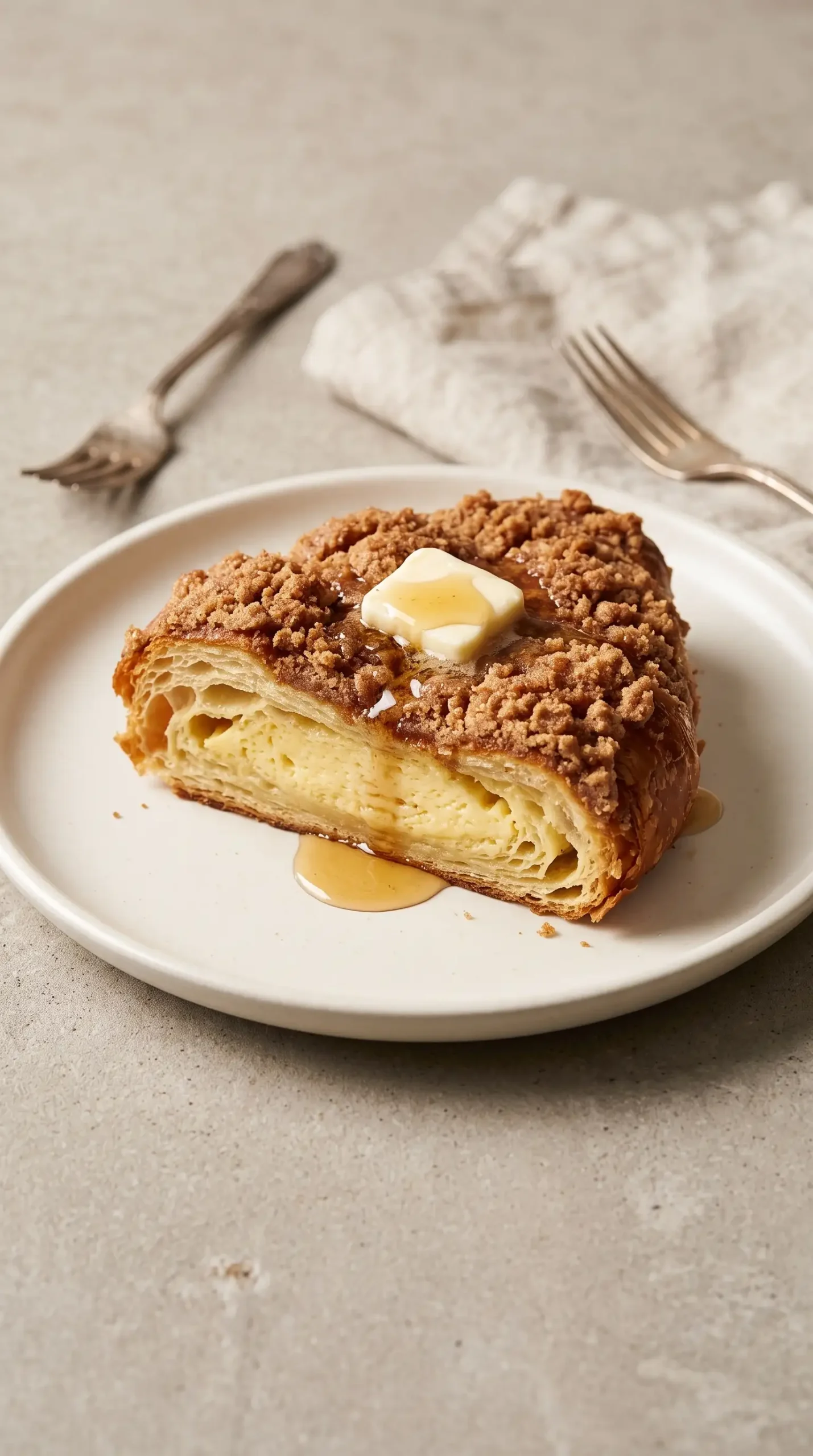
Maple syrup and butter complete the warm baked pastry layers by adding richness after the pan leaves the oven. The simple finish keeps attention on the contrast between the cinnamon crumb surface and the soft croissant center.
Croissant Layers Decide the Success of the Finished Bake
The croissant pieces determine how the dish comes together because their ability to absorb custard while maintaining structure controls the final texture. A careful balance between soaking and baking creates a breakfast bake with tender layers and a defined cinnamon topping.
Good results depend on watching the center as it cooks and allowing the pastry to transform without losing its character. That attention creates a baked croissant french toast with a soft interior, crisp topping, and rich flavor from simple ingredients.
Croissant French Toast Questions About Texture and Timing
Can croissant french toast be prepared the night before?
Yes, preparing the soaked croissant mixture ahead works well because the pastry has time to absorb the custard before baking. The crumb topping should remain separate until the bake is ready for the oven.
Why is my croissant french toast soggy in the middle?
A soggy center can happen when the pastry has absorbed more liquid than the oven has had time to set. Checking the interior before removing the pan helps determine when the custard has cooked properly.
Can I use fresh croissants for this breakfast bake?
Fresh croissants can be used, but their softer texture may absorb the custard differently. Slightly stale croissants are helpful because they hold their shape while taking in the flavors around them.
How do I make the topping more textured?
Keeping the butter cold while cutting it into the flour and sugar mixture helps maintain small crumbs. Those crumbs create a more distinct topping after baking.
Croissant French Toast with Cinnamon Crumb Topping
Croissant French Toast is a comforting breakfast bake with a soft custardy center, flaky pastry layers, and a sweet cinnamon crumb topping. It is perfect for a cozy morning when you want an easy make-ahead dish with rich texture and warm flavor.
Ingredients
Method
Preparation
- Grease a small baking pan with butter. Tear the croissants into small pieces and arrange them in the dish.
- Whisk together the eggs, milk, yogurt, sugar, and vanilla until combined. Pour the mixture evenly over the croissant pieces.
- Cover the pan and refrigerate overnight or for a few hours if preparing on a shorter schedule.
Topping
- Combine the flour, brown sugar, cinnamon, and salt. Cut in the cold butter with a food processor or your fingers until the mixture forms small crumbs.
Baking
- Preheat the oven to 350°F (177°C). Sprinkle the crumb mixture over the soaked croissant mixture in the pan.
- Bake for 30-45 minutes, depending on the preferred soft or crisp texture. Check that the center is fully cooked before removing the pan from the oven.
Serving
- Serve warm with butter and a drizzle of maple syrup.
Notes
Keep the crumb topping separate until baking so it stays distinct on top of the soaked croissant mixture.