From breakfast to dinner, from wholesome meals to indulgent desserts, Nexa Recipes offers quick, easy, and delicious ideas for every occasion and every moment.



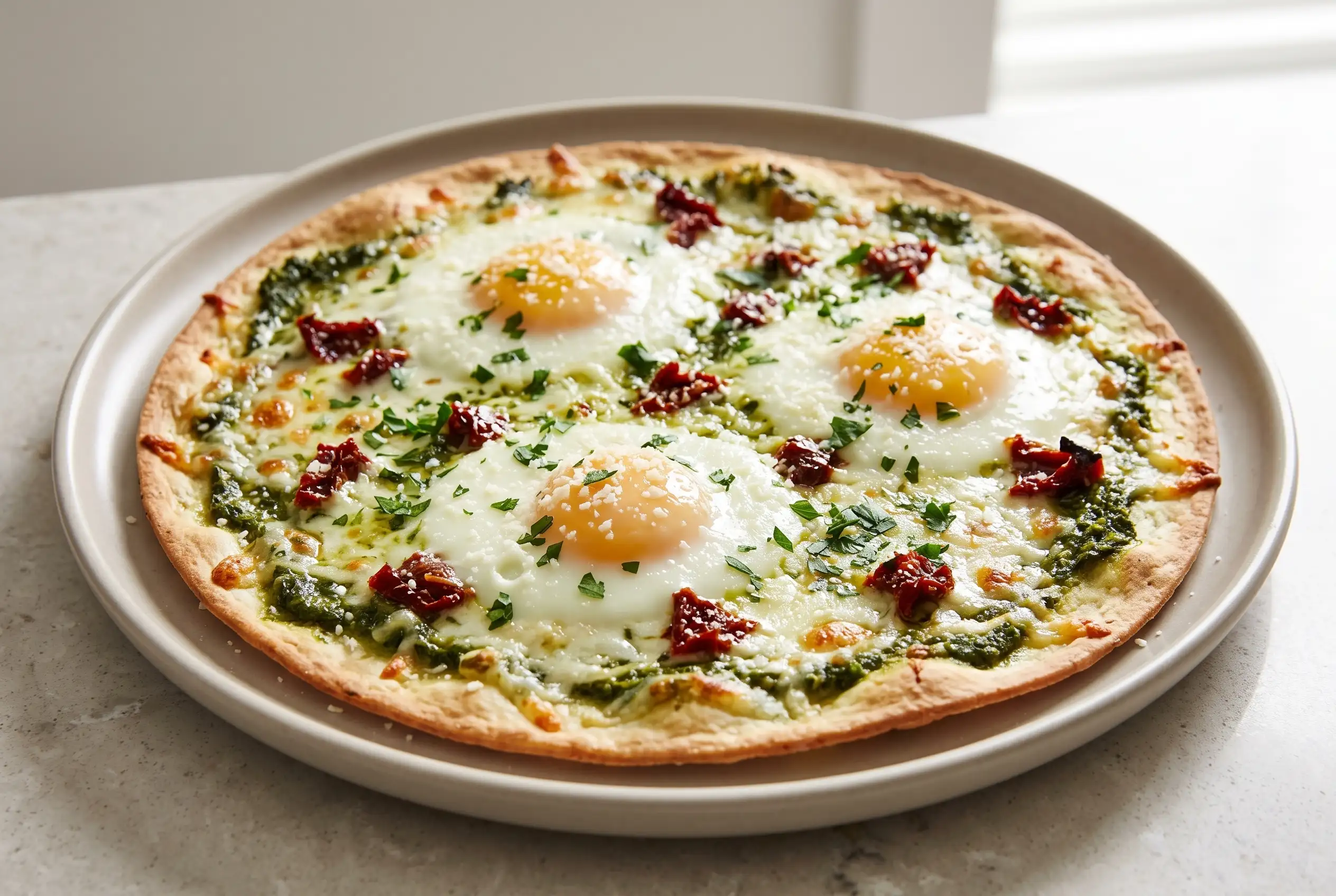 This Recipe
Breakfast pizza brings together a crisp crust, creamy kale pesto, melted mozzarella, sun dried tomatoes, and baked eggs in a format that turns classic pizza techniques toward the morning table. Breakfast Pizza with Kale Pesto and Sun Dried Tomatoes depends on a few important choices: managing very high oven heat, placing eggs carefully, and balancing rich toppings so the crust stays firm enough to support every slice.
Breakfast Pizza Builds a High-Heat Breakfast Foundation
Morning pizza succeeds because the crust and toppings are treated as connected parts of one cooking process. A thinly stretched crust benefits from intense heat because the surface can brown quickly while the interior stays tender. The oven temperature matters most when raw eggs are added, since the crust, cheese, and eggs all need to finish close together.
Unlike a standard pizza topped only with cooked ingredients, breakfast pizza has a fresh egg layer that changes the timing. The eggs continue cooking slightly after leaving the oven, so watching their appearance near the end helps create the preferred texture. A soft yolk requires attention during those last moments when the cheese is already melted and bubbling.
Kale pesto breakfast pizza offers a different approach from tomato-based morning pizzas. The herb sauce spreads directly onto the crust and creates a flavorful base that connects the mozzarella, eggs, and sun dried tomatoes without adding extra preparation steps.
Kale Pesto Defines the Pizza Flavor Balance
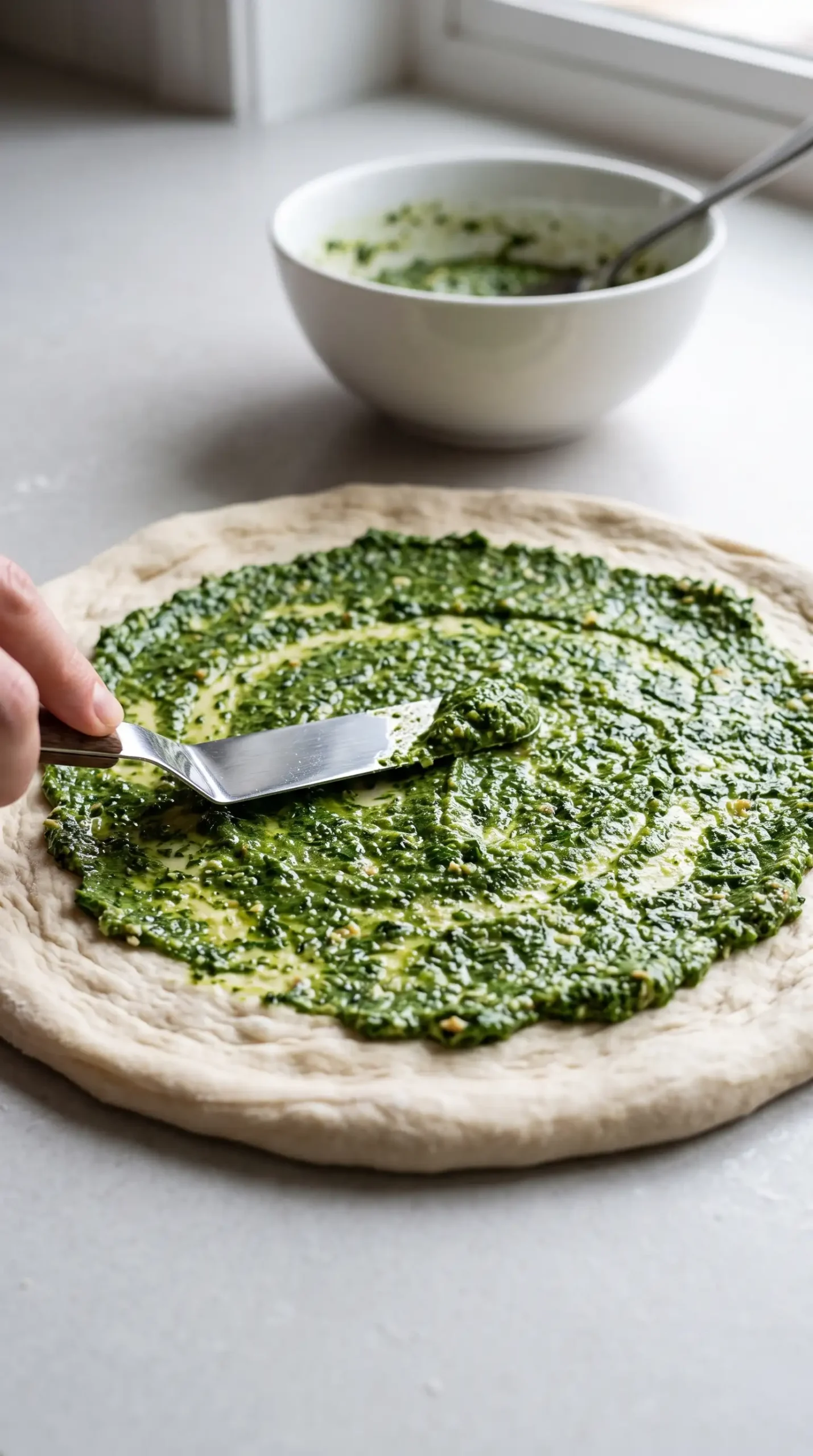
The pesto layer is the ingredient decision that most affects the character of the pizza. A thin coating allows the crust to bake properly while still providing enough basil and kale flavor throughout each slice. Because pesto thickness varies, the amount needed can change depending on the consistency of the sauce.
Freshly prepared kale pesto works well here, but a prepared pesto can fit the structure of the dish too. The important consideration is spreading it evenly so one area of the crust does not become heavier with moisture than another.
Cheese placement also matters after the pesto is added. Mozzarella creates a melted surface that holds the eggs and tomatoes in place, while Parmesan and parsley added after baking provide a finishing contrast.
Sun Dried Tomatoes and Eggs Create the Topping Structure
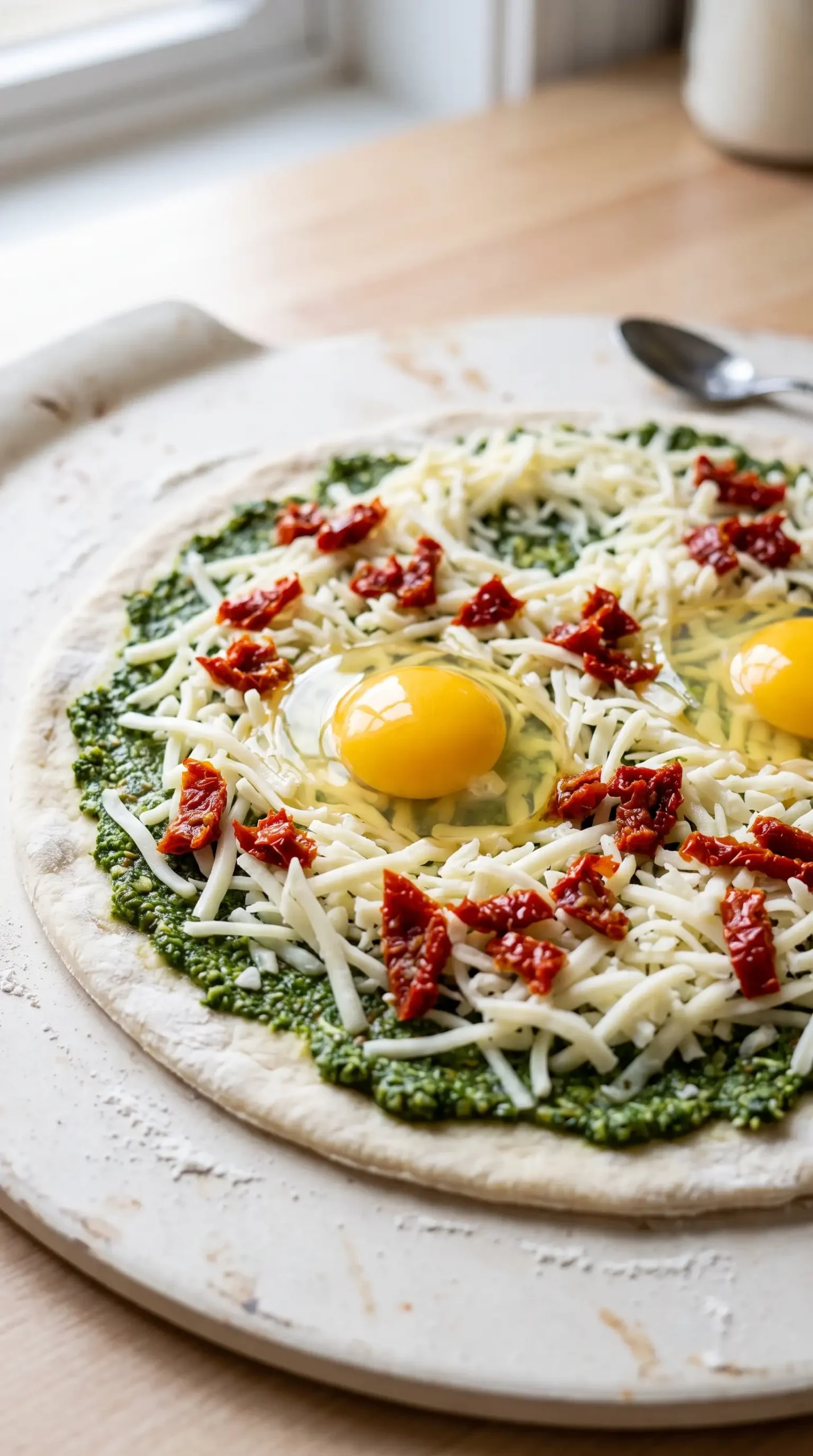
Sun dried tomatoes bring concentrated flavor and a chewy texture that balances the softer toppings. Chopped pieces should be distributed across the pizza so each section receives some of their savory sweetness without covering the areas where eggs will cook.
The egg wells are an important structural choice because they prevent the eggs from sliding across the cheese during baking. Creating small spaces in the cheese layer gives the eggs a stable place to cook while keeping them surrounded by melted mozzarella.
Baked breakfast pizza with eggs depends on understanding that every topping affects the finish. Too much topping in one area can slow cooking, while an even arrangement helps the crust, cheese, and eggs reach the desired texture together.
| Topping decision | Cooking effect | Best practice |
|---|---|---|
| Thin pesto layer | Helps prevent excess moisture on crust | Spread evenly before adding toppings |
| Small tomato pieces | Distributes concentrated flavor | Arrange across the pizza surface |
| Egg wells in cheese | Keeps eggs positioned while baking | Create spaces before cracking eggs |
Breakfast Pizza With Kale Pesto Works Around Crust Texture
The crust determines how easily the finished pizza can be sliced and served. Stretching the dough thin enough allows the high heat to create a browned exterior while leaving room for the toppings to remain the focus.
High Heat Controls the Baked Breakfast Pizza with Eggs Finish
Strong oven heat is the main cooking control for this dish. The crust needs enough heat to develop color quickly, and the cheese needs enough intensity to melt around the eggs. Keeping the oven closed as much as possible helps maintain the temperature needed for that balance.
High temperatures are central to pizza texture because high pizza oven heat helps create the rapid crust expansion and browning that give the base a crisp exterior with a lighter interior.
Placement near the top of the oven helps expose the pizza to direct heat during baking. The last portion of cooking deserves close attention because a small timing change can move eggs from soft to firm and cheese from lightly browned to overly dark.
Different ovens circulate heat differently, so visual cues are more useful than relying only on a timer. Look for a baked crust, melted cheese, and eggs cooked to the preferred texture before removing the pizza.
Egg Placement Determines the Pizza Slice Experience
Eggs create the defining breakfast element, and their placement influences every slice. Spacing the eggs across the cheese allows portions to include crust, pesto, toppings, and egg together.
Common Breakfast Pizza Mistakes That Affect Eggs and Crust
Small errors can change the balance of breakfast pizza because the cooking window is short. Paying attention to moisture, topping arrangement, and egg doneness prevents the most common problems.
- Overloading the surface: Too many toppings can make it harder for the crust and eggs to finish at the same time.
- Skipping egg observation: Leaving the pizza unattended near the end can result in firmer yolks and darker cheese than intended.
- Spreading too much pesto: A thick sauce layer can add extra moisture and affect the crust texture.
- Opening the oven often: Frequent checks release heat that helps the crust bake properly.
Correcting these issues starts with adjusting the amount and placement of toppings. The pizza benefits from restraint because each component needs direct contact with the heat of the oven.
Another avoidable mistake is cutting immediately after removal. Allowing the pizza to stand briefly gives the eggs time to settle and makes slicing cleaner.
Choosing Toppings for Different Breakfast Pizza Styles
The base combination of pesto, cheese, tomatoes, and eggs can support additional toppings when desired. Cooked meats should already be prepared before being added, since the pizza’s short baking time is designed around finishing the crust, cheese, and eggs.
| Variation | Added ingredient | Adjustment to consider |
|---|---|---|
| Meat version | Cooked sausage, bacon, or chorizo | Distribute small amounts to avoid heavy areas |
| Vegetarian version | Keep pesto, tomatoes, cheese, and eggs | Maintain balanced topping coverage |
| Extra cheese finish | Parmesan topping | Add after baking for a finishing touch |
Serving Approaches Keep the Pizza Ready for the Table
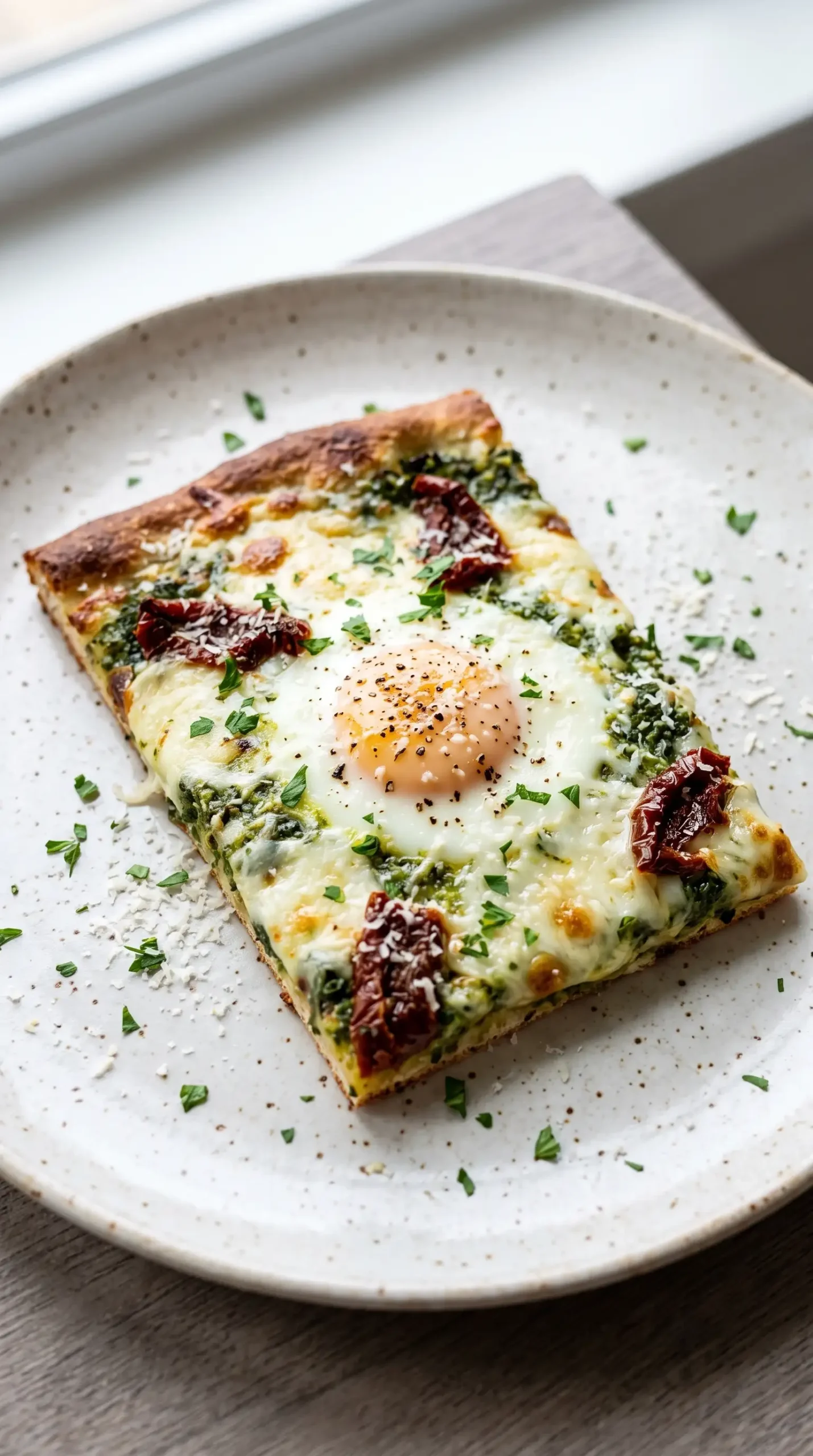
Fresh slices are easiest to serve once the cheese has settled slightly and the eggs have finished their carryover cooking. Cutting into manageable pieces keeps the toppings distributed and makes the pizza suitable for a shared breakfast or brunch setting.
Using Extra Dough and Toppings Efficiently
Pizza dough can often provide more than one baking opportunity when divided before stretching. Remaining dough can be stored for a future pizza, making it easier to prepare another combination of toppings later.
Additional toppings also offer flexibility. Cooked chorizo, bacon, or sausage can change the style of the pizza without changing the core technique. These additions work best when they are already cooked and added in a way that does not cover the eggs completely.
Ingredient preparation becomes simpler when each topping has a clear role. The pesto creates the base, mozzarella creates the melted layer, tomatoes provide concentrated pieces, and eggs create the breakfast focus.
Small Adjustments Change Kale Pesto Breakfast Pizza Results
Oven performance, dough thickness, and egg preference all influence the finished pizza. Watching the surface during the last stage of baking allows small adjustments that match individual preferences.
Pairings That Complement the Savory Breakfast Pizza
Fresh accompaniments can balance the richness of the pesto, cheese, and eggs. Simple fruit, coffee, or other brunch beverages can be served alongside the pizza without competing with its savory toppings.
Reheating and Saving Remaining Pizza Slices
Remaining slices can be warmed carefully to preserve the crust texture. Gentle reheating helps restore the melted cheese while avoiding excessive cooking of the egg topping.
Breakfast Pizza with Kale Pesto and Sun Dried Tomatoes Brings Timing Into Focus
Breakfast pizza works best when the crust, cheese, pesto, and eggs are treated as one connected bake. The strongest results come from controlling moisture, spreading toppings evenly, and paying close attention during the short period when the eggs finish cooking.
A well-timed oven bake keeps the crust browned, the mozzarella melted, and the eggs at the texture you prefer. Those decisions shape how every slice comes together from the first bite to the last.
Breakfast Pizza Soft Yolks Questions and Answers
How do I keep soft yolks on breakfast pizza?
Soft yolks depend on watching the pizza closely near the end of baking. Remove the pizza when the eggs have reached the texture you like because they continue firming slightly after leaving the oven.
Can I use store bought pesto for this pizza?
Yes, store bought pesto can be used in place of kale pesto. Adjust the amount based on how thick the pesto is so the crust does not receive an overly heavy sauce layer.
Should breakfast pizza toppings be cooked before baking?
Only toppings that need cooking before the short bake should be prepared ahead. Sausage, bacon, and chorizo should be cooked before adding, while the eggs are placed raw so they can bake with the pizza.
How can I prevent the crust from becoming soggy?
A thin pesto layer, even topping distribution, and strong oven heat help protect the crust texture. Avoiding excess sauce or crowded toppings also keeps the base easier to slice.
Breakfast Pizza with Kale Pesto and Sun Dried Tomatoes
Breakfast pizza with kale pesto combines a crispy crust, creamy melted cheese, savory toppings, and baked eggs for a flavorful brunch dish. It is a fun and satisfying recipe for gatherings or a special breakfast.
Ingredients
Method
Preparation
- Prepare the pizza dough according to package directions.
- Preheat the oven to 500 degrees (260°C), or the hottest temperature your oven can reach.
- Divide the dough into two pieces. Stretch one piece into a 14-inch round, using flour as needed to prevent sticking, then transfer it to a baking sheet, pizza pan, or baking stone. Freeze the remaining dough piece for a future pizza.
Assembly
- Spread a thin layer of kale pesto over the dough. Arrange the sun dried tomatoes evenly over the pesto, then add the mozzarella cheese.
- Create three or four small openings in the cheese layer and place the raw eggs into the spaces.
Baking
- Bake the pizza on the highest oven rack for 6-10 minutes, until the crust is baked, the cheese is melted and bubbly, and the eggs reach your preferred doneness.
- Remove the pizza from the oven, allow it to stand for a few minutes, then slice and serve.
Notes
The timing of this recipe is important for achieving soft eggs and browned cheese. Avoid opening the oven frequently because maintaining high heat helps the crust bake properly. Watch the pizza closely near the end of baking since ovens vary, and remember that the eggs will continue to firm slightly after removal. Cooking the pizza a little too long can quickly lead to darker cheese and firmer yolks. The amount of pizza produced can vary depending on how much is served, and cooked sausage, bacon, or chorizo can be added if desired.