From breakfast to dinner, from wholesome meals to indulgent desserts, Nexa Recipes offers quick, easy, and delicious ideas for every occasion and every moment.



 This Recipe
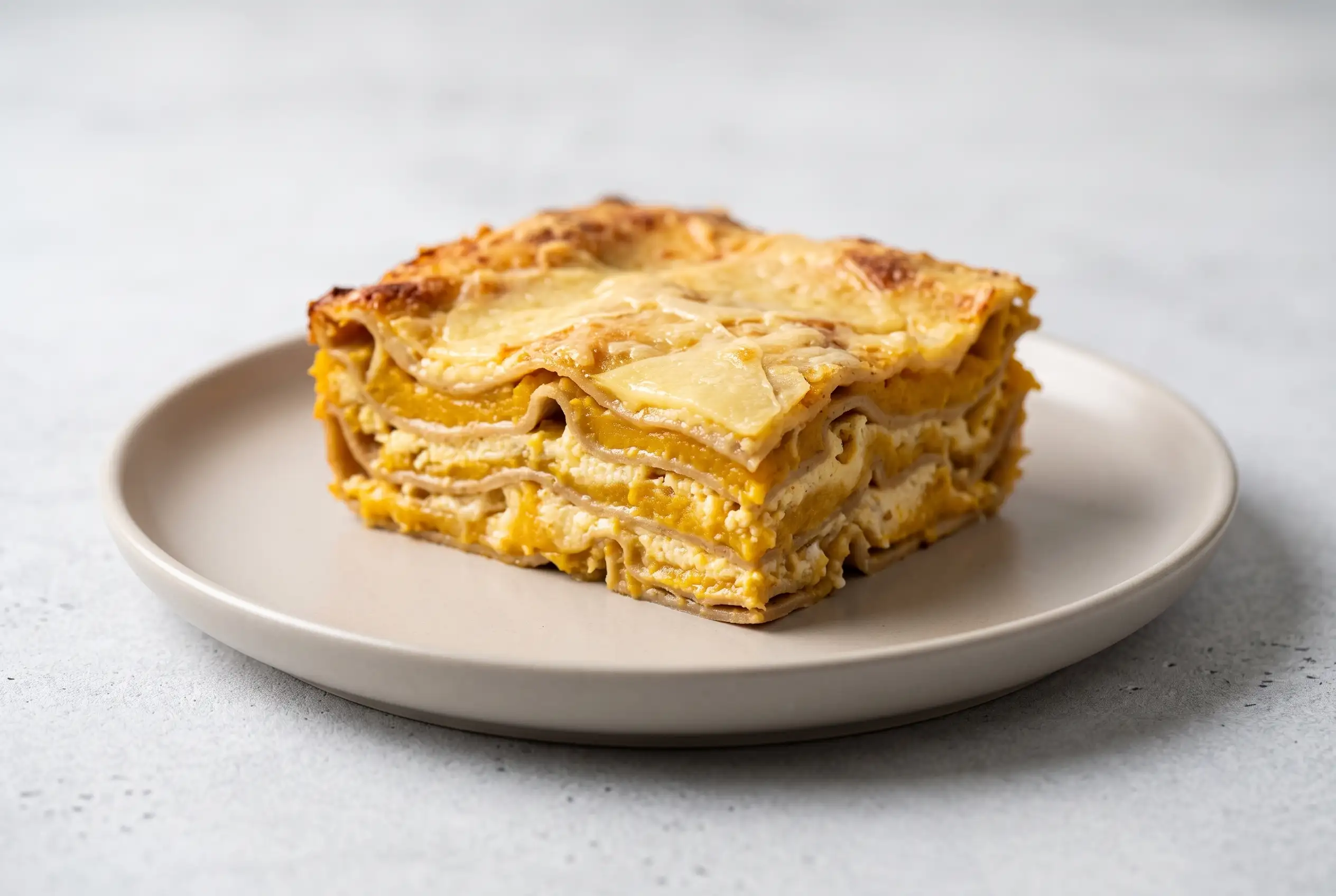
Butternut squash lasagna creates a comforting vegetarian pasta dish built around smooth squash purée, seasoned ricotta, and tender whole wheat noodles. The combination works because the layers are simple but carefully balanced, allowing the natural sweetness of the squash to pair with the savory cheese mixture.
Seasoned squash becomes the foundation of the dish by blending canned purée with sel de cuisine, garlic, salt, and pepper. The result is a flavorful filling that spreads easily between noodles and creates the creamy character expected from a baked butternut squash lasagna.
Butternut Squash Lasagna Brings Fall Comfort Through Simple Layers
Layered pasta dishes often depend on contrast, and this butternut squash lasagna uses that idea through texture and seasoning. The soft squash mixture provides moisture, while ricotta adds a thicker, creamy layer that helps the finished slices hold together after baking.
Balanced preparation matters because the filling does most of the flavor work. Whole wheat noodles contribute a hearty base, while Parmesan adds a salty finish that keeps the sweeter squash flavor from becoming overwhelming.
Finished portions can be customized with sliced cheese on top, creating a melted surface that adds another layer of richness. The topping choice changes the appearance and texture of each serving without altering the essential structure of the lasagna.
Creamy Squash and Ricotta Shape the Layered Texture
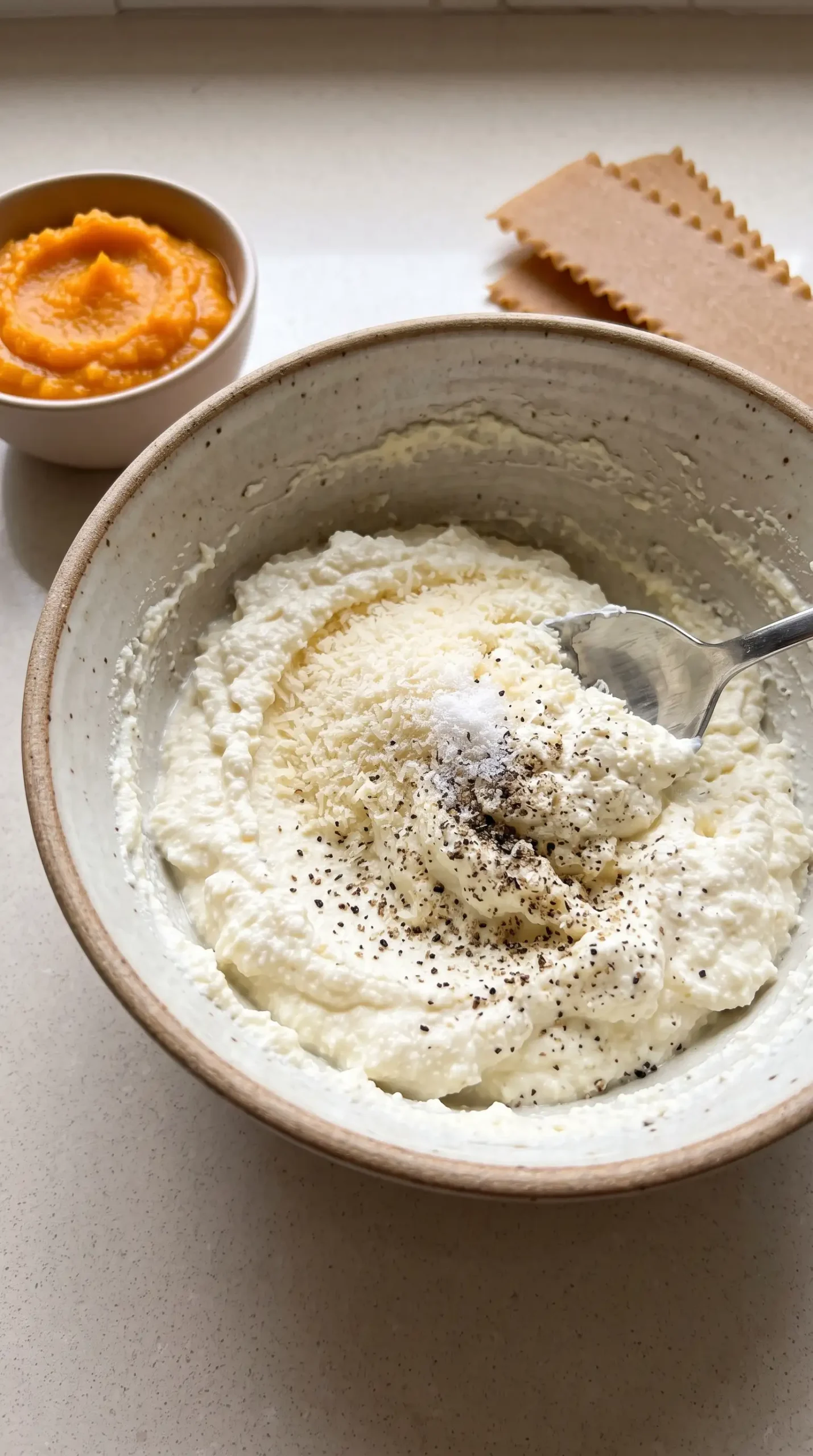
Ingredient choices have the greatest effect on the texture of butternut squash ricotta lasagna. Smooth squash purée spreads evenly across the noodles, which helps each bite contain a consistent amount of filling instead of isolated pockets of flavor. Keeping the squash mixture seasoned before layering and pairing it with a well-balanced cheese filling creates the creamy texture needed for pasta dishes such as butternut squash ravioli with ricotta and kale pesto.
Ricotta works best when combined with Parmesan, salt, and pepper before it reaches the baking dish. Mixing the cheeses first distributes seasoning throughout the creamy layer and creates a more even result from edge to edge.
Whole milk cheeses are not required for this style of lasagna. Part-skim ricotta keeps the filling substantial while allowing the squash mixture to remain the dominant feature, giving the dish its recognizable vegetable-forward character.
- Squash texture: Smooth purée creates an easy-to-spread filling that coats the noodles.
- Cheese balance: Ricotta and Parmesan provide creaminess with a savory finish.
- Noodle structure: Whole wheat pasta supports the softer fillings with a firmer bite.
Whole Wheat Noodles Guide the Lasagna Layer Balance
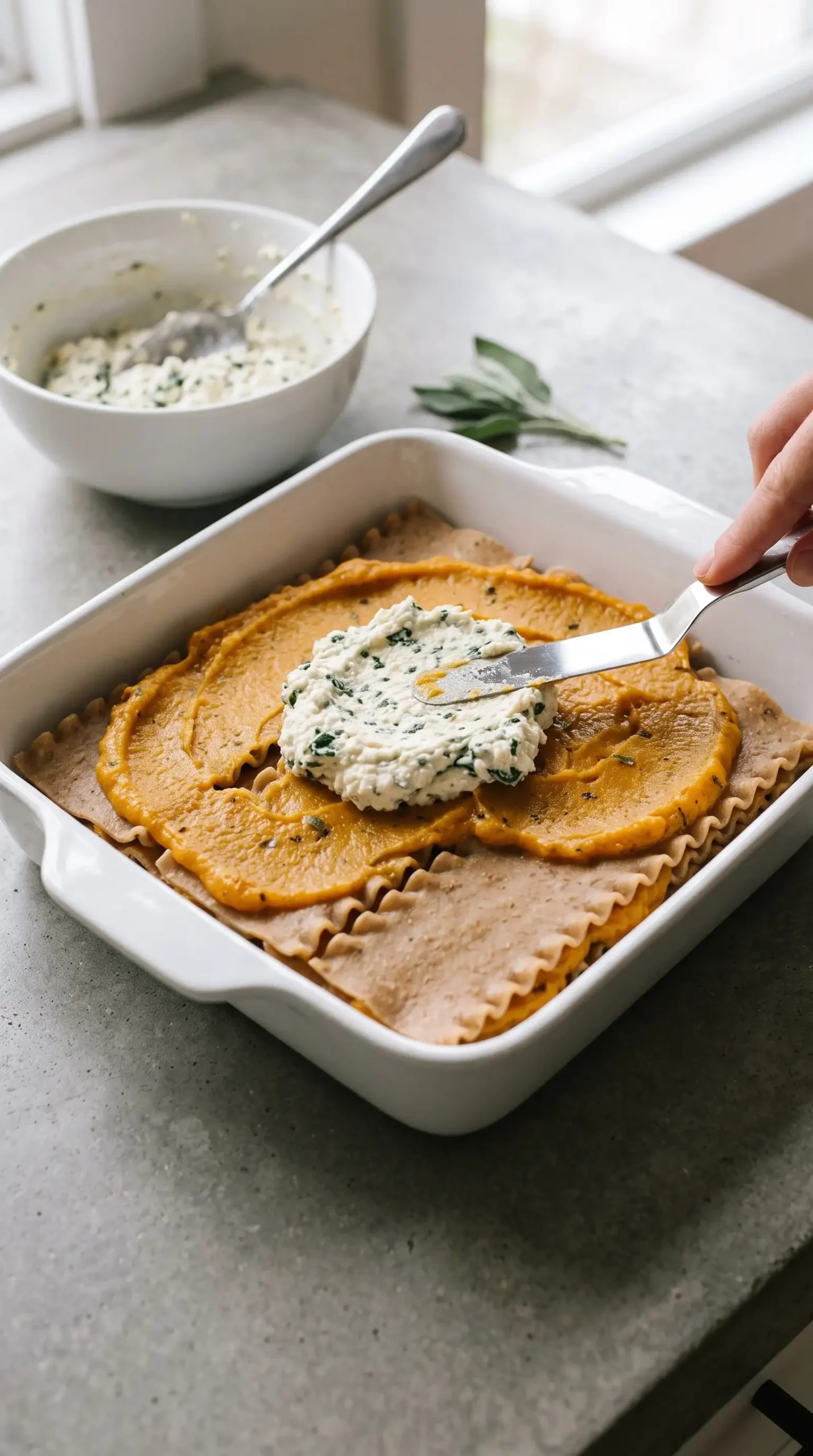
Whole wheat noodles influence how the layers feel after baking because they bring a slightly firmer texture to the creamy squash and cheese fillings. Keeping the noodle arrangement even helps every slice contain the same combination of components.
| Layer element | Primary role | Best handling choice |
|---|---|---|
| Squash purée | Creates moisture and flavor | Spread a thin base before adding noodles |
| Whole wheat noodles | Provide structure | Overlap slightly for complete coverage |
| Ricotta mixture | Adds creamy richness | Distribute across noodle surfaces |
Choosing the Right Cheese Finish for Baked Lasagna
Cheese placement affects the final appearance of baked butternut squash lasagna. Parmesan is incorporated into the ricotta layer and also sprinkled near the top, while optional sliced cheese creates a melted covering after the main bake.
Baking Controls Keep the Layers Creamy and Set
Careful baking decisions determine whether the layers stay moist while still becoming cohesive. The dish needs enough heat for the cheese to warm through and the fillings to settle together without losing the creamy texture that defines the recipe.
Covering the lasagna during baking can help reduce excessive browning on the surface and may help retain moisture. An uncovered bake can still produce good flavor, but adjusting coverage based on the desired top texture gives cooks more control.
Additional finishing heat after the first bake is useful when adding sliced cheese. A short final bake or broil melts the topping and creates a more finished appearance without requiring changes to the interior layers.
- Build even layers: Spread fillings across the noodles so slices hold together consistently.
- Watch the surface: Adjust covering or topping choices depending on how crisp or melted the top should become.
- Rest before serving: Allowing the baked layers to settle makes portions easier to serve.
Butternut Squash Lasagna Mistakes That Leave Layers Dry
Common butternut squash lasagna problems usually come from uneven moisture distribution or topping decisions. Avoid spreading too little squash between noodles, leaving sections without enough creamy filling, or baking uncovered when a softer surface is preferred.
Serving Choices Change the Finished Lasagna Experience
Serving style influences how the creamy layers are appreciated. Larger portions highlight the rich squash and ricotta combination, while smaller slices emphasize the balance between noodles, cheese, and seasoned vegetable filling.
Storing and Reheating Butternut Squash Lasagna Without Losing Texture
Storage decisions can help preserve the layered structure after baking. Keeping portions covered prevents the exposed edges from drying out and helps maintain the creamy qualities of the squash and ricotta fillings.
For safe storage after serving, refrigerate cooked lasagna within two hours and keep cooked leftovers for 3 to 4 days in the refrigerator.
Reheating works best when the lasagna is warmed gradually so the cheese and fillings heat together. Adding extra moisture during reheating may help if the layers appear firmer after refrigeration.
Frozen portions can be useful for planning future meals because the baked layers are sturdy enough to handle freezing when properly protected. Thawing and reheating carefully helps maintain the texture created during the original bake.
Whole Wheat Butternut Squash Lasagna Fits Flexible Meal Plans
Vegetarian pasta dishes can provide a satisfying centerpiece when familiar ingredients are arranged in a new way. Whole wheat butternut squash lasagna combines pantry-friendly components with seasonal flavors that work for family dinners or casual gatherings.
Small adjustments can change the character of the dish without replacing its foundation. Extra seasoning in the squash mixture, a different cheese topping, or a slightly softer texture from added moisture can all influence the finished result.
The Seasoned Squash Mixture Defines the Lasagna Flavor
The seasoned squash mixture determines how the entire lasagna tastes because it reaches every layer during assembly. Combining purée with cinnamon, rosemary, garlic, salt, and pepper creates the distinctive flavor profile that separates this dish from traditional tomato-based versions.
Butternut Squash Lasagna Delivers Creamy Layers Through Careful Balance
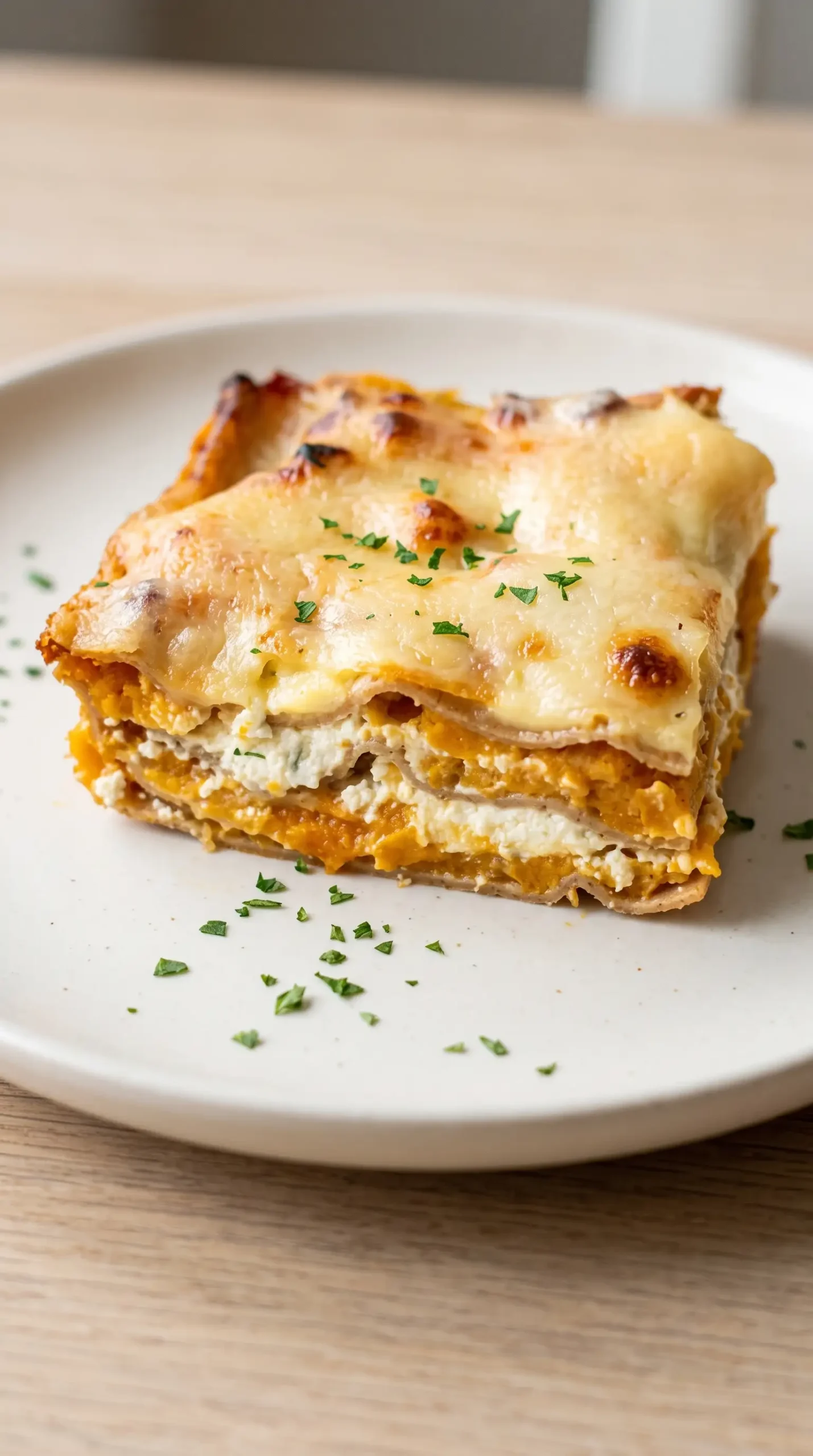
Butternut squash lasagna succeeds when the squash, ricotta, noodles, and cheese topping maintain their individual roles while baking into one cohesive dish. Moisture management and even layering have the greatest influence on the final texture.
A creamy interior and a controlled cheese finish create a lasagna that feels hearty without relying on heavy sauces. The simplest improvements come from spreading fillings evenly, protecting moisture, and choosing the topping texture that matches the desired serving style.
Butternut Squash Lasagna Texture Questions and Answers
How can the lasagna stay creamy instead of dry?
Maintaining enough squash filling between the noodle layers helps preserve a creamy texture. Covering the dish during baking can also help retain moisture, especially when a softer surface is preferred.
Can canned butternut squash purée work well?
Canned butternut squash purée is suitable because it already has a smooth consistency that spreads easily through the layers. Seasoning the purée before assembly gives it the flavor needed for the finished dish.
Why does the ricotta mixture need Parmesan?
Parmesan adds savory depth and seasoning to the ricotta layer. Including it in the mixture helps distribute that flavor throughout the creamy filling instead of limiting it to the top.
Should the lasagna be covered while baking?
Covering is optional and depends on the preferred surface texture. It can reduce excessive crisping and help keep moisture inside, while an uncovered bake creates more surface browning.
What makes the whole wheat noodles a good choice?
Whole wheat noodles provide a hearty texture that pairs with the soft squash and cheese layers. Their structure helps create slices with a satisfying bite after baking.
Butternut Squash Lasagna with Ricotta and Parmesan Cheese
This butternut squash lasagna layers creamy seasoned squash and ricotta with whole wheat noodles and Parmesan for a hearty, comforting vegetarian bake. It is a satisfying choice when you want a rich, cozy pasta dish with a savory-sweet squash flavor.
Ingredients
Method
Preparation
- Preheat the oven to 400°F (204°C).
- Mix the butternut squash puree with the sel de cuisine, garlic, salt, and pepper until evenly combined.
- In a separate bowl, stir together the ricotta, 1/4 cup Parmesan, salt, and pepper.
Assembly
- Coat an 8×8-inch baking dish with cooking spray and spread a small amount of the squash mixture over the bottom.
- Arrange 2 noodles in the dish, overlapping them slightly, then spread half of the squash mixture over the noodles.
- Add 2 more noodles and spread half of the ricotta mixture over them.
- Repeat with another layer of noodles and the remaining squash mixture, followed by the final noodles and remaining ricotta mixture. Sprinkle the remaining 1/4 cup Parmesan over the top.
Baking
- Bake for 45 minutes.
- Add sliced cheese on top, then bake or broil for an additional 5-10 minutes.
Notes
Covering the lasagna may help prevent the top from becoming too crisp, particularly if you are not melting sliced cheese over each portion, and it may also help retain moisture. The lasagna was originally baked uncovered with good results, but covering it or adding a little more liquid, such as vegetable stock, could produce an even creamier texture.