From breakfast to dinner, from wholesome meals to indulgent desserts, Nexa Recipes offers quick, easy, and delicious ideas for every occasion and every moment.



 This Recipe
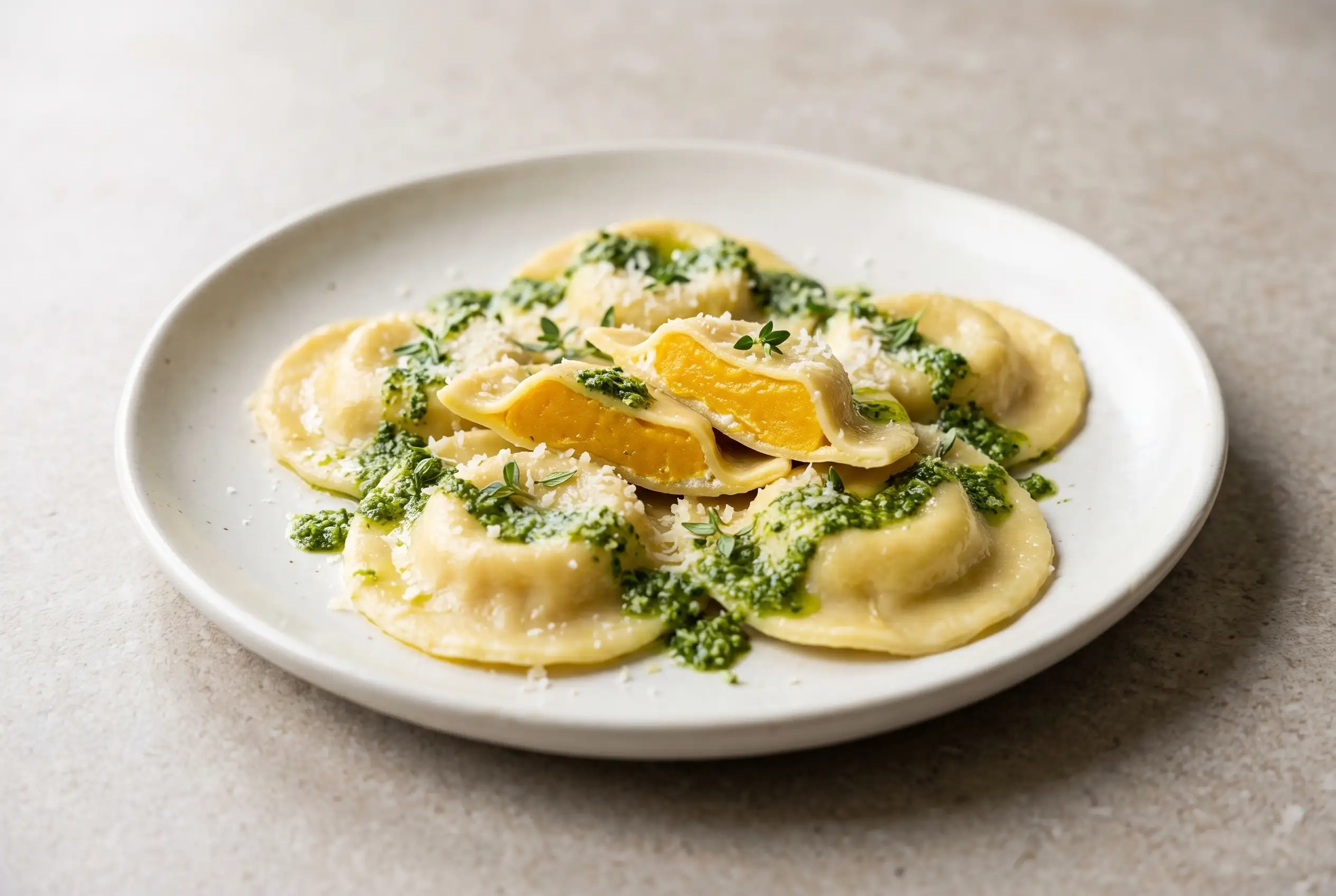
Butternut squash ravioli brings together a creamy roasted squash filling, tender pasta-like wrappers, and a bright kale pesto finish for a dish that feels special while using approachable ingredients. The combination works because the filling is rich and smooth, while the pesto adds a fresh contrast that keeps each bite balanced.
Homemade-style jumbo butternut squash ravioli creates a different experience from smaller pasta portions because the generous filling becomes the center of attention. Ricotta, Parmesan, herbs, and squash form a thick mixture that holds its shape inside the wrappers and delivers a comforting autumn-inspired flavor.
Kale Pesto Adds Freshness to Butternut Squash Ravioli
Kale pesto gives the finished pasta a colorful, savory layer that complements the naturally sweet squash filling. A fresh herb sauce such as kale pesto with almonds and parsley can bring nutty flavor, Parmesan notes, and herbal brightness to filled pasta while keeping the creamy center balanced.
Roasted Squash Creates the Right Ravioli Filling Texture
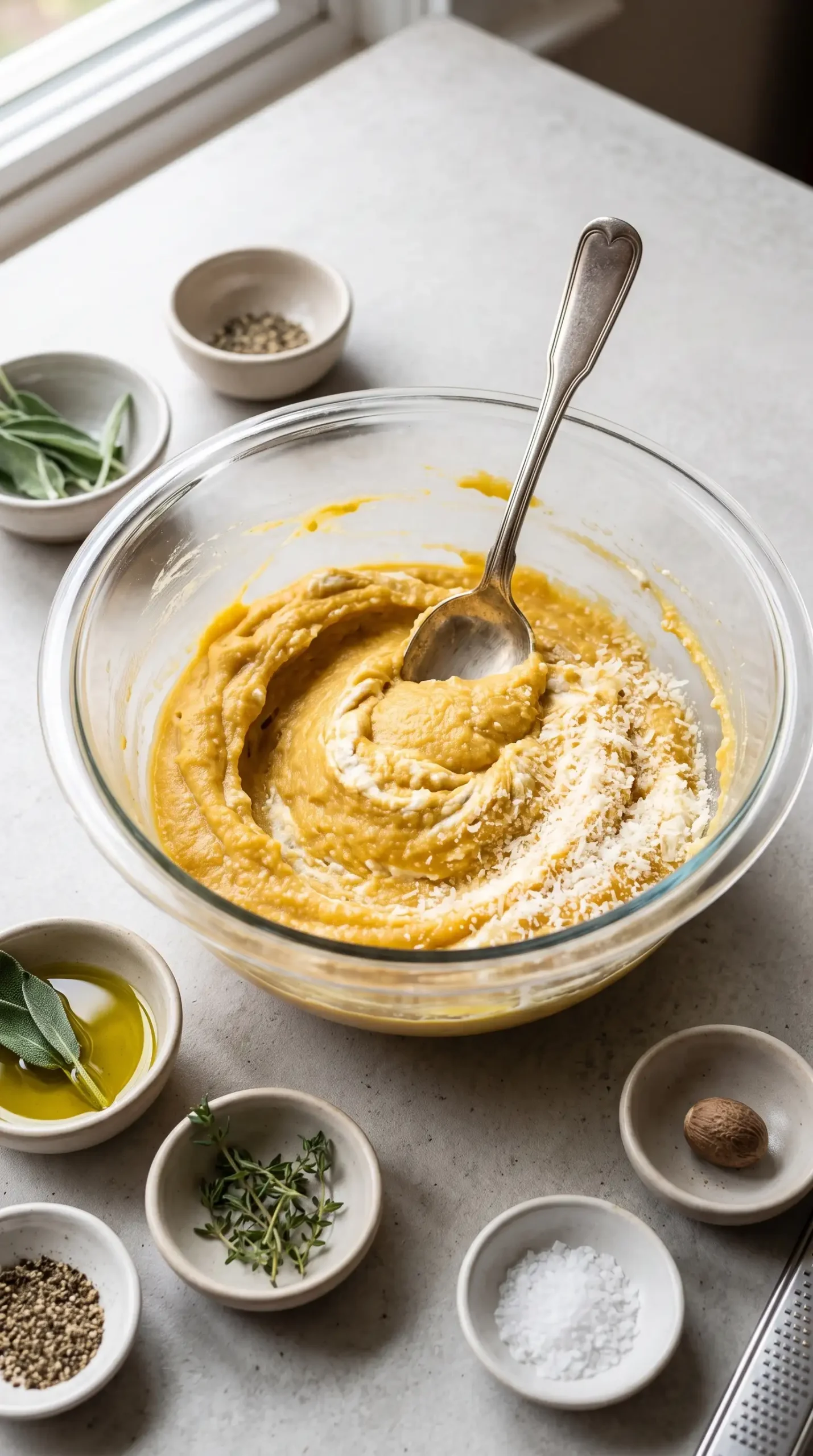
Choosing the right texture for the squash mixture is one of the most important decisions when making ricotta butternut squash ravioli. Cooked squash needs to blend smoothly with ricotta and Parmesan while remaining thick enough to stay inside the wrappers during cooking.
Blended squash provides the foundation, but the additional ingredients help shape the filling’s consistency. Ricotta contributes creaminess, Parmesan adds savory depth, and olive oil helps the mixture become cohesive after processing. A thick, sticky texture similar to soft dough makes portioning easier.
Seasoning decisions also influence the character of the filling. A small amount of nutmeg can add warmth, while garlic, thyme, sage, or rosemary can create a more savory profile. Herbs may be gently warmed in olive oil before blending when a softer garlic flavor and deeper herbal taste are preferred.
| Filling choice | Texture result | Best handling approach |
|---|---|---|
| Roasted butternut squash | Concentrated and smooth | Blend until thick and cohesive |
| Steam-in-the-bag squash | Soft and easy to process | Drain excess moisture if needed |
| Ricotta and Parmesan blend | Creamy with savory structure | Combine with squash before filling |
Large Ravioli Shapes Highlight the Creamy Center
Jumbo butternut squash ravioli uses larger wrappers to create a generous pasta shape where the filling remains the main feature. The wider surface also gives cooks room to seal the edges carefully and form rounded portions that look impressive when served.
Gentle Cooking Keeps Ravioli Sealed and Tender
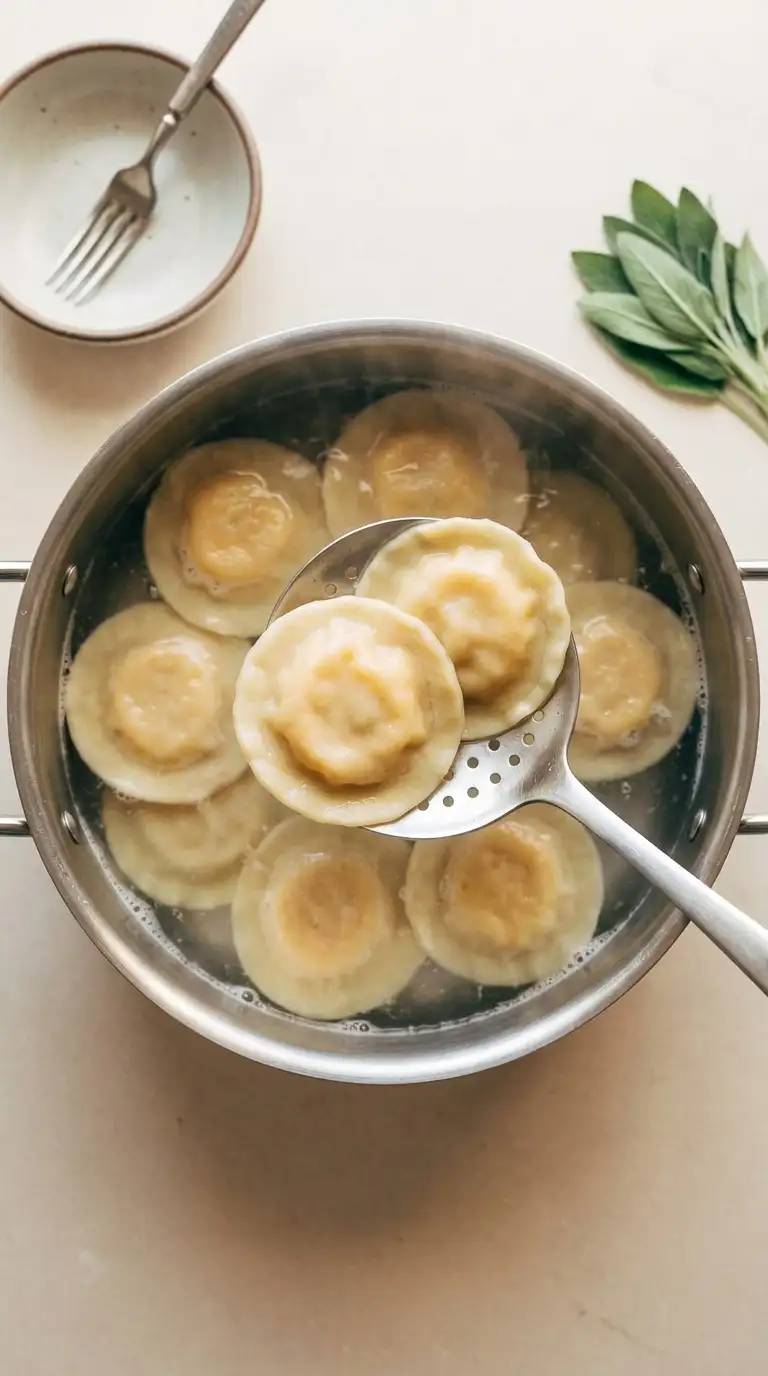
Successful ravioli cooking depends on protecting the filled wrappers while they move through the water. A large pot with enough space allows the pasta pieces to cook without excessive handling, and gentle ravioli cooking helps keep delicate filled pieces intact as they become tender.
Careful sealing makes a major difference before the ravioli reaches the pot. Pressing out excess air around the filling and creating a secure edge helps prevent openings during boiling. An egg wash between wrapper layers improves the seal and supports a neat shape.
After cooking, gentle draining preserves the structure of the pasta. Tossing the ravioli with a little olive oil helps reduce sticking while avoiding the rough movement that can tear the wrappers. The finished pasta is ready for kale pesto and additional Parmesan without needing heavy sauces that hide the squash flavor.
Common Butternut Squash Ravioli Mistakes to Avoid
Overfilling the wrappers can make butternut squash ravioli difficult to seal and more likely to break during cooking. A generous portion of filling creates the signature jumbo shape, but leaving enough space around the edges allows the wrappers to close completely.
Loose edges are another common problem because water can enter the ravioli and weaken the structure. Brushing the wrapper edges with beaten egg and pressing firmly around the filling creates a stronger connection between the two layers.
Rough handling after boiling can also damage the finished pasta. Ravioli should be lifted and drained carefully because the cooked wrappers are tender and the creamy filling depends on the pasta staying intact.
- Filling texture: Keep the squash mixture thick enough to hold its shape before sealing.
- Wrapper seal: Remove gaps around the edges so the filling stays contained.
- Water handling: Move cooked ravioli gently to protect the delicate wrappers.
Kale Pesto Balance Completes the Pasta Presentation
Kale pesto works best as a finishing element for butternut squash ravioli with kale pesto because its vibrant flavor supports the filling without covering it. A light coating allows the squash, cheese, and herb notes to remain noticeable in every serving.
Serving Ideas Bring Out the Ravioli Flavor
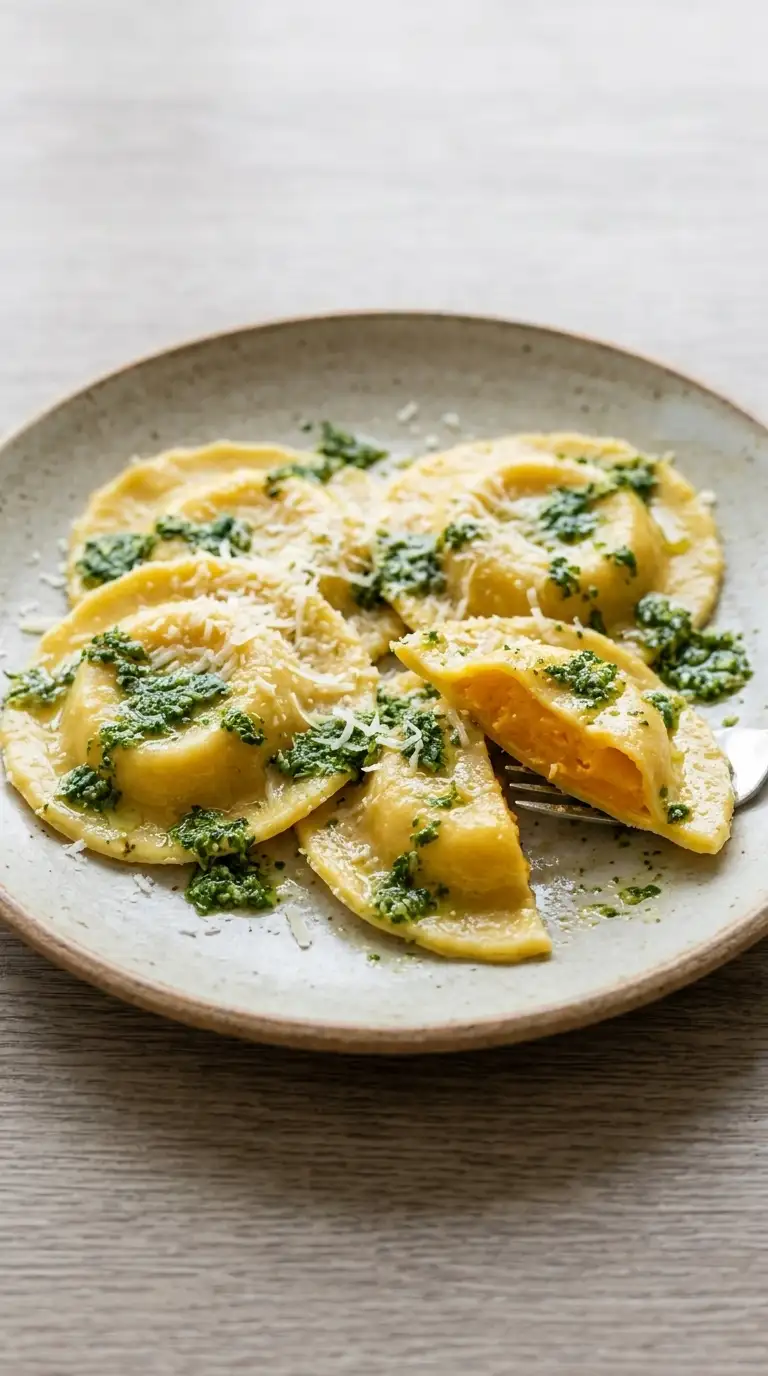
Warm ravioli benefits from simple finishing touches that emphasize its creamy interior. Extra Parmesan cheese adds a salty accent, while the green pesto creates visual contrast against the golden squash filling.
Seasonal meals often pair well with this pasta because the flavors are comforting without requiring a heavy preparation style. The large portions make the ravioli suitable for a dinner centerpiece, while the filling provides enough richness to feel satisfying.
Storage Choices Protect Filled Ravioli Quality
Cooked ravioli is best handled carefully during storage because the soft wrappers and creamy filling need protection from drying out. Keeping leftovers chilled in a covered container helps maintain the texture, and gentle reheating preserves the pasta better than aggressive cooking.
Creative Variations Keep Squash Ravioli Flexible
Different herb choices can change the personality of the filling while keeping the core structure of the dish intact. Thyme offers an earthy direction, sage creates a classic squash pairing, and rosemary provides a stronger herbal note when used carefully.
Alternative wrapper shapes can also change the appearance without changing the filling concept. Round or square wonton wrappers both work for creating filled pasta portions, allowing cooks to choose the style that fits their preferred presentation.
Additional adjustments should focus on maintaining the thick filling texture that makes the ravioli successful. Changes that add too much moisture can make sealing more difficult, so creamy additions and seasonings are best incorporated thoughtfully.
Butternut Squash Ravioli Gains Its Character Through Careful Balance
Butternut squash ravioli succeeds when the filling remains creamy, the wrappers stay secure, and the kale pesto adds a fresh finishing note. Each part has a clear role: squash creates the comforting center, cheese builds richness, and careful handling protects the pasta shape.
Large filled portions reward patience during preparation because the finished dish depends on texture as much as flavor. A thick filling and gentle cooking approach create ravioli that feels homemade, satisfying, and distinct from everyday pasta dishes.
Butternut Squash Ravioli Questions About Filling and Cooking
Can butternut squash ravioli filling be made ahead?
Yes, the squash filling can be prepared in advance and kept chilled until the ravioli is assembled. Keeping the mixture covered helps maintain its thick texture so it remains easy to portion into wrappers later.
How can the ravioli filling avoid becoming watery?
Using cooked squash with a concentrated texture helps prevent excess moisture in the filling. If steam-in-the-bag squash is used, allowing extra liquid to drain before blending can help maintain the thicker consistency needed for sealing.
Can different herbs replace the suggested seasonings?
Yes, herbs can be adjusted based on preference. Sage, thyme, rosemary, and garlic each create a different flavor direction, so small amounts can be added and tasted until the filling reaches the desired balance.
Why does my ravioli break while boiling?
Ravioli may break when wrappers are not sealed firmly, when too much filling presses against the edges, or when the pasta is handled roughly after cooking. Careful sealing and gentle draining help protect the finished pieces.
What makes jumbo ravioli different from smaller pasta shapes?
Jumbo ravioli places more emphasis on the filling because each piece contains a larger portion of squash mixture. The larger shape also creates a more dramatic presentation when paired with a simple pesto finish.
Butternut Squash Ravioli with Ricotta and Kale Pesto
Butternut squash ravioli combines creamy, rich squash filling with tender wrappers and fresh kale pesto for a comforting homemade-style pasta dish. It is a special yet approachable meal perfect when you want a flavorful, satisfying dinner.
Ingredients
Method
Preparation
- Add cooked squash, ricotta, Parmesan, olive oil, seasonings, salt, and pepper to a food processor. Pulse until the mixture is mostly smooth and reaches a thick, sticky consistency similar to cookie dough.
- Bring a large pot of water to a boil.
- Arrange half of the wonton wrappers on a work surface. Place 1-2 tablespoons of filling in the center of each wrapper. Brush the edges with beaten egg, top with another wrapper, seal the edges firmly, and gently shape the ravioli with your palm.
Cooking
- Cook the ravioli in batches in boiling water for about 5-8 minutes.
- Drain the ravioli carefully and toss with olive oil to help prevent sticking.
- Serve with kale pesto and additional Parmesan cheese.
Notes
Garlic and herbs such as fresh rosemary or thyme can be sautéed in the oil to deepen the herbal flavor and soften the garlic. A very small amount of nutmeg adds warmth, but it should be added lightly and adjusted to taste. Too much nutmeg can overpower the filling.