From breakfast to dinner, from wholesome meals to indulgent desserts, Nexa Recipes offers quick, easy, and delicious ideas for every occasion and every moment.



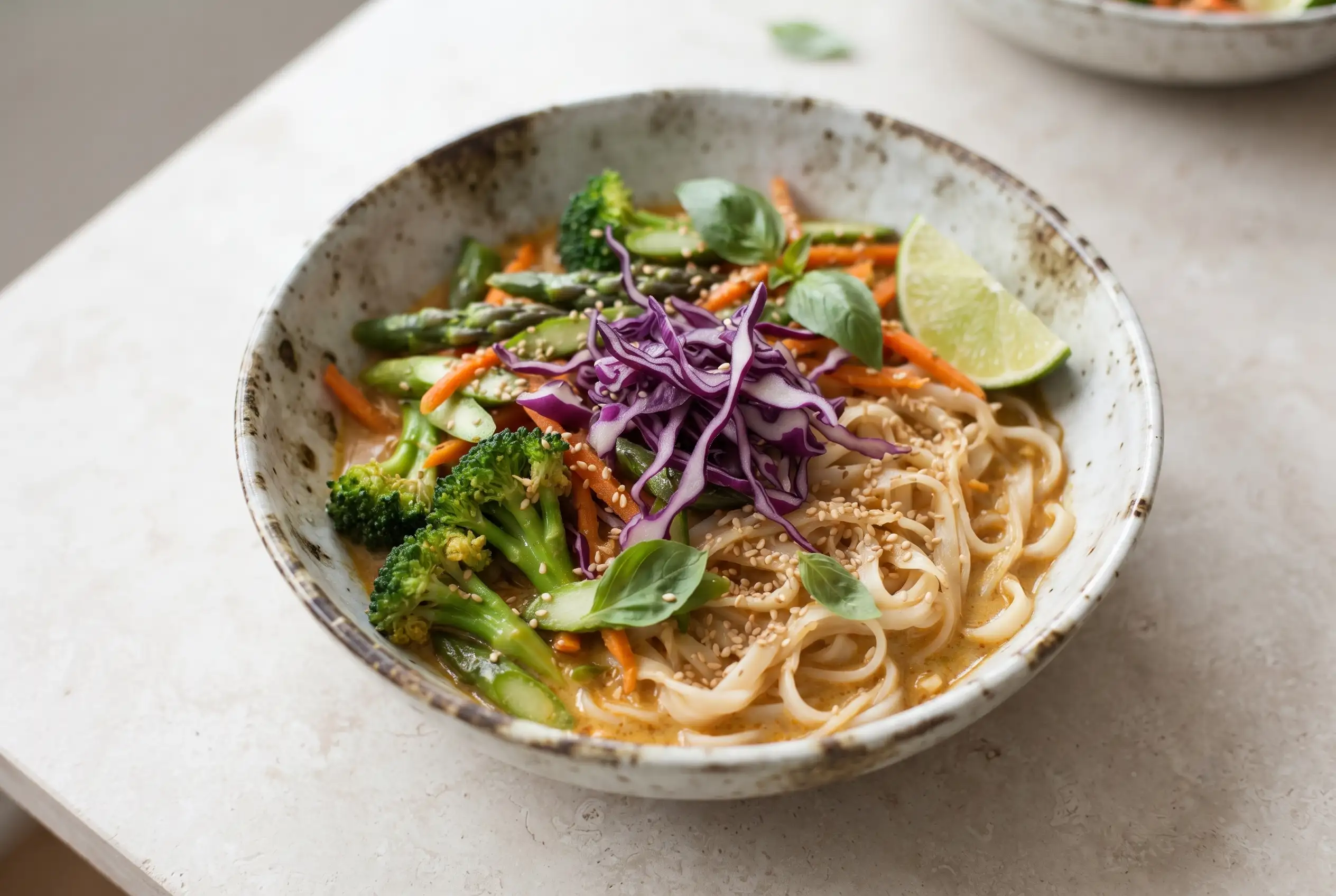 This Recipe
Coconut curry noodle bowls bring together silky coconut sauce, chewy rice noodles, and crisp vegetables in a meal built around contrast. The combination works because the sauce carries bold curry flavor while the fresh toppings keep every bite lively. With red curry paste, coconut milk, vegetables, herbs, and lime, these bowls create a balance of richness, brightness, and texture that feels satisfying without relying on complicated techniques.
Unlike many noodle dishes that depend on one dominant flavor, coconut curry noodle bowls are designed around layers. The noodles provide a neutral foundation, the curry sauce adds warmth and depth, and the vegetables create different textures throughout the bowl. Small decisions during preparation determine whether the finished dish feels creamy and cohesive or overly sticky and heavy.
Coconut Curry Noodle Bowls Create a Layered Weeknight Meal
Balanced bowls come from keeping each element recognizable after cooking. The coconut sauce should coat the noodles without overwhelming them, while vegetables should maintain enough firmness to provide contrast. That relationship is what makes the dish feel complete instead of blending into a single soft texture.
Many home cooks appreciate coconut curry noodle bowls because the format allows flexibility while preserving the core experience. The same curry base can support different vegetables, and the level of heat can shift depending on how much chili paste is added.
| Element | Purpose in the bowl | Key handling choice |
|---|---|---|
| Rice noodles | Carry the sauce and seasonings | Soak until tender before combining |
| Coconut curry sauce | Add creamy spice and richness | Simmer until slightly thickened |
| Vegetables | Create freshness and texture | Cook briefly to preserve color |
Red Curry Paste Shapes the Coconut Sauce Foundation
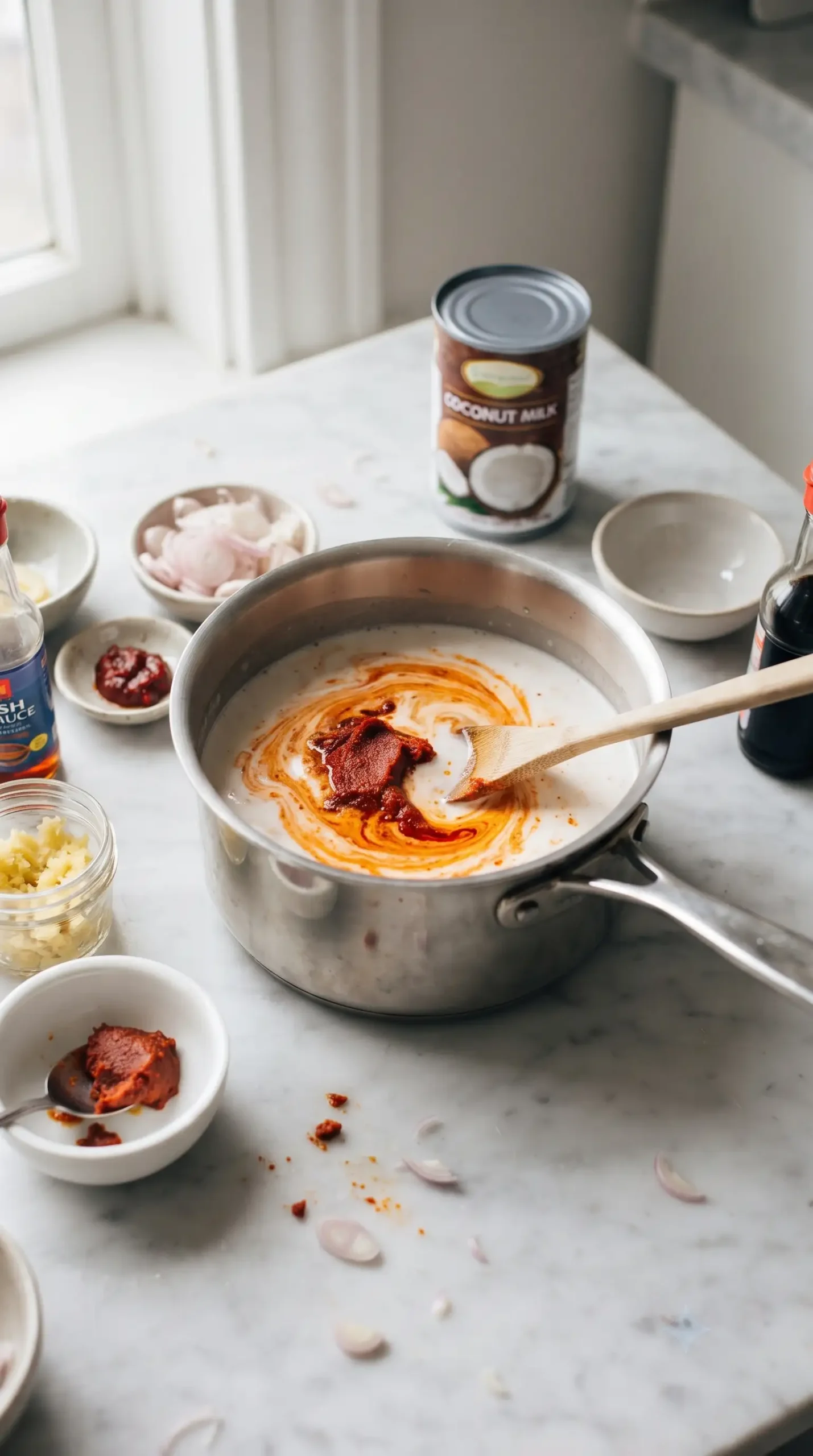
Flavor development begins with the curry paste because it determines the character of the sauce. Red curry paste combines naturally with coconut milk, creating the signature base found in red curry coconut noodle bowls. A short period of cooking the paste helps its flavors blend into the sauce before the liquid ingredients are added, as seen in coconut curry with coconut milk preparations that build richness through careful sauce layering.
Coconut milk provides the creamy body that connects the spicy, salty, and sweet notes. Sugar, fish sauce, soy sauce, and chili paste create a layered seasoning profile, allowing the sauce to taste rounded instead of relying only on heat.
For cooks adjusting the sauce, the choice between a thicker coating and a looser curry depends on adding broth. Including broth creates a more fluid consistency, while leaving it out produces a sauce that clings closely to the noodles.
Rice Noodles Need Texture Control for Better Bowls
Noodle texture has one of the biggest effects on the finished dish. Rice noodles continue absorbing liquid after they meet the curry sauce, so they need careful timing during preparation. Softening them before cooking the vegetables keeps the final combination easier to manage.
The ideal texture depends on choosing the right soaking or cooking approach for the noodle variety. Different thicknesses require different hydration times, so understanding rice noodle preparation methods helps prevent noodles from becoming too soft before they meet the curry sauce.
- Soak first: Tender noodles are easier to combine evenly with vegetables and sauce.
- Rinse after soaking: A quick rinse removes excess surface starch before tossing.
- Combine briefly: Extended cooking after adding sauce can make noodles too sticky.
Vegetable Coconut Curry Noodle Bowls Depend on Color and Contrast
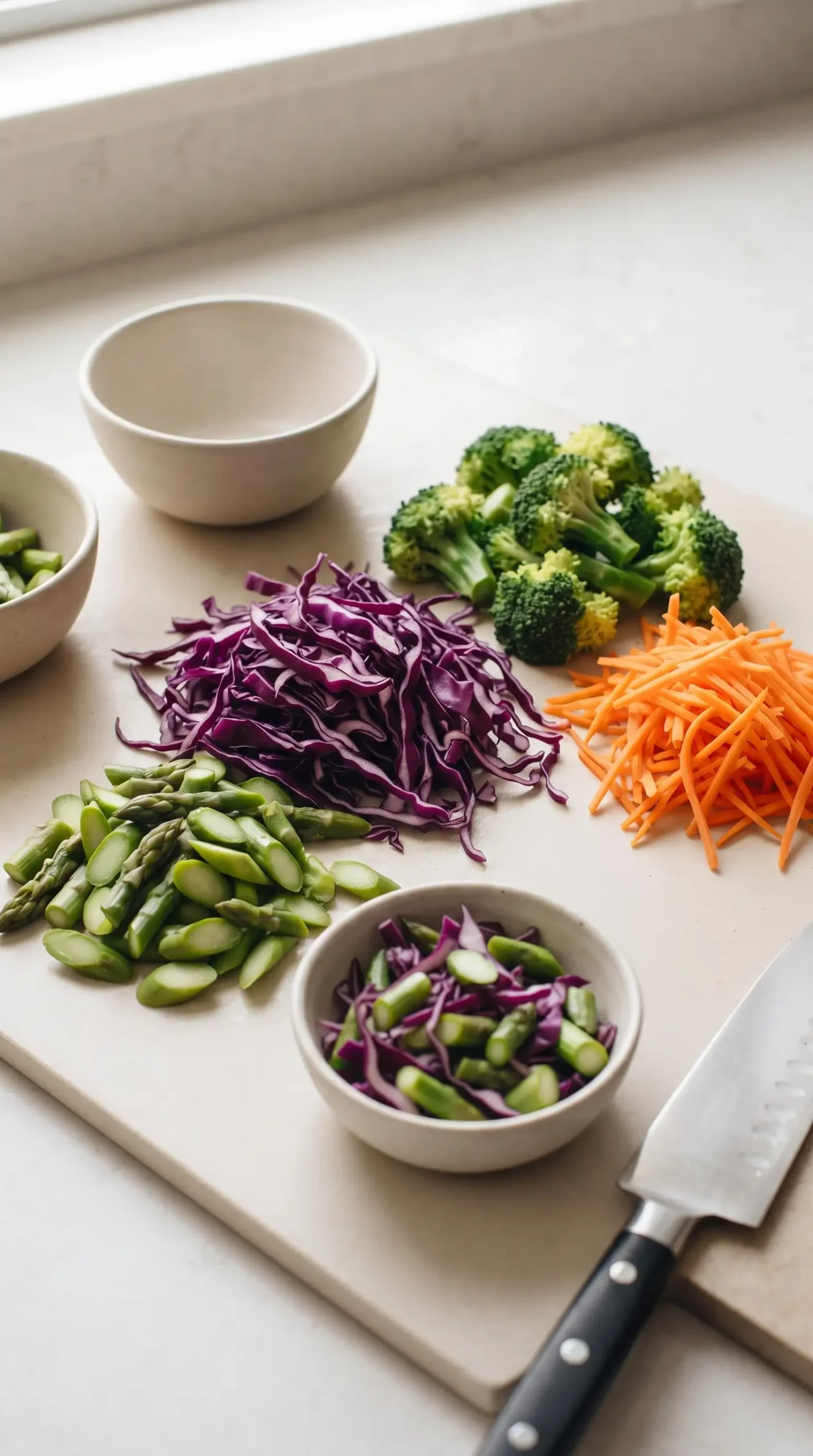
Vegetable choices define the freshness of these coconut curry rice noodle bowls. Broccoli, carrots, asparagus, and purple cabbage create different shapes, colors, and textures that stand apart from the creamy sauce. Keeping the vegetables visible helps the bowl feel vibrant.
The skillet cooking approach works because the vegetables only need enough time to become bright and tender while retaining structure. Overcooking would reduce the contrast that makes the dish appealing.
Fresh toppings also influence the overall balance. Sesame seeds, lime, and basil provide finishing touches that complement the richness of coconut milk and curry paste.
Shallots Ginger and Curry Paste Build the Flavor Base
Aromatics receive focused attention in the early cooking stage because they establish the background flavor. Shallots and ginger are cooked before the liquid ingredients arrive, allowing their savory and warming qualities to spread through the sauce.
The ingredient choices also make these coconut curry noodle bowls easy to customize. Fresh ginger can be replaced with ginger paste when convenience matters, while curry paste selection determines whether the finished bowl fits vegetarian or vegan needs.
Sauce Consistency Decides the Finished Bowl Style
Texture decisions start with the amount of liquid added to the curry. A broth addition creates a looser sauce that resembles a more spoonable curry bowl, while a reduced sauce creates a thicker coating around the noodles.
Small adjustments during simmering matter because the sauce needs enough body to stay connected with the noodles and vegetables. A slightly thickened consistency allows each serving to carry the curry flavor evenly.
Common Coconut Curry Noodle Bowls Mistakes That Affect Texture
Several issues can change the texture and balance of coconut curry noodle bowls. These problems usually come from timing choices that are easy to correct once the signs are clear.
- Sticky noodles: Cooking the noodles too long after adding sauce can create a clumped texture. Combine everything briefly once the sauce is added.
- Thin curry sauce: Adding broth may require additional simmering so the sauce develops enough body.
- Muted flavor: Reducing the seasonings too much can make the coconut milk dominate the bowl.
- Overcooked vegetables: Long cooking removes the bright texture that supports the creamy sauce.
Variations Keep Red Curry Coconut Noodle Bowls Flexible
Adaptability is one reason these bowls work well for different preferences. The vegetable combination can change while keeping the same coconut curry foundation, making the format useful when certain produce is available.
Vegetarian and vegan versions require attention to the curry paste and the salty seasoning component. Using a suitable curry paste and replacing fish sauce with a vegan alternative allows the dish to maintain its savory character.
| Adjustment | Change to make | Expected effect |
|---|---|---|
| More heat | Increase chili paste | Adds stronger spice without changing the base |
| More sauce | Add broth with coconut milk | Creates a looser curry consistency |
| Vegetarian version | Use suitable curry paste and replace fish sauce | Keeps the bowl plant-friendly |
Prep Choices Make Coconut Curry Rice Noodle Bowls Easier to Finish
Preparation order affects how smoothly the cooking process comes together. Having the noodles softened before the sauce and vegetables are ready prevents rushed decisions when multiple components meet in the pan.
Organizing the vegetables by their cooking needs also helps preserve their individual qualities. Quick-cooking additions can remain fresh-looking when they are not left in the heat longer than necessary.
Serving Details Bring Fresh Balance to Each Bowl
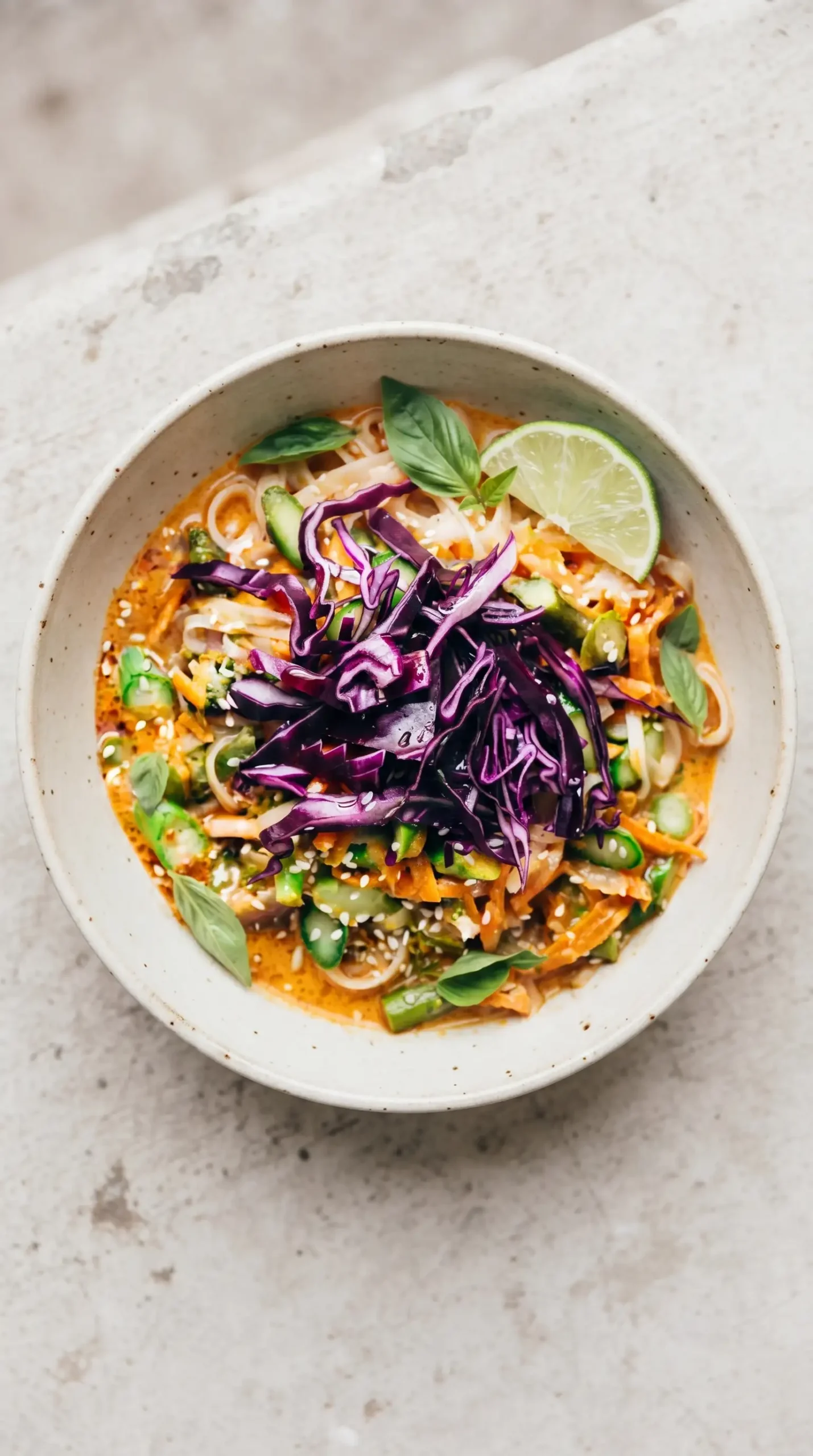
Presentation choices have a practical purpose in these bowls. Adding purple cabbage, sesame seeds, lime, and basil at serving keeps the brighter elements distinct from the creamy curry base.
Fresh finishes are especially useful with rich sauces because they introduce contrast after cooking is complete. A squeeze of lime can brighten the coconut flavor, while herbs add a fresh aroma to each portion.
Leftover Handling Preserves Noodle Texture
Stored portions of coconut curry noodle bowls may continue absorbing sauce as they sit. Gentle reheating and small adjustments with liquid can help restore a softer, more balanced texture when enjoying leftovers.
Keeping portions properly chilled after serving also protects the quality of the noodles and vegetables. Separate storage can be helpful if you want to maintain more texture in later servings.
Coconut Curry Noodle Bowls Suit Different Dietary Preferences
These bowls can fit several dietary approaches with careful ingredient choices. The main considerations involve the curry paste, fish sauce, and the type of broth used in the sauce.
For a vegetarian or vegan preparation, selecting a compatible curry paste and replacing fish sauce preserves the savory profile. Additional soy sauce can help adjust the seasoning if needed.
Curry Bowl Adjustments Help Control Spice and Sauce
Heat level is easy to personalize because chili paste is added separately from the main curry foundation. Mild servings can keep the suggested amount, while spice-focused versions can increase the chili element.
Beyond spice, the sauce style can also be adjusted according to preference. A thicker coating suits noodle-focused servings, while extra liquid creates a more curry-like bowl experience.
Coconut Curry Noodle Bowls Show Why Balance Matters
Coconut curry noodle bowls succeed when creamy sauce, tender noodles, and crisp vegetables remain distinct through the cooking process. The most important judgment comes from protecting texture: noodles should stay cohesive, vegetables should stay lively, and the sauce should support every part without hiding it.
Thoughtful timing turns simple pantry ingredients into a bowl with clear contrasts. The combination of coconut milk, red curry paste, rice noodles, and fresh toppings works because each choice has a role in the finished balance.
Coconut Curry Noodle Bowls Questions About Spice Noodles and Sauce
Can coconut curry noodle bowls be made less spicy?
Yes. Reducing the chili paste lowers the heat while keeping the coconut and curry flavors intact. Adding extra lime or fresh herbs at serving can also brighten the bowl without increasing spice.
Why do my rice noodles become sticky?
Rice noodles can become sticky when they continue cooking after they have already softened. Combining soaked noodles with sauce briefly helps them absorb flavor while maintaining a better texture.
Can I use another vegetable combination?
Yes. Vegetables that cook quickly and provide color or texture can work well with the curry sauce. Keeping a mix of firm and fresh elements helps maintain the balance of the bowl.
How can I make the sauce more like a curry soup?
Adding broth with the coconut milk creates a looser consistency. Allowing the sauce enough simmering time afterward helps it keep its flavor while reaching the preferred texture.
What makes a vegetarian version work?
A vegetarian version depends on choosing a suitable curry paste and replacing fish sauce with an alternative seasoning. Adjusting soy sauce can help maintain the savory depth of the original style.
Coconut Curry Noodle Bowls with Rice Noodles and Vegetables
Coconut curry noodle bowls combine chewy rice noodles with a creamy, flavorful curry sauce and colorful vegetables for a fresh, satisfying meal that works well for easy weeknight cooking.
Ingredients
Method
Preparation
- Place the rice noodles in a bowl of cold water and soak for at least 20 minutes until softened. Drain and rinse the noodles.
Cooking
- Heat 1 tablespoon oil in a large saucepan. Add the shallots and ginger, then stir-fry for 3-5 minutes.
- Add the red curry paste and cook for 1 minute, stirring to combine.
- Pour in the coconut milk, sugar, chili paste, fish sauce, and soy sauce. Simmer for about 15 minutes until the sauce thickens slightly. If adding broth, include it with the coconut milk and allow additional simmering time as needed for the sauce to thicken.
- Heat the remaining 1 tablespoon oil in a large skillet over high heat. Add the onion, carrots, broccoli, and asparagus, then stir-fry for about 5 minutes until the broccoli and asparagus are bright green.
- Add the softened noodles to the skillet with the vegetables and toss to combine.
Assembly
- Add the curry sauce to the skillet and toss with the noodles and vegetables until just combined. Avoid extended cooking after adding the sauce to prevent the noodles from becoming too sticky.
- Serve topped with purple cabbage, sesame seeds, and a squeeze of lime or fresh basil leaves.
Notes
For a more saucy, soup-like curry consistency, add the broth with the coconut milk. Without the broth, the sauce will be thicker and coat the noodles more closely. For a vegetarian or vegan version, use a suitable curry paste and replace the fish sauce with a vegan alternative, adjusting the seasoning if needed. Increase the chili paste or add extra spice if you prefer more heat.