From breakfast to dinner, from wholesome meals to indulgent desserts, Nexa Recipes offers quick, easy, and delicious ideas for every occasion and every moment.



 This Recipe
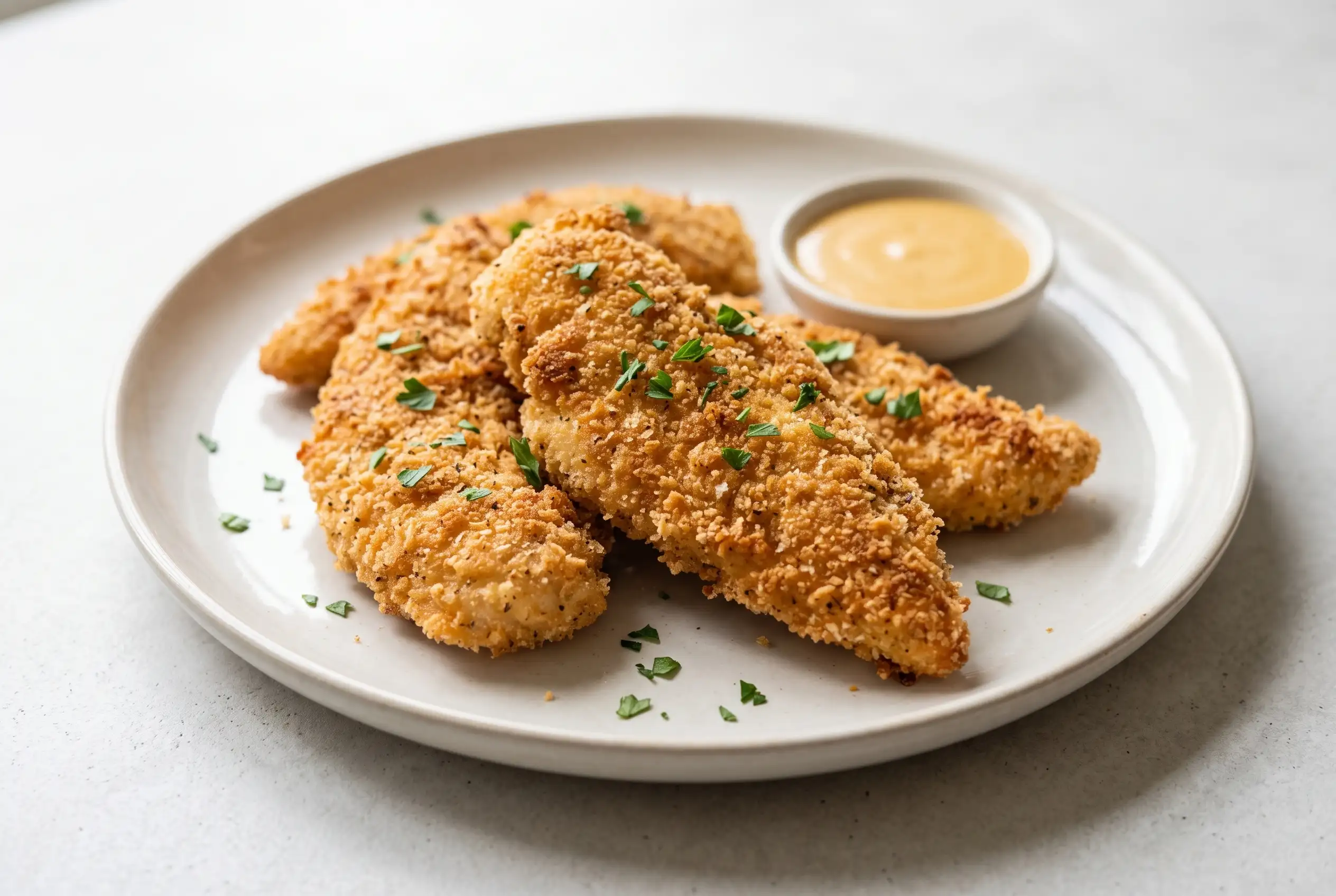
Air fryer chicken tenders bring together a seasoned breading layer, tender chicken, and fast circulating heat for a dinner that balances crisp texture with simple preparation. This version uses flattened chicken tenderloins, a seasoned flour coating, a tangy milk mixture, and flavorful breadcrumbs to create a coating that browns evenly while the chicken stays juicy.
The method works because each layer has a specific role. The flour helps the wet coating cling, the buttermilk-style mixture adds moisture, and the breadcrumbs create the textured surface associated with fried chicken without requiring a deep fryer. Careful spacing and a light coating of oil help the air fryer develop the golden exterior.
Air Fryer Chicken Tenders Create Crisp Coating Fast
Air fryer chicken tenders succeed when the breading receives enough heat and airflow to dry and brown. The circulating air moves around each piece, helping the exterior firm up while the inside reaches a safe temperature.
Flattening the tenderloins slightly before coating changes the shape of the chicken. A thinner, more even surface gives the breading more contact with the hot air and helps the pieces cook at a similar pace.
The finished texture depends on balance. Too much moisture can soften the coating, while an even layer of breadcrumbs creates the crunchy exterior expected from crispy air fryer chicken tenders.
Flattened Tenderloins Improve the Coating Texture
Chicken tenderloins benefit from being gently flattened because the coating can cover more surface area. Pressing the pieces with the flat side of a knife creates a slightly fanned shape that allows seasoning and breadcrumbs to reach more of the chicken.
Breadcrumb Choice Shapes Breaded Chicken Tenders in Air Fryer
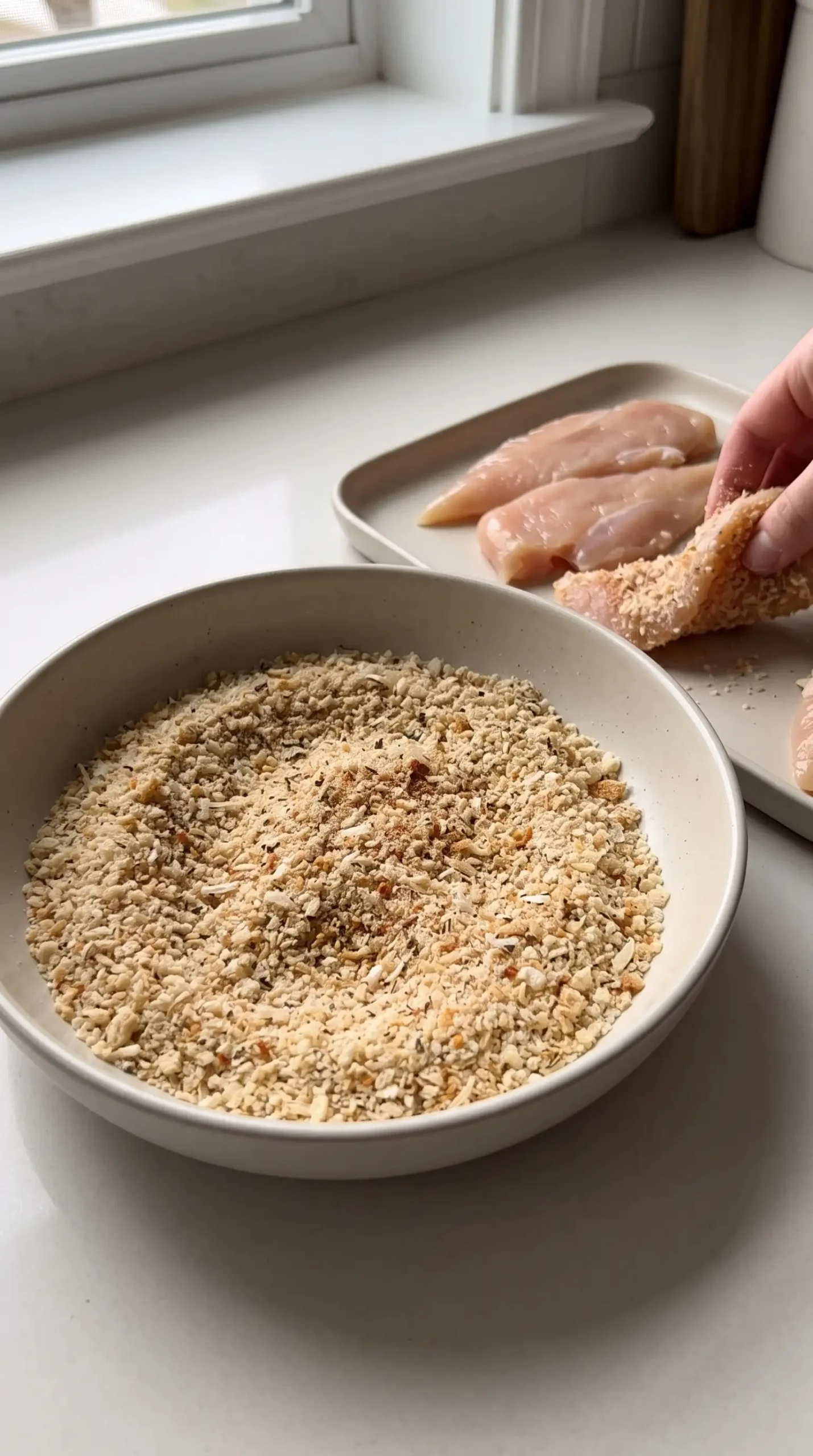
Breadcrumb texture has a direct effect on how breaded chicken tenders in air fryer cooking turn out. Finer crumbs create a more uniform coating, while slightly chunkier crumbs provide additional texture across the surface, a detail that matters when building crisp coatings for dishes like chicken meatballs with Parmesan and breadcrumbs.
Plain breadcrumbs work well because they allow the seasoning mixture to control the flavor. Mixing different breadcrumb textures can also create a coating with varied crunch without changing the cooking process.
The coating should be pressed gently onto the chicken after dipping. This helps the crumbs stay attached during air circulation and reduces areas where the chicken surface is left uncovered.
| Coating choice | Texture result | Best handling approach |
|---|---|---|
| Fine plain breadcrumbs | Even, traditional crust | Press gently onto the wet surface |
| Chunkier breadcrumbs | More noticeable crunch | Use a light pressing motion to secure pieces |
| Breadcrumb blend | Mixed texture across the coating | Combine evenly before dipping |
Ranch and Rotisserie Seasoning Build Flavor Depth
The seasoning approach gives air fryer chicken tenders their recognizable savory character. Ranch seasoning in the flour mixture and rotisserie-style seasoning in the breadcrumbs distribute flavor across separate layers, creating a more complete coating.
Air Fryer Basket Space Controls Browning Results
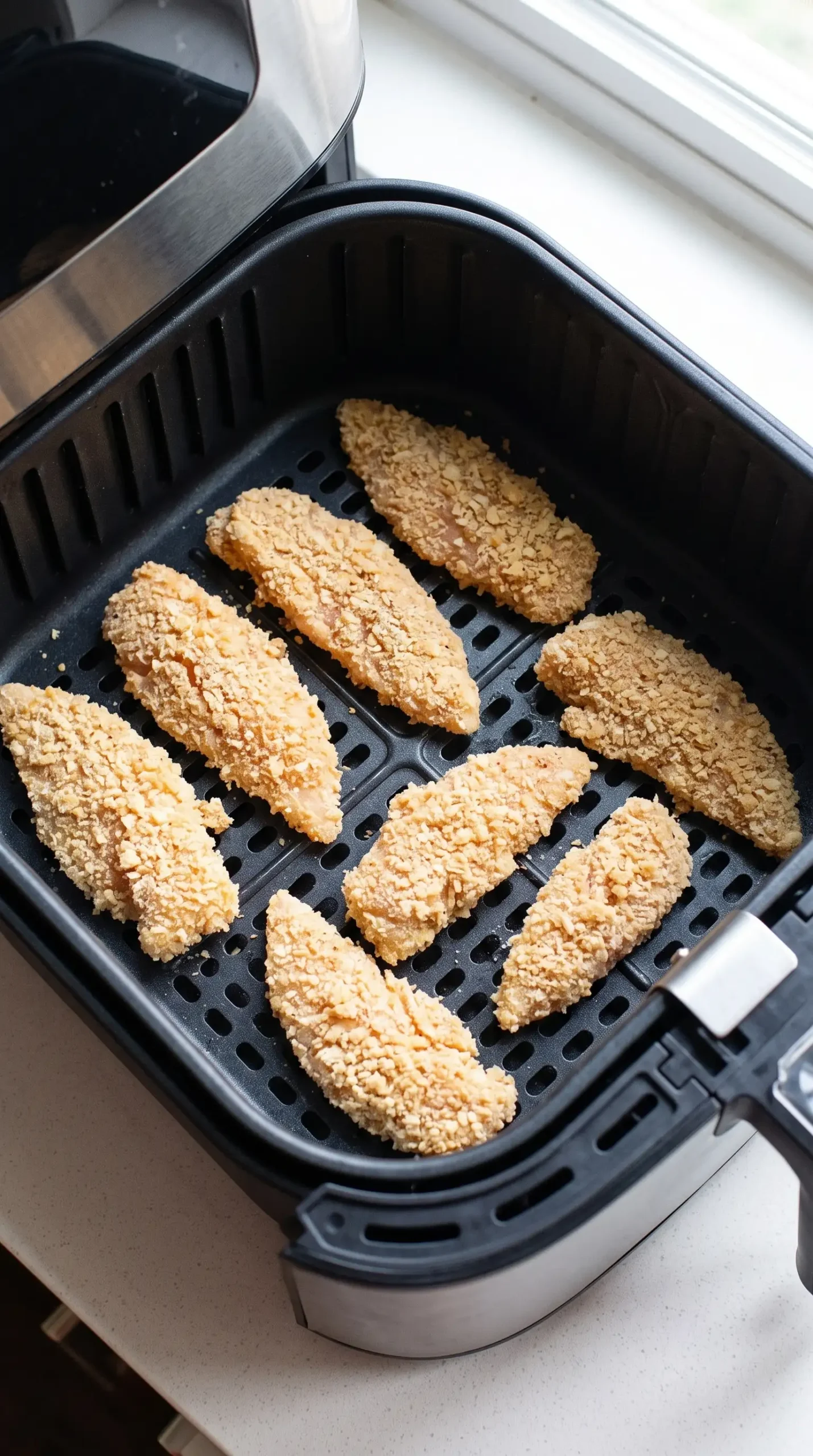
Basket arrangement has a major effect on the exterior of the chicken. Each tender needs room for hot air to move around the coating, which is why a single flat layer produces more even browning than stacking pieces.
Overlapping pieces create sheltered areas where moisture can collect. Those spots may cook through but can develop a softer coating compared with exposed surfaces receiving direct airflow.
Working in batches is often useful when the basket cannot hold every tender without crowding. Keeping the pieces separated protects the texture created during coating.
Temperature Checks Keep Chicken Tenderloins Safe
Chicken tenderloins should reach a safe minimum internal temperature of 165°F for serving. Checking the thickest section with a thermometer helps confirm doneness while avoiding unnecessary extra cooking that can dry the meat.
Mistakes That Ruin Air Fryer Chicken Tenders Coating
Air fryer chicken tenders can lose their crisp coating when a few specific preparation choices go wrong. The most common problems come from moisture control, uneven coating, and basket arrangement.
- Skipping excess flour removal: A heavy flour layer can make the wet coating slide instead of creating a thin base for breadcrumbs.
- Leaving coating loose: Gently pressing breadcrumbs onto the chicken helps prevent bare patches after cooking.
- Adding too much underside oil: Excess oil beneath the chicken can interfere with the dry heat needed for a crisp surface.
Correcting these issues starts before cooking begins. A balanced coating, careful oil application, and proper spacing create better conditions for browning.
Oil Spray Changes the Exterior Finish
Avocado oil spray helps the breading develop a fried appearance by adding a thin layer of fat across the surface. A light, even coating supports browning without soaking the crust.
Oven Baking Offers Another Way to Cook Tenders
The same breaded chicken preparation can also work in the oven when an air fryer is unavailable. Baking on a wire rack allows heat to move around the chicken and helps reduce direct contact with the pan.
A rack is especially useful because the bottom coating has more opportunity to stay dry. Without a rack, applying oil only to the top surface can help prevent the underside from becoming soft.
Additional browning can be achieved with a brief broiling step near the end of cooking. Careful observation is important because the breadcrumb coating can darken quickly under direct heat.
Serving Sauces Balance the Seasoned Crust
Air fryer chicken tenders pair naturally with dipping sauces because the seasoned coating provides a savory base. Simple options can highlight the chicken without covering the texture of the crust.
Storage and Reheating Preserve Breaded Texture
Cooked tenders are best stored once cooled and placed in an airtight container. Keeping them protected helps maintain moisture in the chicken while preventing the coating from absorbing unnecessary humidity.
Reheating works best with dry heat methods that restore some crispness. An air fryer or oven can warm the coating more effectively than methods that trap steam around the breading.
For leftovers, avoid repeatedly reheating the same pieces. Smaller portions warm more evenly and help the chicken retain a better texture.
Small Adjustments Change the Tender Experience
The seasoning can be adjusted without changing the structure of air fryer chicken tenders. Removing the prepared seasoning blends and using salt and pepper in the flour and breadcrumb mixtures creates a simpler flavor profile.
Prep Decisions Make Weeknight Cooking Easier
Preparation choices influence how smoothly the cooking process moves. Organizing the flour mixture, wet coating, and breadcrumbs before handling the chicken keeps the breading process consistent from piece to piece.
The milk and vinegar mixture provides a quick buttermilk-style coating that helps the egg mixture cling to the chicken. Letting the mixture sit briefly allows the ingredients to combine before dipping.
Having the coated tenders ready before turning on the air fryer also makes it easier to cook without interrupting the workflow. The coating benefits from being handled carefully once applied.
Flavor Variations Keep Chicken Tenders Flexible
Small flavor changes can adapt air fryer chicken tenders for different meals. The optional hot sauce adds a little tang and warmth while remaining a background flavor, making it suitable for a mild family-style serving.
Air Fryer Chicken Tenders Depend on Even Coating and Heat
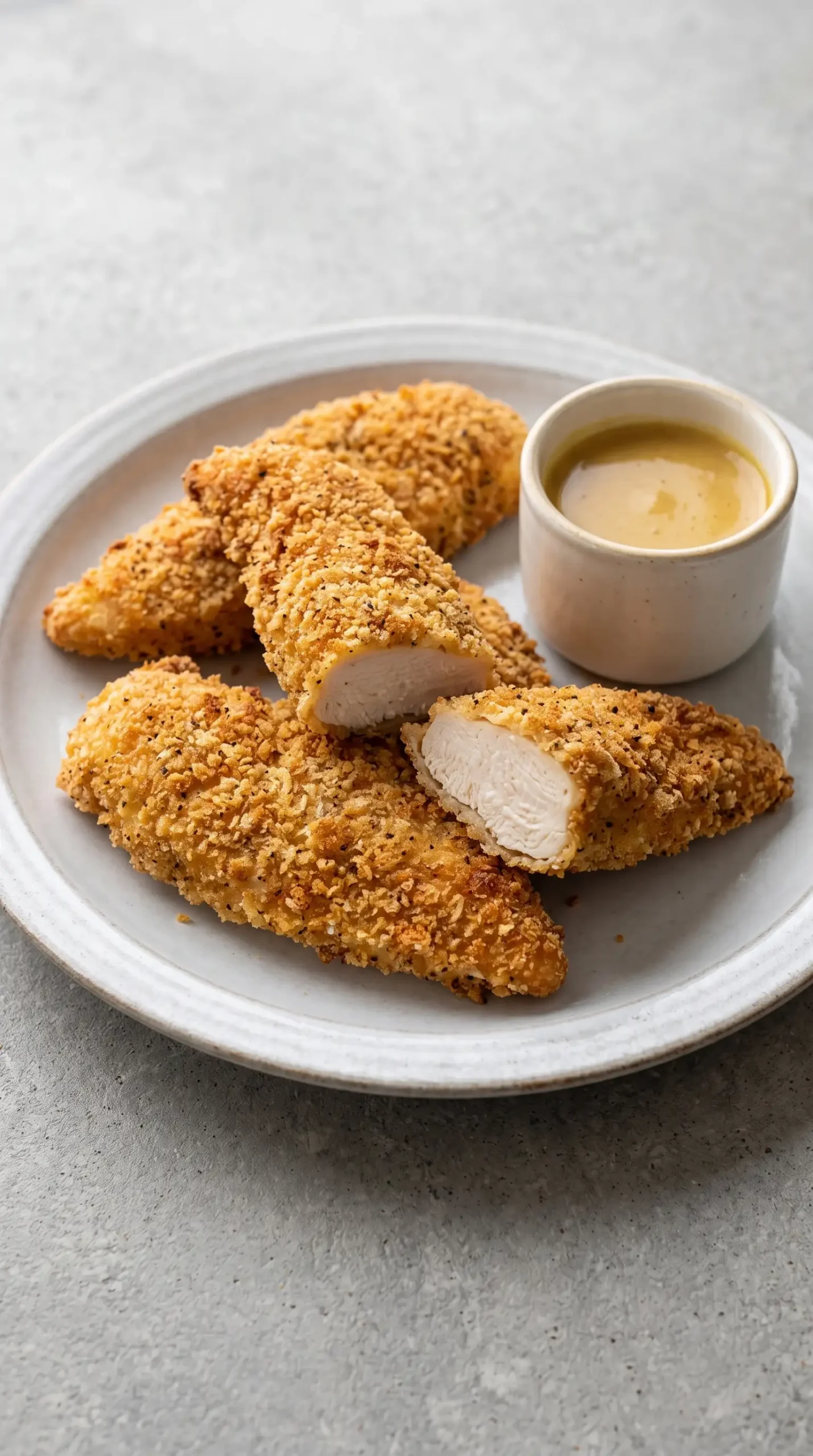
Golden chicken tenders come from the relationship between the coating and the cooking environment. Flattened pieces, attached breadcrumbs, and open airflow allow the air fryer to create the texture that defines this preparation.
When the breading is handled carefully and the chicken reaches the proper temperature, the result is a practical meal built around crisp edges, seasoned flavor, and tender chicken.
Air Fryer Chicken Tenders Questions About Coating and Cooking
Why does the breading fall off air fryer chicken tenders?
Breading usually stays attached when each coating layer is applied evenly and the breadcrumbs are pressed gently onto the chicken. Excess flour or loose crumbs can create weak spots that separate during cooking.
Can air fryer chicken tenders be made less seasoned?
Yes. The prepared seasoning mixes can be replaced with salt and freshly ground pepper in the flour and breadcrumb mixtures for a simpler flavor while keeping the same coating structure.
How can the coating stay crisp after cooking?
Allowing air around each tender during cooking helps preserve the crust. Reheating with dry heat instead of trapping steam also helps bring back some of the original texture.
Are chicken tenderloins necessary for this preparation?
Chicken tenderloins are useful because they are naturally shaped for individual portions, but the same coating approach can work with other thin chicken pieces when they are prepared to a similar thickness.
Air Fryer Chicken Tenders with Seasoned Breadcrumbs
Air fryer chicken tenders with seasoned breadcrumbs are crispy, golden, and packed with savory flavor. They are an easy choice for a quick weeknight meal with a satisfying crunchy coating and tender chicken.
Ingredients
Method
Preparation
- Combine the flour, salt, and ranch seasoning in a bowl.
- Mix the milk and vinegar together and allow it to sit for 5 minutes. Add the mixture to the egg and hot sauce, then whisk until combined.
- Stir the breadcrumbs together with the seasoning mix.
- Flatten each chicken tenderloin slightly by pressing it a few times with the flat side of a knife on a cutting board.
- Coat each tenderloin in the flour mixture, removing excess flour. Dip into the milk mixture, allow extra liquid to drip away, then cover completely with the breadcrumb mixture while gently pressing the coating in place.
Cooking
- Arrange the coated chicken tenderloins in a single flat layer in the air fryer basket, working in batches if needed.
- Spray the chicken generously with avocado oil spray so the coating is lightly and evenly covered.
- Air fry at 400°F (204°C) for 7-9 minutes, until the exterior is browned and the internal temperature reaches 165-175°F (74-79°C).
- Serve the chicken tenders with your preferred sauce.
Notes
Oven Directions: These can also be prepared in the oven. Bake for 10 minutes and broil for a minute or two if additional browning is desired. Using a wire rack helps reduce sticking and improves airflow around the chicken. If a rack is not used, spray only the top side of each tender with oil to help prevent a soft underside. Seasonings: If you prefer not to use the seasoning mixes, add 1 1/2 teaspoons salt and some freshly ground pepper to each of the flour and breadcrumb mixtures. Hot Sauce: The hot sauce is optional and adds flavor and a small amount of zing without making the chicken spicy. Breadcrumbs: Different breadcrumb types can be used. A slightly chunkier plain breadcrumb or a blend of textures can create a more varied coating.