From breakfast to dinner, from wholesome meals to indulgent desserts, Nexa Recipes offers quick, easy, and delicious ideas for every occasion and every moment.



 This Recipe
Arepas recipe methods transform simple precooked cornmeal into golden, hand-shaped pockets ready for savory fillings, creating a dish where texture begins with careful dough preparation. The combination of a lightly crisp exterior and tender interior makes these cornmeal rounds a versatile meal base for everything from shredded meat to vegetables and cheese.
Arepas Recipe Starts With Cornmeal Dough

Traditional arepas recipe preparation depends on understanding how precooked cornmeal behaves after it meets water. The dough does not need yeast or extended kneading because the cornmeal already has the structure needed to form sturdy rounds.
Unlike many breads, arepas rely on shaping and cooking control to create their character. The finished texture comes from a balance between a dry fried surface and a soft center that can hold flavorful fillings without falling apart.
Precooked Cornmeal Shapes the Arepas Texture
Precooked cornmeal is the ingredient decision that most influences how homemade arepas recipe results develop. The specific cornmeal used for arepas is a form of precooked corn flour made from cooked corn that is dried and ground, allowing it to absorb water and become a workable dough for shaping.
Salt works throughout the dough instead of only seasoning the fillings. Mixing it evenly before adding water helps create consistent flavor in every bite, especially because the exterior and interior share the same simple base.
Water temperature also affects the mixing process. Warm water helps the cornmeal hydrate smoothly, making it easier to remove lumps and create a dough that can rest before shaping.
Filling Choices Turn Arepas Into Complete Meals
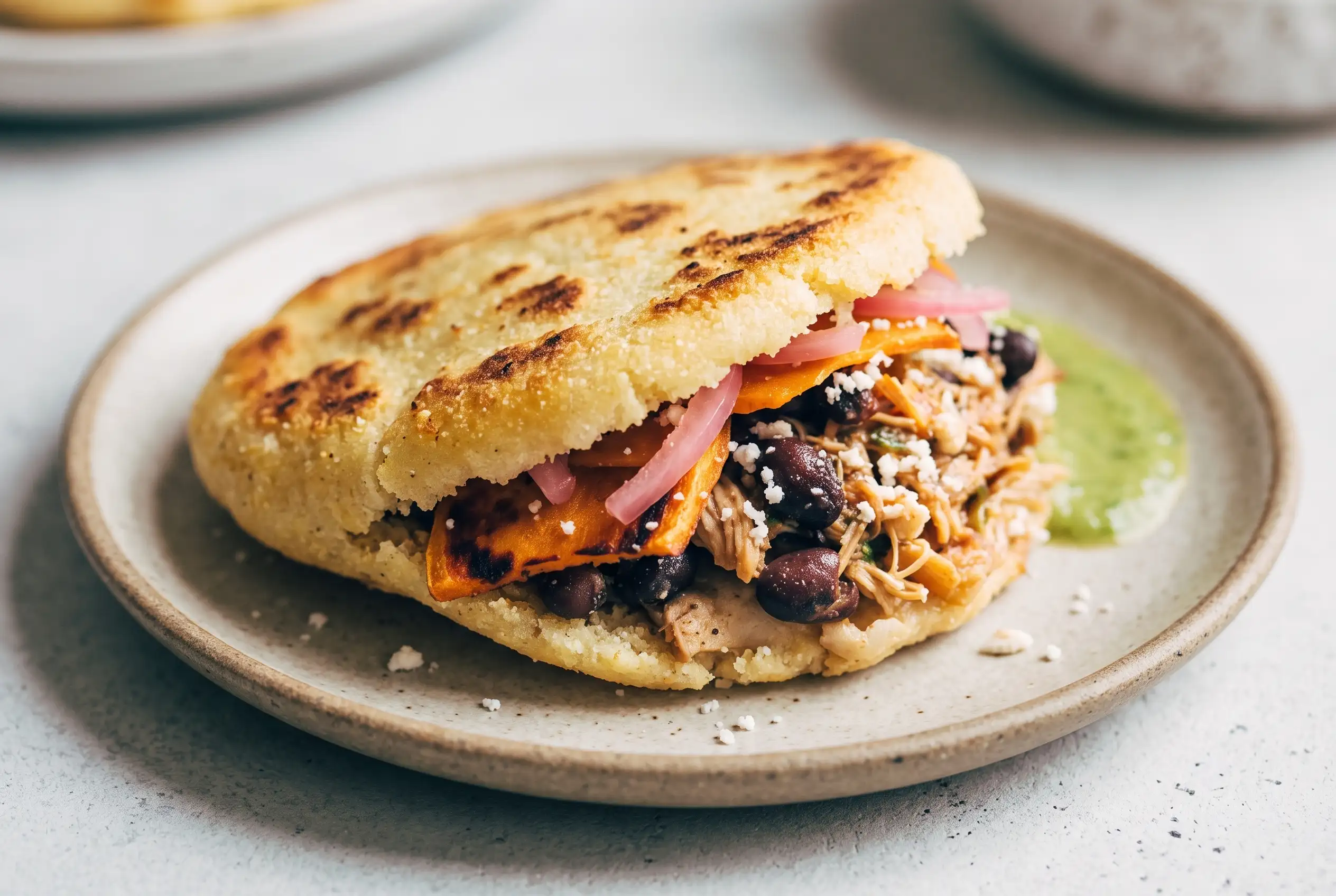
Filled arepas become especially adaptable because the cooked shells provide a neutral foundation for contrasting flavors. Carnitas or chipotle shredded chicken create hearty options, while black beans and sautéed sweet potatoes add different textures and plant-based choices such as a butternut squash wrap with quinoa, black beans, and cheese bring vegetables and cheese together in a satisfying handheld meal.
Popular combinations work because the fillings are added after the shell has developed its own structure. A balanced stuffed arepa usually includes:
- Protein options: Carnitas or chipotle shredded chicken bring a substantial center.
- Vegetable layers: Sweet potatoes and pickled red onions introduce color, sweetness, and brightness.
- Finishing touches: Cotija cheese and green sauce add creamy and fresh flavors.
Dough Resting Improves Handmade Arepas
The short resting period after mixing allows the precooked cornmeal to absorb the water more evenly, which makes shaping easier and reduces the chance of cracks forming around the edges.
Skillet Heat Creates the Essential Exterior

The cooking surface determines whether arepas develop the signature dry exterior that makes them ideal for slicing and filling. A heavy skillet with a thin layer of oil provides steady heat contact while allowing the outside to become firm.
Medium heat gives the cornmeal rounds time to cook through while preventing excessive browning. The desired appearance is a lightly fried surface, not a deeply colored crust that hides the delicate corn flavor.
Careful handling during cooking also protects the shape. Turning the arepas gently helps both sides develop evenly, while draining them after cooking keeps excess oil from softening the exterior.
Arepas Recipe Mistakes That Affect the Shell
Common arepas recipe mistakes usually happen before the filling is added because the dough and cooking stages determine the strength of the finished shell. Paying attention to texture, thickness, and heat prevents many disappointing results.
Several issues can change the way the arepas cook:
- Dry dough: Too little hydration can create cracks that make stuffing difficult.
- Uneven shaping: Thick areas may cook differently from thinner edges.
- Over-browning: Excessive skillet heat can darken the outside before the inside reaches the right texture.
Fixing problems early is easier than correcting them after cooking. A dough that feels workable before shaping will produce more reliable rounds, and controlled skillet heat protects the finished exterior.
Stuffing Techniques Keep Arepas Balanced
Cutting the cooked shells carefully creates space for fillings without breaking the structure. The opening should allow generous portions while leaving enough cornmeal around the edges to support each bite.
Layering fillings thoughtfully keeps the texture interesting. Creamy Cotija cheese, savory meats, crisp pickled onions, and sauces can complement each other when no single addition overwhelms the cornmeal base.
Cornmeal Arepas Adapt Across Serving Styles
Cornmeal arepas can move between breakfast, lunch, dinner, or snack occasions because the shell works with many flavor profiles. The table below highlights how different fillings change the overall serving style.
| Serving style | Filling approach | Texture contrast |
|---|---|---|
| Hearty meal | Carnitas or chipotle shredded chicken | Tender meat with a crisp shell |
| Vegetable-focused plate | Sweet potatoes, black beans, and onions | Soft vegetables with creamy toppings |
| Fresh finishing option | Cotija cheese and green sauce | Creamy and bright flavors against cornmeal |
Sauces and Toppings Complete the Arepas Experience
Green sauce is a natural partner for arepas because it adds moisture and freshness to the dense cornmeal structure. A spoonful inside the shell or over the filling can connect separate ingredients into a cohesive bite.
Additional toppings should support the main filling instead of covering the flavor of the shell. Cotija cheese contributes a salty finish, while pickled red onions can introduce acidity that balances richer fillings.
Flexible topping choices make an arepas recipe easy to customize for different preferences. The same cooked shell can become lighter with vegetables or more substantial with meat and beans.
Storage and Reheating Preserve Arepas Quality
Cooked arepas are best handled carefully after cooling because moisture can change the texture of the exterior. Keeping them protected from excess air helps maintain their structure when they are served later.
Homemade Arepas Recipe Decisions for Beginners
Learning how to make arepas becomes simpler when each stage is treated as a separate decision. The dough consistency, shaping pressure, and skillet temperature all influence the final result without requiring complicated techniques.
Beginners often benefit from focusing on the feel of the dough instead of relying only on appearance. A properly hydrated mixture should be easy to form into disks and should hold together before cooking.
Small adjustments can make each batch more consistent. If the first rounds need improvement, changing the shaping method or cooking heat provides clear ways to refine future attempts.
Serving Ideas Highlight the Arepas Recipe

An arepas recipe can become the centerpiece of a meal when served with a combination of warm fillings, fresh toppings, and sauces that match the occasion. The simple cornmeal base allows each variation to feel distinct.
Arepas Recipe Success Comes From Balanced Dough Handling
The strongest arepas recipe results come from dough that is hydrated evenly, shaped carefully, and cooked with enough control to create a firm exterior without losing the tender center. Those choices determine how well the shells hold their fillings.
Golden arepas provide a reliable foundation because the cooking process preserves their structure while leaving room for bold combinations of meat, vegetables, cheese, and sauces.
Arepas Recipe Questions About Fillings and Texture
Can I use regular cornmeal for arepas?
Regular cornmeal does not provide the same texture as precooked cornmeal because the dough needs the specific structure created by precooked grains. Using the correct type helps the rounds hold together during shaping and cooking.
Why do my arepas crack while shaping?
Cracking usually indicates that the dough needs better hydration or mixing. Allowing the dough to absorb water fully before shaping can help create smoother edges that are easier to handle.
What fillings pair best with homemade arepas recipe variations?
Meat fillings such as carnitas and chipotle shredded chicken pair well with the sturdy shell, while black beans, sweet potatoes, cheese, and onions create flavorful alternatives with different textures.
How can I keep arepas from becoming too brown?
Cooking over medium heat helps the exterior develop gradually. Lowering the heat slightly gives the inside more time to cook while keeping the surface from becoming overly dark.
Arepas Recipe with Savory Fillings and Cheese Pockets
This arepas recipe makes crispy cornmeal pockets with a tender interior and endless savory filling appeal. These homemade arepas are a versatile choice for a comforting meal or gathering.
Ingredients
Method
Preparation
- Combine the precooked cornmeal and salt in a bowl. Add the warm water and whisk to break up any lumps, then stir until a dough forms. Allow the mixture to rest for 5-10 minutes.
- Divide the dough into 8 portions. Shape each portion into a ball, then gently flatten into a disk about 1 inch thick.
Cooking
- Warm a large heavy skillet with a thin layer of oil about 1/4 inch deep over medium heat. Add the arepas and fry for about 6 minutes per side.
- Cook until the arepas have a dry fried exterior without becoming overly brown. Transfer them to paper towels to drain and cool.
Filling
- Slice the cooled arepas in half and fill them with the desired fillings.
Notes
Nutrition information is provided for the arepas only and does not include fillings.