From breakfast to dinner, from wholesome meals to indulgent desserts, Nexa Recipes offers quick, easy, and delicious ideas for every occasion and every moment.



 This Recipe
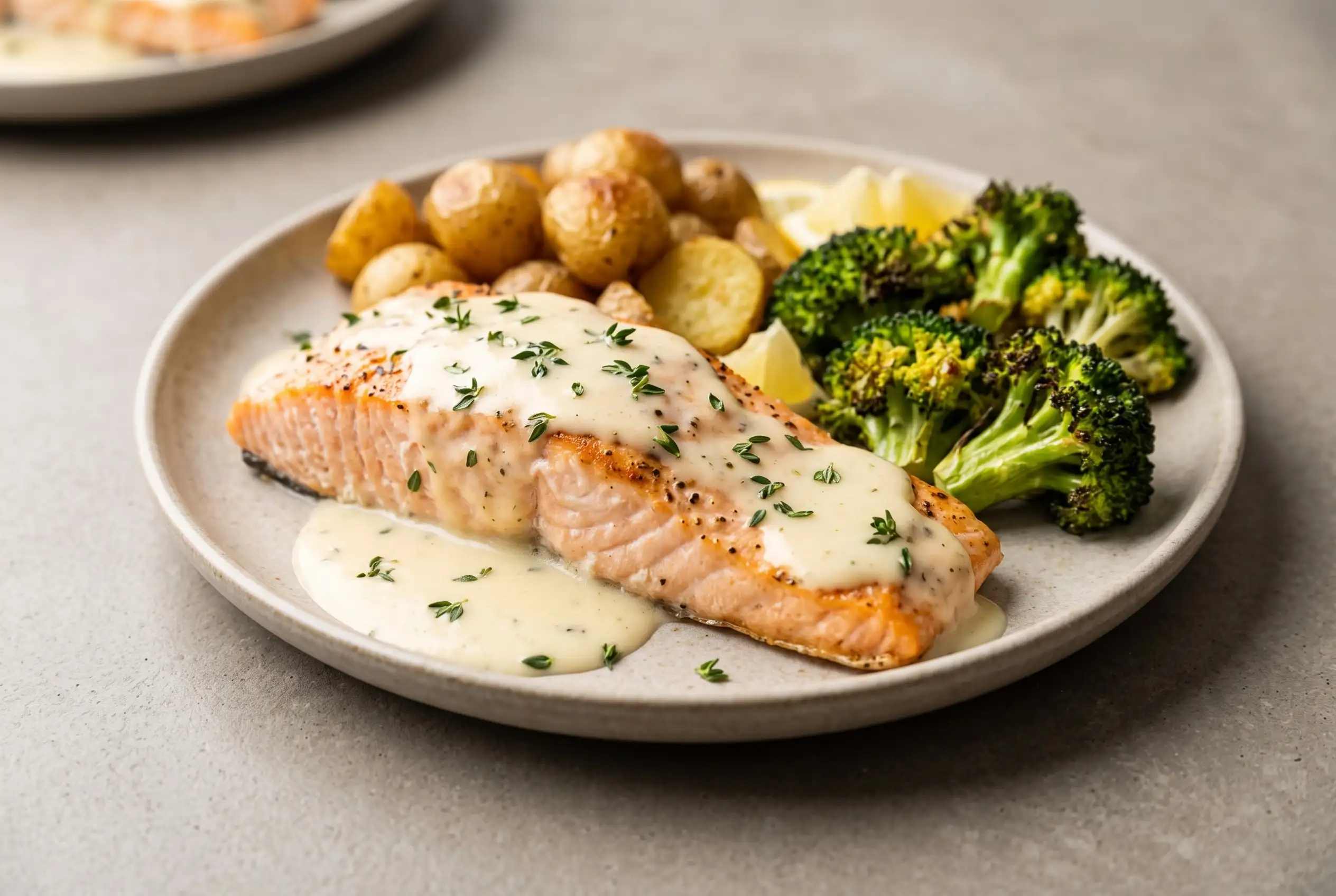
Baked salmon with lemon sauce brings together tender fish, roasted potatoes, crisp broccoli, and a silky cream sauce in a balanced sheet pan dinner. The combination works because each part reaches the plate with a different texture: the potatoes develop browned edges, the broccoli stays vibrant, and the salmon absorbs the bright citrus finish without becoming heavy.
Roasting everything in one pan creates a practical meal built around timing. The potatoes need extra heat before the quicker-cooking seafood joins the pan, while the lemon cream sauce is prepared separately so its smooth texture stays intact. That separation gives the baked salmon enough attention while allowing the sauce to become the finishing element.
Lemon Sauce Depends on Creamy Reduction and Fresh Citrus Balance

The most important ingredient decision in baked salmon with lemon sauce is the way the sauce is built. Heavy cream provides the body, while chicken broth keeps the richness from becoming too dense. Slowly reducing those liquids allows the thyme, garlic, and shallot flavors to settle into the sauce before lemon is added.
Fresh lemon plays a specific role after the cream mixture has thickened. Adding lemon juice and zest near the end protects the bright citrus character and prevents the flavor from becoming muted during a long simmer. The result is a salmon with lemon cream sauce that feels rich but still has a clean finish.
Thyme sprigs are used during the reduction to create a gentle herbal background. Removing the stems before serving keeps the sauce smooth and allows the lemon to remain noticeable. A few fresh thyme leaves added at the table provide a lighter aroma without overwhelming the seafood.
Potatoes and Broccoli Shape the Salmon Dinner’s Texture

Small gold potatoes are especially useful in this arrangement because their bite-sized pieces can develop a browned exterior while maintaining a tender center. Cutting them consistently helps the pieces cook evenly and creates a dependable base for the salmon and vegetables.
Broccoli brings contrast to the richer elements of the plate. The florets benefit from joining the pan after the potatoes have already started roasting, which helps prevent them from becoming overly soft while the fish finishes cooking.
- Potato texture: Even pieces encourage consistent browning and tenderness.
- Broccoli finish: Shorter roasting exposure helps maintain a fresh vegetable texture.
- Salmon placement: Keeping each item arranged with enough space supports better cooking results.
Salmon Selection Changes the Finished Baked Result
The thickness of the salmon fillets influences how quickly they cook and how much moisture they retain. Larger pieces generally require more time than thinner portions, so watching the fish itself is more reliable than depending only on a fixed minute count. Understanding salmon fillet cooking times helps when adjusting heat and timing for different cuts.
Fresh or properly thawed salmon works well because the fish should enter the oven with an even surface and similar thickness throughout. Adjusting for salmon fillet thickness helps prevent thinner areas from drying out before thicker portions finish cooking.
A useful visual cue appears as the salmon changes from translucent to opaque. Properly cooked fish should separate into flakes easily while still appearing moist. Baked salmon can become dry when it stays in the oven beyond the point where the proteins have set.
| Salmon appearance | Texture expectation | Best action |
|---|---|---|
| Deep translucent center | Very soft and underdone | Continue cooking briefly and check again |
| Lightly opaque with easy flakes | Tender and moist | Serve with lemon sauce |
| Fully opaque and firm | Less juicy texture | Avoid additional oven time |
Cooking Controls Protect the Tender Salmon Texture
Oven timing matters because the potatoes, broccoli, and fish do not require identical cooking conditions. Giving the potatoes a head start creates the foundation needed for the complete baked salmon with potatoes and broccoli combination.
Temperature consistency also affects the sauce and seafood relationship. A hot oven helps the vegetables roast while the salmon finishes efficiently, reducing the chance that the fish sits exposed to heat longer than necessary.
Several small choices improve the final texture and appearance:
- Even cuts: Keep potato pieces similar in size so they roast together.
- Gentle handling: Brush or coat the salmon lightly to avoid disturbing its natural flakes.
- Quick checks: Look for easy flaking and a moist center before removing the fish.
Common Baked Salmon Mistakes That Ruin the Lemon Sauce Finish
Overcooking is one of the easiest ways to lose the delicate texture that makes baked salmon appealing. A dry, firm piece of fish usually indicates that it remained in the oven after it had already reached the desired doneness.
Another frequent issue happens when the lemon sauce is reduced too aggressively. High heat can cause the cream mixture to become too thick before the citrus is incorporated. Keeping the sauce at a low simmer helps maintain a smooth consistency.
Uneven roasting can also affect the final plate. Crowding the pan may limit browning on the potatoes and vegetables, while inconsistent potato sizes can leave some pieces tender and others still firm. Simple preparation choices make the cooking process much more predictable.
Timing Choices Keep the Sheet Pan Balanced
The order of preparation determines whether every component reaches the table at its best. Potatoes need the longest roasting period, while broccoli and salmon require less time, so adding them later keeps the meal balanced.
Sheet pan dinners work especially well when each ingredient has a clear role. The potatoes create a hearty foundation, the broccoli adds freshness, and the fish provides the main protein without requiring a separate cooking vessel.
Sauce Adjustments Bring Variety to Salmon with Lemon Cream Sauce
The lemon cream sauce can adapt to different serving preferences while keeping the same basic character. A little additional lemon can create a sharper finish, while extra thyme can emphasize the herbal notes already present from the simmered sauce.
For a lighter presentation, the amount of sauce served over the plate can be adjusted instead of changing the entire preparation. The baked salmon remains the centerpiece, and the sauce works as a concentrated finishing element.
Simple pairings can also change the feel of the meal. Additional roasted vegetables, a crisp salad, or another vegetable side can make the salmon suitable for different occasions without changing the core cooking approach.
Serving Details Highlight Baked Salmon with Potatoes and Broccoli

Presentation matters because this dish combines several colors and textures in one serving. Placing the salmon alongside the roasted potatoes and broccoli allows the lemon sauce to connect each component without covering the natural appearance of the ingredients.
Lemon wedges provide a fresh finishing option for anyone who wants more acidity at the table. Extra thyme leaves create a small visual accent and reinforce the flavors already developed in the sauce.
Storage Decisions Preserve the Leftover Quality
Cooked salmon and vegetables are best stored promptly in a covered container and reheated gently to help protect their texture. The cream sauce can be kept with the meal or stored separately if you prefer to control how much is added during reheating.
Cold leftovers can also be used in salads or grain bowls where the lemon flavor remains useful. Gentle reheating helps prevent the salmon from becoming overly firm.
| Storage item | Handling approach | Quality consideration |
|---|---|---|
| Salmon portions | Store covered after cooling | Reheat gently to protect moisture |
| Roasted potatoes and broccoli | Keep together or separate | Texture changes more quickly when reheated |
| Lemon cream sauce | Warm slowly before serving | Avoid high heat that can affect smoothness |
Baked Salmon With Lemon Sauce Finds Its Balance Through Gentle Cooking
Salmon reaches its best texture when the fish is watched carefully as it moves from translucent to flaky. The roasted potatoes and broccoli support that texture by adding contrast, while the lemon cream sauce ties the plate together with a bright, smooth finish.
Careful timing, moderate heat, and a properly reduced sauce create the defining qualities of baked salmon with lemon sauce. Each part remains distinct, yet the finished meal feels connected because the flavors are built to complement one another.
Baked Salmon With Lemon Sauce Flaking Questions Answered
Why is my salmon not flaking easily?
Salmon that does not separate into flakes may need additional cooking time, especially if the fillet is thick. Check the center portion and continue cooking in short intervals until the texture changes while avoiding extended oven exposure.
Can I use another vegetable with the salmon?
Vegetables with similar roasting needs can work well alongside the fish. Choose options that can become tender during the shorter cooking window after the potatoes have already started roasting.
How can I keep the lemon cream sauce smooth?
Keep the sauce at a gentle simmer while it reduces and avoid harsh heat after the cream is added. Stirring in the lemon at the end helps preserve its fresh flavor and smooth texture.
Can I prepare parts of the meal ahead?
The potatoes can be cut in advance and stored properly until cooking. The sauce can also be prepared before serving, then warmed carefully so the consistency remains creamy.
Baked Salmon with Lemon Sauce and Roasted Potatoes
Baked Salmon with Lemon Sauce is a creamy, flavorful sheet pan dinner featuring tender flaky salmon, roasted potatoes, and fresh vegetables. It is a comforting choice for an easy weeknight meal with a bright lemon finish.
Ingredients
Method
Preparation
- Preheat the oven to 400°F (204°C). Line a baking sheet with parchment paper.
- Place the potatoes on the prepared baking sheet and coat with olive oil, garlic powder, and salt.
Baking
- Roast the potatoes for 25 minutes until lightly browned.
- Add the broccoli and salmon to the same pan with the potatoes. Coat or brush with additional olive oil, garlic powder, and salt.
- Bake for another 10-15 minutes, until the salmon is cooked to your preferred doneness and flakes easily.
Lemon Sauce
- While the potatoes roast, melt the butter over medium-low heat. Add the garlic and shallot and cook for 3-5 minutes until softened and fragrant.
- Add the chicken broth, heavy cream, and thyme sprigs. Bring to a low simmer and cook over low heat until the sauce thickens and reduces by about half.
- Remove the thyme sprigs, then whisk in the lemon zest and lemon juice.
Serving
- Serve the salmon, potatoes, and broccoli with the lemon sauce and garnish with extra thyme leaves.
Notes
The salmon is ready when it flakes easily and is no longer translucent in the center.