From breakfast to dinner, from wholesome meals to indulgent desserts, Nexa Recipes offers quick, easy, and delicious ideas for every occasion and every moment.



 This Recipe
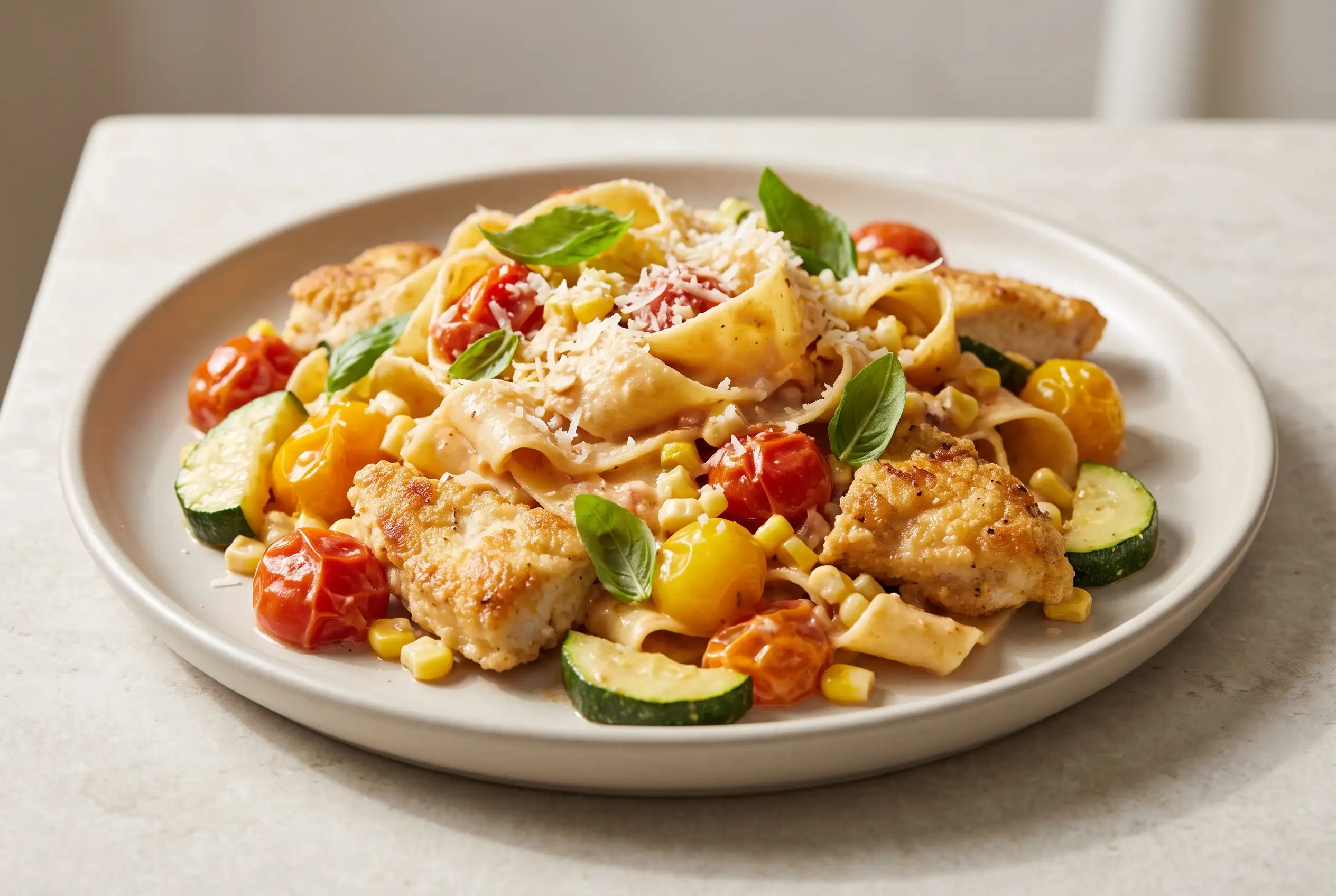
Burst tomato pappardelle brings together silky pasta, sweet summer vegetables, golden chicken, and a light cream finish in a skillet meal built around texture. The cherry tomatoes create a naturally rich sauce as they soften, while zucchini, corn, and basil keep the dish bright. With tender ribbons of pappardelle and crisp pan fried chicken, the combination delivers the comfort of pasta while preserving fresh seasonal character.
The balance of the plate comes from timing and contrast. The tomatoes need enough heat to release their juices, the vegetables need to stay recognizable, and the chicken benefits from a thin shape that cooks evenly. Each part contributes to a finished dish where no single element overwhelms the others.
Burst Tomato Pappardelle Builds a Fresh Summer Pasta Foundation
Pappardelle provides the structure for this meal because its wide ribbons hold onto the juices released by the tomatoes and the creamy coating that follows. Unlike smaller pasta shapes that can disappear under a sauce, the broad noodles create a noticeable bite and carry the vegetables throughout each serving.
The skillet sauce develops from simple movements rather than a heavy preparation process. Cherry tomatoes soften until their skins split and their interior juices combine with the other ingredients. That released moisture creates a flavorful base that coats the pasta while allowing the zucchini and corn to remain visible.
Fresh additions complete the character of the dish. Lemon brightens the creamy sauce, Parmesan adds a savory finish, and basil brings a fresh herbal note after cooking. The result is a cherry tomato pappardelle pasta that feels rich but still reflects the ingredients placed into the pan.
Cherry Tomatoes Create the Sauce Texture That Defines the Dish
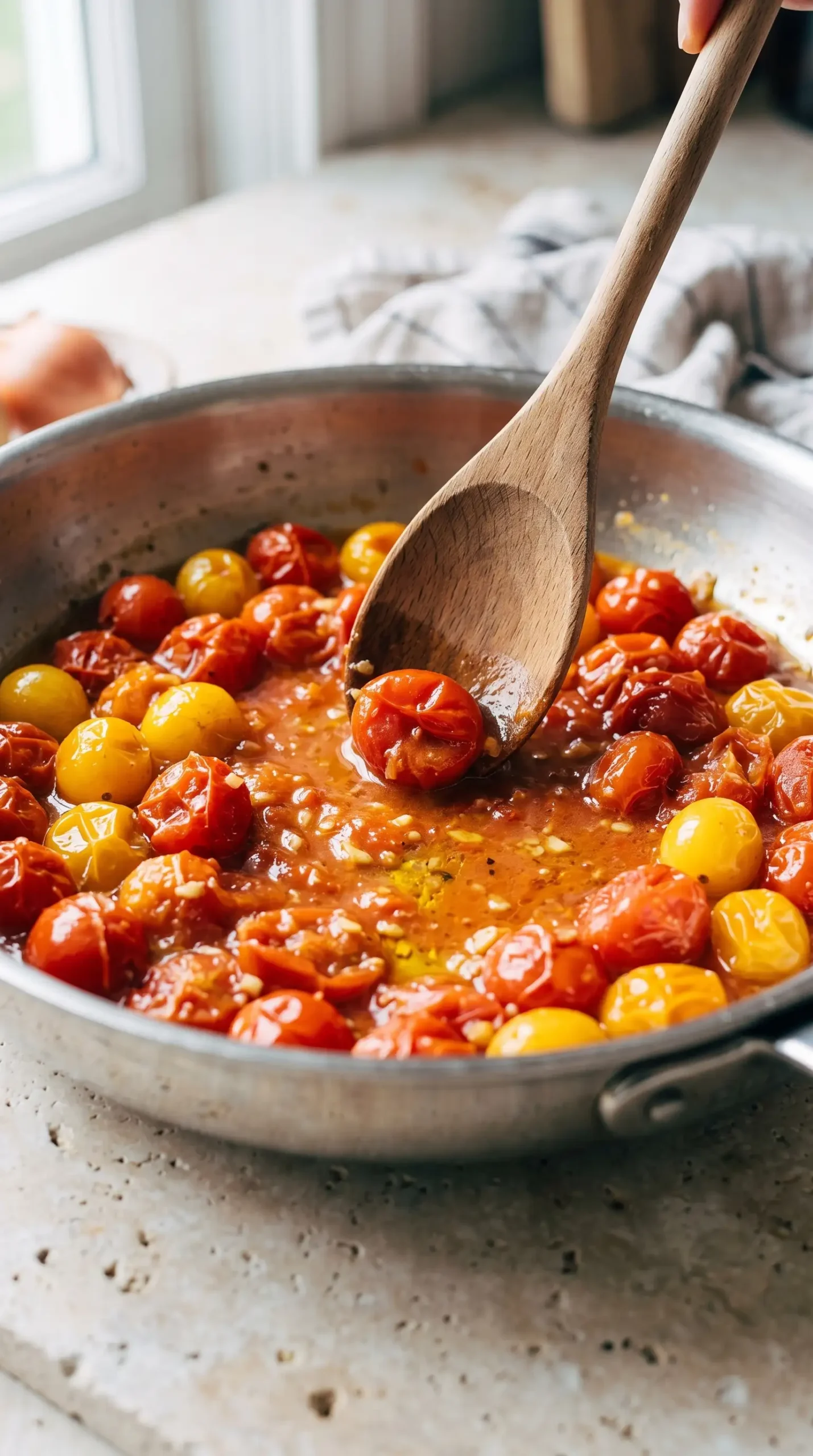
Gentle pressure from a spoon helps transform softened tomatoes into a sauce with body. Keeping some pieces intact preserves texture, while breaking open enough tomatoes releases the juices needed to coat the pasta.
Pappardelle and Produce Choices Shape Ingredient Balance
The most important ingredient decisions in pappardelle with zucchini and corn come from selecting components that work together during cooking. Wide pasta needs a sauce with enough moisture, while the vegetables need enough structure to avoid becoming lost in the dish. A balanced chicken and zucchini combination benefits from keeping the vegetable texture noticeable alongside the protein and sauce.
Egg pappardelle works especially well because its tender texture matches the creamy tomato coating. Zucchini should be softened until comfortable to eat but still able to hold its shape. Sweet corn contributes natural sweetness that complements the acidity of the tomatoes and lemon.
Pappardelle is a pasta shape valued for its broad surface, with wide flat pasta noodles that pair naturally with rich sauces and textured ingredients like the tomatoes, vegetables, and chicken in this skillet meal.
Several details improve the way these ingredients behave together:
- Tomato condition: Choose cherry tomatoes that can soften and release juices easily when heated.
- Zucchini size: Smaller half-moons cook quickly and blend naturally with the pasta ribbons.
- Corn texture: Fresh kernels add a crisp contrast after a brief sauté.
Flour Coating Improves Pan Fried Chicken Results
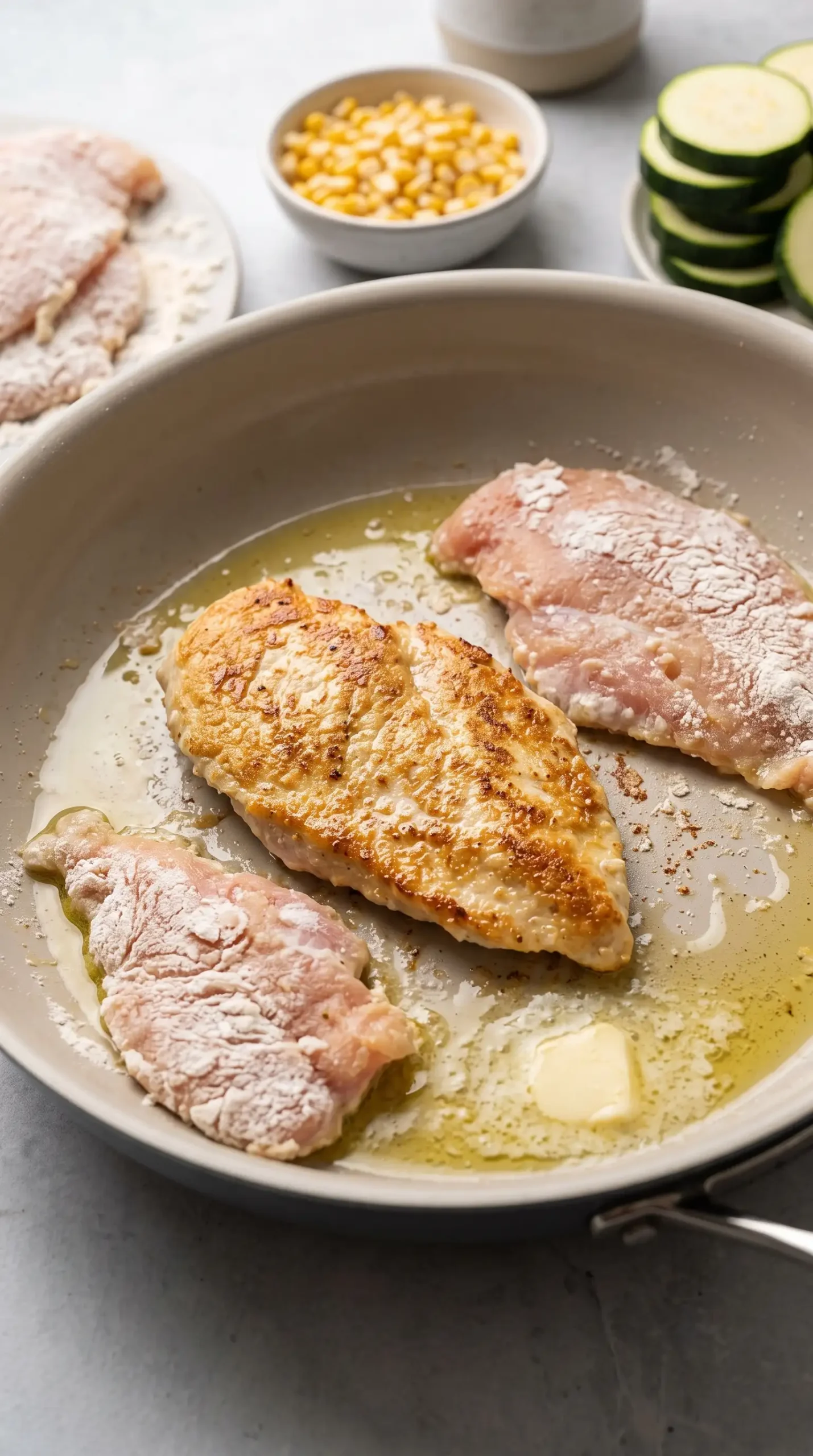
A light flour coating gives the chicken a golden surface while helping it pair with the creamy pasta. Shaking off excess flour keeps the exterior delicate and prevents loose coating from mixing heavily into the sauce.
Cooking Controls Keep Pasta and Chicken in Harmony
Successful pappardelle with pan fried chicken depends on controlling the moments when each component reaches its best texture. The pasta should remain able to absorb the sauce, the tomatoes should release their juices gradually, and the chicken should develop a browned exterior without losing tenderness.
Starting the chicken in hot oil and adding butter after the oil has warmed helps create the desired skillet environment. The pieces need enough room to brown, and their thinner shape supports quicker, more even cooking. Removing the chicken before combining the pasta keeps the crust from softening too early.
The vegetable mixture also benefits from attention to timing. Garlic goes in near the end of sautéing because it needs only a short amount of heat to become fragrant. Cream and lemon join after the vegetables soften, creating a smoother sauce that can surround the pasta.
Before serving, gentle tossing matters. Folding the pappardelle through the tomato mixture distributes the sauce without breaking the wide noodles. Placing the chicken alongside the pasta preserves the contrast between the crisp coating and the creamy ribbons.
Common Burst Tomato Pappardelle Mistakes That Affect Texture
Several small choices can change the finished texture of burst tomato pappardelle. Avoiding these problems keeps the pasta balanced and helps every part of the skillet contribute.
| Common issue | What happens | Better approach |
|---|---|---|
| Leaving tomatoes whole | The sauce lacks the juices needed to coat pasta | Press softened tomatoes gently to release their flavor |
| Adding garlic too early | The garlic may lose its fresh aroma during longer cooking | Stir it in during the last minute of sautéing |
| Overcrowding chicken pieces | The surface may not brown evenly | Use a spacious skillet arrangement for better contact |
Another frequent issue occurs when the vegetables cook beyond their useful texture. Zucchini should become tender while still showing its shape, because completely softened pieces can disappear into the sauce.
Pappardelle with Zucchini and Corn Fits Flexible Serving Styles
The combination of vegetables, pasta, and chicken adapts well to different meals. The wide noodles make the dish substantial enough for dinner, while the bright produce keeps the flavors suitable for warmer seasons.
Storing and Reheating Preserve the Pasta Experience
Cooked pasta dishes with cream-based sauces are best handled carefully after serving. Allow leftovers to cool promptly, then store them in a sealed container to maintain quality.
Reheating works best with gentle heat and a small amount of added moisture if the sauce has thickened. Warm portions slowly so the chicken stays tender and the pasta does not become overly soft.
Serving Details Bring Parmesan and Basil Into Focus
Finishing touches have a clear purpose in this dish. Parmesan adds savory depth, while basil provides a fresh contrast that highlights the tomato and lemon notes.
Golden Chicken Pieces Complete the Pappardelle Dinner Balance
The chicken component changes the pasta from a vegetable-forward meal into a more complete dinner. A thin, golden piece beside the noodles creates a contrast between the creamy sauce and the crisp exterior developed in the skillet.
Keeping the chicken separate until serving protects that texture. The pasta can absorb the tomato sauce fully while the chicken remains a distinct element with its own browned surface.
Burst Tomato Pappardelle Connects Juicy Tomatoes and Golden Chicken
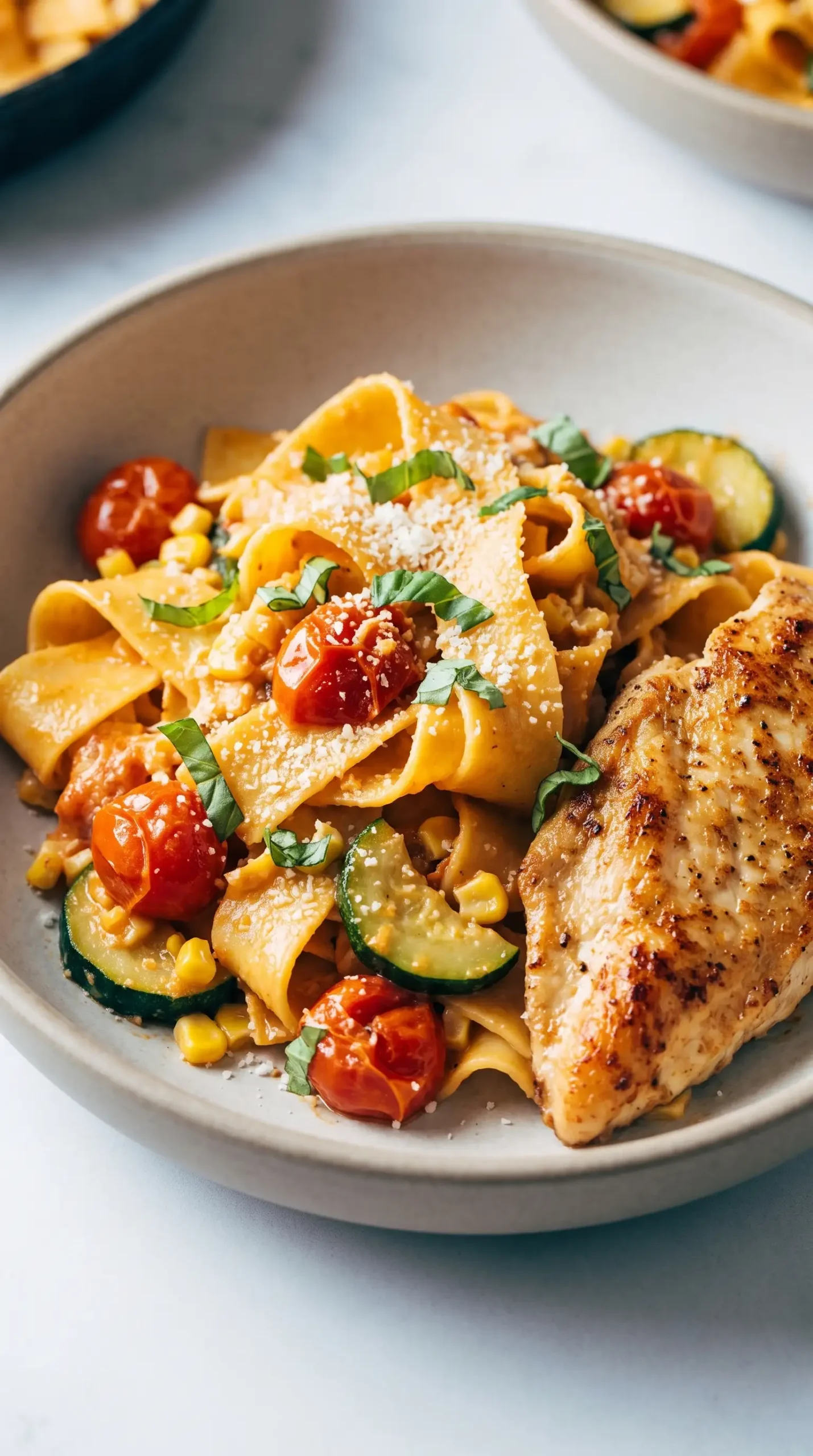
Burst tomato pappardelle succeeds when the tomatoes provide enough moisture to surround the pasta, the vegetables retain their fresh character, and the chicken keeps its golden coating. The cooking choices are simple, but each one affects how the finished skillet comes together.
The strongest results come from treating the sauce, pasta, and chicken as connected parts with different needs. Juicy tomatoes create the foundation, wide noodles carry the flavors, and pan fried chicken adds the finishing contrast that makes the meal feel complete.
Burst Tomato Pappardelle Questions About Creamy Sauce
How can I keep the creamy sauce balanced?
The sauce stays balanced when the cream is combined with the natural tomato juices and brightened with lemon. Using the cream as a finishing element allows the tomatoes and vegetables to remain noticeable instead of creating a heavy coating.
Can I prepare the chicken separately?
Yes, preparing the chicken separately works well when you want to preserve the browned exterior. Keep the cooked pieces warm and add them when serving so the pasta sauce does not soften the coating.
Why are cherry tomatoes useful for this pasta?
Cherry tomatoes are useful because they soften quickly and release flavorful juices that become part of the sauce. Their size also allows some pieces to remain visible for texture after cooking.
What makes pappardelle different from other pasta shapes?
Pappardelle has wide ribbons that provide a larger surface for sauces and toppings. That shape makes it especially suited to a skillet sauce with vegetables, cream, and tender pieces of chicken.
Burst Tomato Pappardelle with Zucchini, Chicken and Corn
Burst tomato pappardelle is a creamy, fresh pasta with juicy cherry tomatoes, zucchini, sweet corn, and golden pan-fried chicken. It is a hearty, colorful dinner with tender pasta and crisp-edged chicken.
Ingredients
Method
Pasta
- Cook the pappardelle according to the package directions. Toss with oil and set aside.
Vegetable Sauce
- Add the cherry tomatoes to a pan with oil and cook until softened. Press them gently with the back of a wooden spoon so they burst and release their juices, forming a thick sauce.
- Add the corn and zucchini and sauté for a few minutes, until the zucchini softens. Stir in the garlic during the final minute of cooking.
- Add the lemon juice and heavy cream, then season with salt and pepper.
Chicken
- While the vegetables soften, coat each chicken breast in the seasoned flour and shake off the excess.
- Heat the olive oil in a large skillet over medium-high heat, then add the butter once the oil is hot.
- Add the chicken and cook for a few minutes on each side, until golden brown and cooked through. Remove from the skillet and keep warm.
Assembly
- Add the cooked pappardelle to the vegetable sauce and toss gently until combined.
- Serve topped with Parmesan, basil, and a piece of golden brown chicken.
Notes
Keep the cooked chicken separate from the pasta until serving to help preserve its golden flour-coated exterior.