From breakfast to dinner, from wholesome meals to indulgent desserts, Nexa Recipes offers quick, easy, and delicious ideas for every occasion and every moment.



 This Recipe
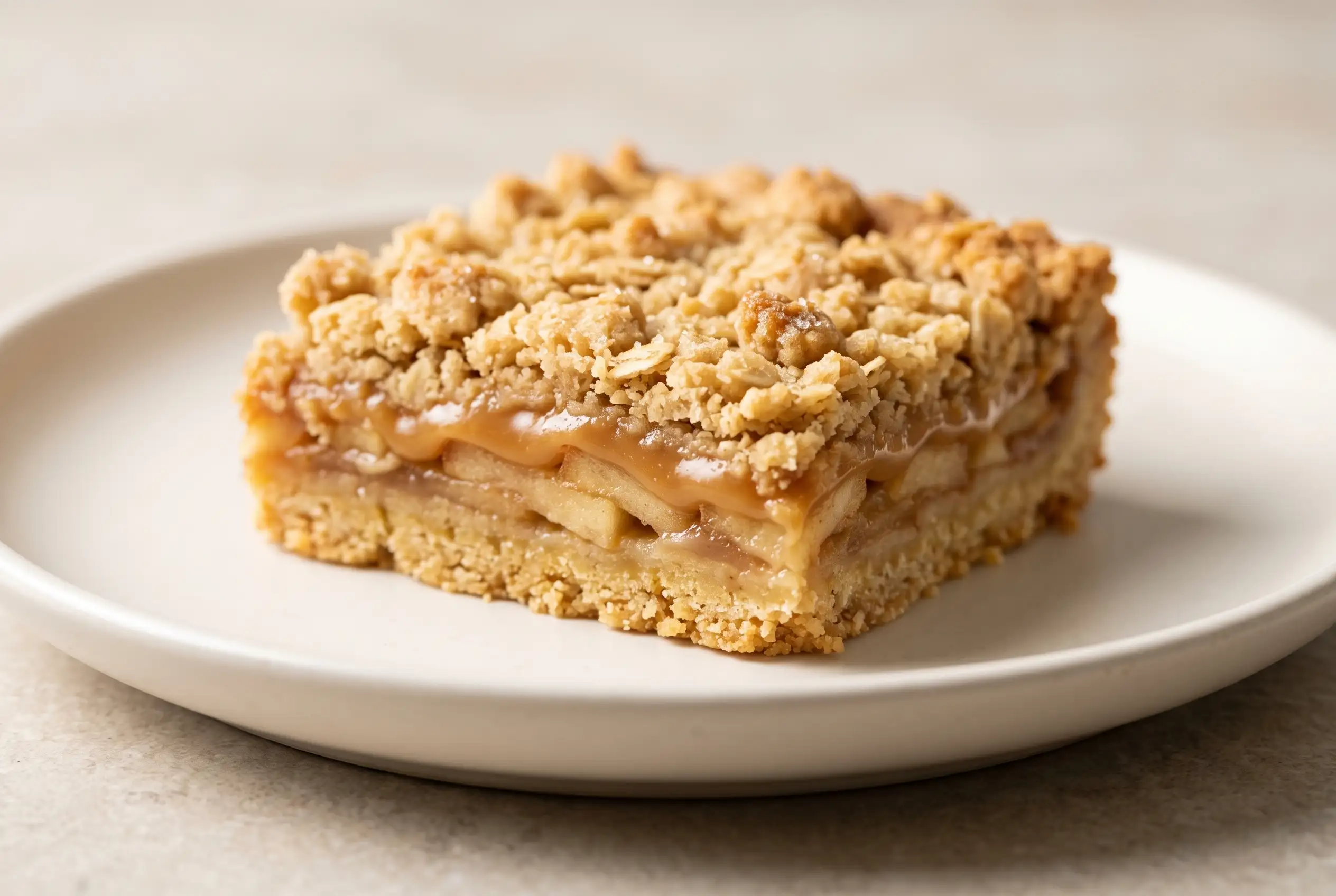
Caramel apple crisp bars bring together a buttery crumble crust, delicate apple layers, and a creamy homemade caramel that settles into every bite. These apple dessert bars have the familiar comfort of apple crisp in a sliceable format, making them especially appealing when you want a dessert that feels rustic but presents neatly.
Why Caramel Apple Crisp Bars Stand Out
Few desserts balance contrast as naturally as caramel apple crisp bars. The base begins with a tender, crumbly texture, while the thin apple layer creates softness and the caramel adds a smooth richness that ties everything together.
Unlike a traditional pie, apple crisp bars are designed around distinct layers that can be seen and tasted separately. The parchment-lined pan makes the finished dessert easy to lift, cool, and portion into clean squares.
Choosing Apples and Crust Details for Better Caramel Apple Crisp Bars
Apple selection matters because the fruit needs to soften during baking while still remaining noticeable between the crumb layers. Small apples sliced into very thin pieces create an even layer that cooks consistently across the pan.
Flour measurement also influences the crust texture. The crumb mixture should hold together as small crumbles before baking, and the texture is a better guide than simply adding extra flour without checking the consistency.
- Apple thickness: Very thin slices help the fruit layer blend with the caramel and crust.
- Crumb texture: A crumbly mixture creates the signature crisp topping and sturdy base.
- Caramel coverage: A smooth sauce spreads more evenly over the arranged apples.
Creating a Crumbly Base That Holds the Filling
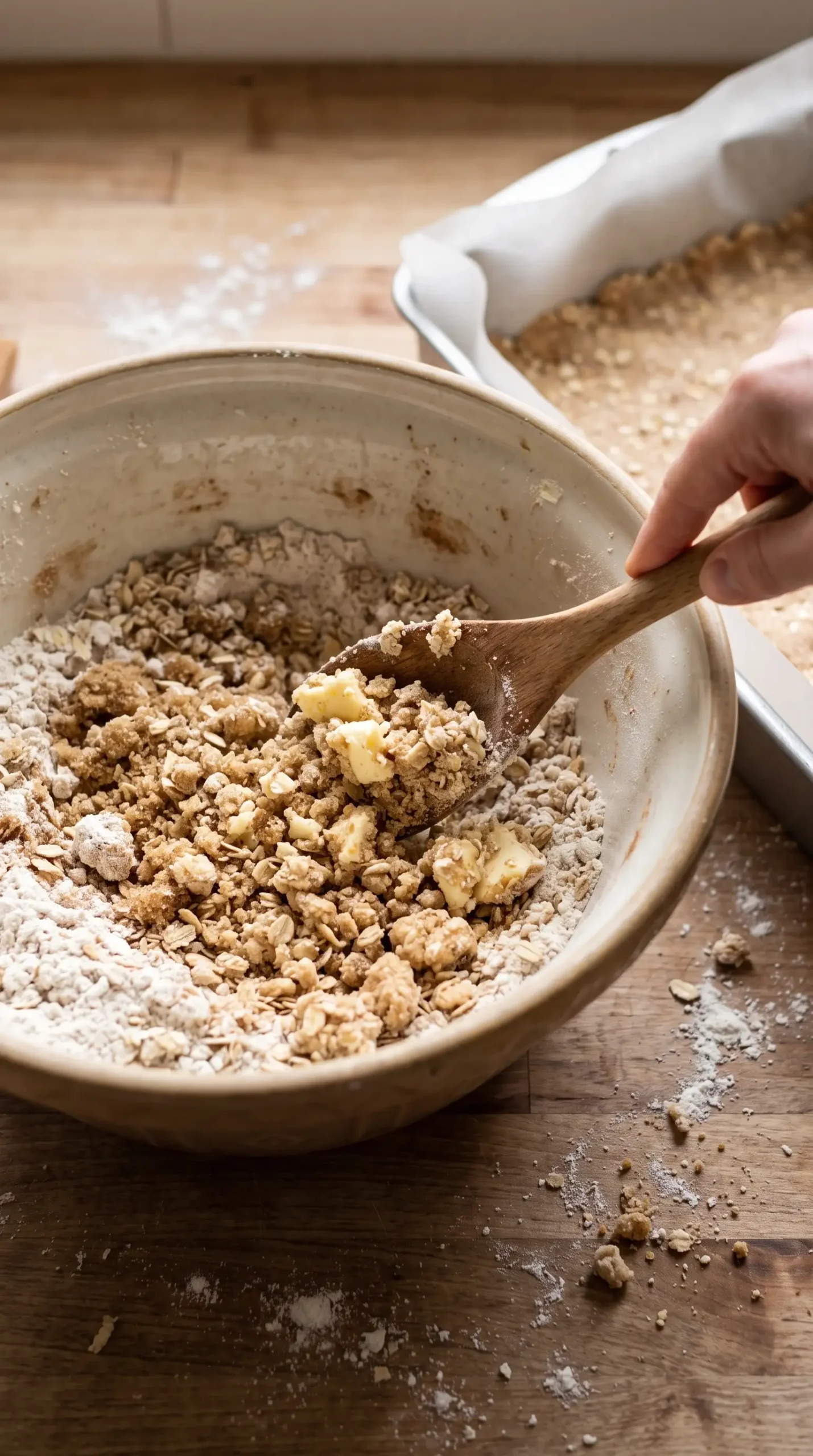
The crust for caramel apple crisp bars works because the mixture serves two purposes at once. Most of the crumb mixture becomes the baked foundation, while the reserved portion creates the topping that adds texture after the apples and caramel are added.
During preparation, the butter and brown sugar combination should become creamy before the dry ingredients are incorporated. That early mixing step helps distribute the cinnamon and other dry ingredients throughout the crumble mixture.
Once pressed into the pan, the crust receives an initial bake before the fruit layer is added. This gives the base structure so it can support the moisture from the apples and caramel later.
Caramel Texture Depends on Small Cooking Choices
The caramel layer succeeds when the butter, sugars, and cream combine into a sauce with enough body to coat the back of a spoon. Paying attention to the moment when the mixture begins approaching a bubble helps avoid adding the cream too early or too late.
Gentle heating is important because the goal is a creamy sauce that spreads across the apples. Stirring after the cream is added helps create a consistent texture that can move between the fruit slices.
Adjusting the fat and sweetener balance can change how a caramel sauce coats fruit and desserts. A dairy-free version made with coconut oil and maple syrup creates a different set of ingredients while keeping a smooth texture for drizzling, such as this vegan caramel sauce.
| Caramel stage | What to notice | Why it matters |
|---|---|---|
| Sugars combined | The butter and sugars are blended together | Creates a smooth starting point for the sauce |
| Before bubbling | The mixture is just beginning to heat through | Signals the right time to add cream |
| Finished sauce | The caramel coats a spoon | Shows a spreadable consistency for the apples |
Thin Apple Slices Make the Layers Work
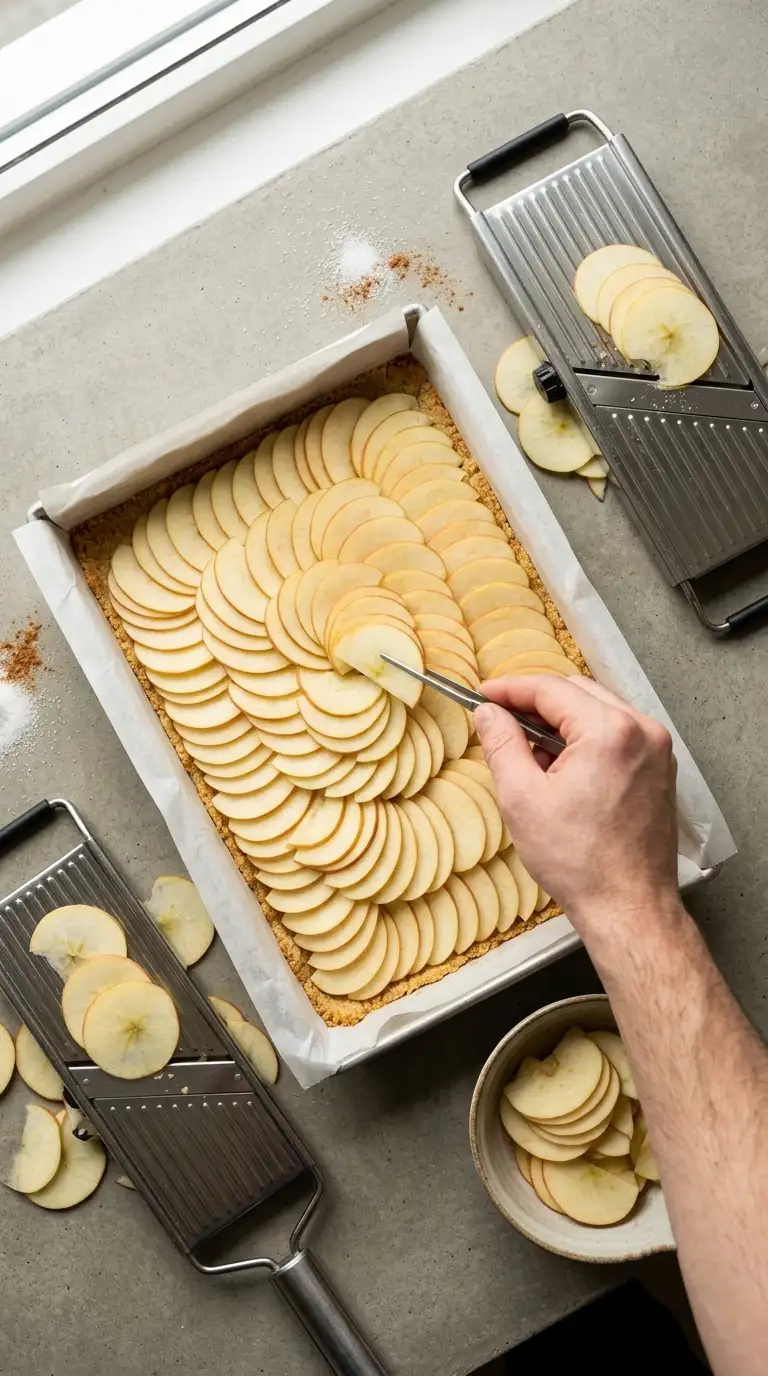
Paper-thin apple slices are one of the defining details of these bars. A mandoline slicer can create consistent apple slices, but careful hand slicing also works when the pieces are kept as thin as possible.
Arranging the apples evenly helps each square receive a balanced amount of fruit and caramel. A scattered or overly thick fruit layer can change how the dessert bakes because some areas will hold more moisture than others.
Caramel Apple Crisp Bars Mistakes That Affect the Bake
Several small choices can change the final texture of caramel apple crisp bars. Avoiding these common problems keeps the crust firm, the fruit tender, and the caramel evenly distributed.
| Potential issue | What causes it | Better approach |
|---|---|---|
| Dense crust | Crumb mixture loses its intended texture | Check that the mixture forms crumbles before pressing |
| Uneven apple layer | Slices are too thick or scattered | Use thin slices arranged across the crust |
| Runny caramel layer | Sauce lacks enough cooked texture | Continue until it reaches spoon-coating consistency |
Another common mistake is cutting the bars before they have had a chance to settle after baking. A short cooling period allows the layers to become easier to handle and helps the slices keep their shape.
Serving Ideas for Apple Dessert Bars
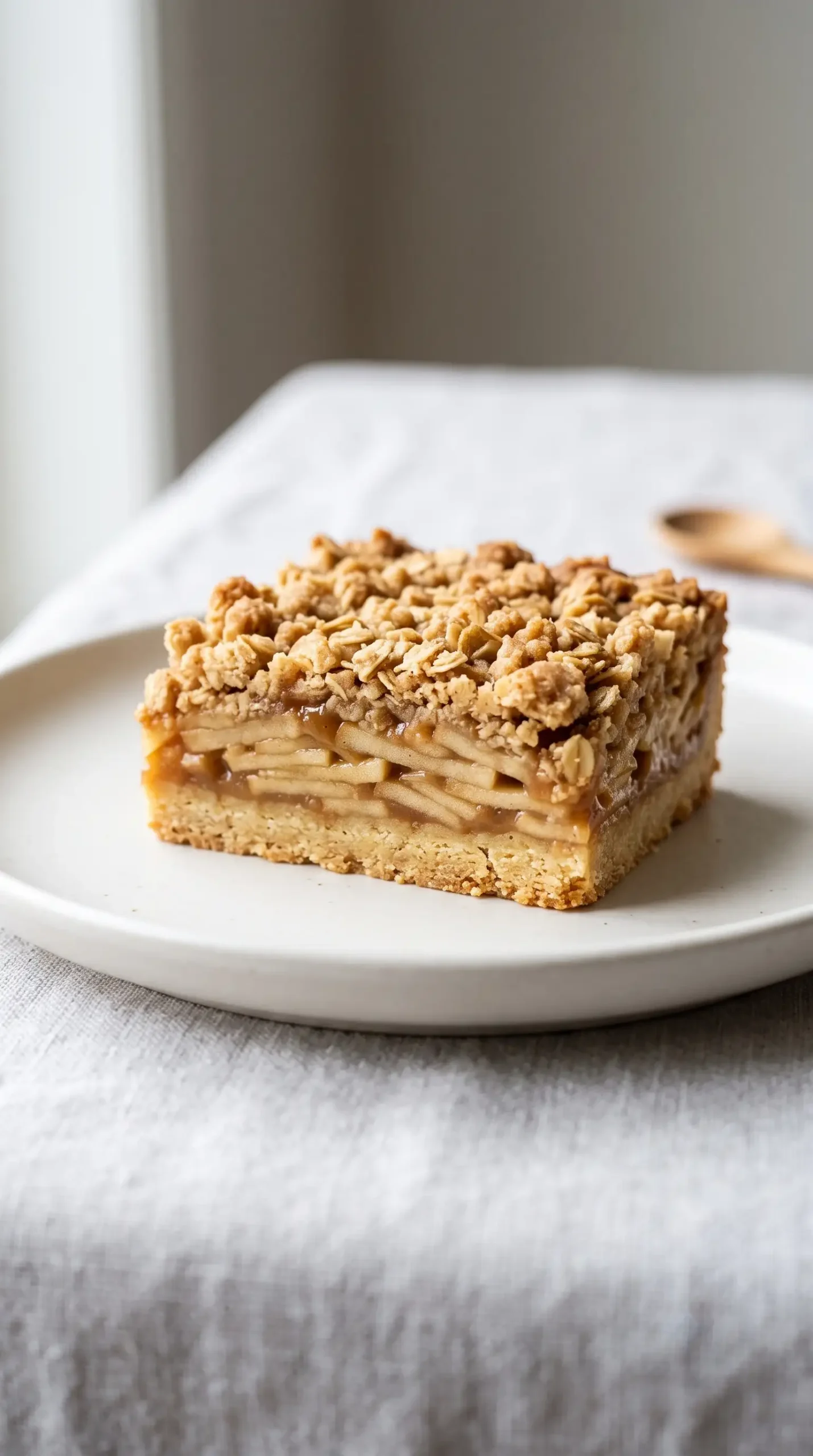
Freshly cut apple dessert bars work well as a casual dessert for gatherings because they can be served individually without the extra handling required by a pie. The caramel and crisp topping provide enough richness to stand on their own.
Presentation can be simple: lift the cooled slab from the pan using the parchment edges, then cut it into portions with a clean knife. The layered appearance makes each piece look finished even without additional decoration.
Storing and Reheating Baked Caramel Apple Bars
Proper storage helps baked caramel apple bars maintain their contrasting textures. Keeping portions protected after cooling prevents the crust and topping from becoming exposed to excess air.
When serving leftovers, gentle warming can bring back the softness of the apples and caramel. Short reheating should be approached carefully so the crumb topping keeps its texture.
Simple Adjustments for Different Occasions
Caramel apple crisp bars can fit different serving situations without changing their core character. The pan format makes them suitable for sharing, while the familiar apple and caramel combination works across casual and seasonal menus.
For a slightly different finish, the topping can be emphasized with a sprinkle of turbinado sugar before baking. That extra touch adds sparkle and a subtle crunch to the surface.
Understanding the Texture You Should Expect
The best result combines several textures in one bite. The bottom layer should feel sturdy enough to hold the filling, the apples should become tender, and the caramel should blend into the fruit without disappearing completely.
Texture depends on how the components interact during baking. The crumb mixture, apple slices, and caramel each contribute something different, creating a dessert that feels more complex than a single-layer bar.
Caramel Apple Crisp Bars Are Best When Layers Stay Balanced
Balanced layers define caramel apple crisp bars from the first bite to the last. The thin apples, creamy caramel, and buttery crumble need to work together so no single element overwhelms the others.
Careful slicing and attention to the caramel consistency make the biggest difference in the finished dessert. When those details are handled well, the bars deliver the comforting flavor of apple crisp in a format that is easy to serve.
Caramel Apple Crisp Bars Texture Questions and Answers
Can I use different apples for caramel apple crisp bars?
Yes, different apple varieties can work as long as they are sliced thinly enough to soften evenly during baking. The most important factor is creating consistent slices so the fruit layer cooks at the same rate throughout the pan.
Why are my caramel apple bars too soft?
Softness can come from extra moisture in the apple layer or from a caramel sauce that has not reached a thick enough consistency before spreading. Checking the caramel texture before assembly and keeping the apple slices thin can help create firmer layers.
How do I keep the crisp topping crunchy?
The topping keeps more texture when the reserved crumb mixture remains in small pieces instead of being packed tightly. Allowing the bars to cool before covering them also helps protect the contrast between the topping and filling.
Can I slice the apples without a mandoline?
Yes, a sharp knife can create the needed thin slices. The important detail is not the tool itself but making the apple pieces thin enough that they soften alongside the crust and caramel during baking.
What makes the crust crumbly instead of hard?
The crust texture comes from keeping the flour mixture in a crumb-like state before pressing it into the pan. Adding only enough flour to maintain those crumbles helps preserve the tender texture.
Caramel Apple Crisp Bars with Homemade Caramel and Apples
Caramel apple crisp bars combine tender apple layers, creamy homemade caramel, and a buttery crumb topping for a comforting dessert that is perfect for gatherings or anytime you want a sliceable apple treat.
Ingredients
Method
Preparation
- Preheat the oven to 350°F (177°C). Beat the softened butter and brown sugar with an electric mixer until smooth and creamy. Mix in the cinnamon, salt, baking soda, and flour until a crumbly mixture forms.
- Reserve 1 cup of the crumb mixture. Press the remaining mixture into a parchment-lined 9×13 baking sheet and bake for 12 minutes.
Caramel and Apple Preparation
- Quarter the apples, remove the cores and seeds, and slice the apple pieces very thinly using a mandoline or a knife.
- Melt the butter in a saucepan. Add both sugars and stir until combined. When the mixture is just about to begin bubbling, add the cream and stir until a smooth caramel sauce forms that coats the back of a spoon.
Assembly and Baking
- Arrange the thin apple slices evenly over the baked crust. Pour the caramel sauce over the apples and scatter the reserved crumb mixture on top. Sprinkle with turbinado sugar for added sparkle and crunch.
- Bake for 30-35 minutes. Remove the bars from the oven, lift them from the pan using the parchment edges, and cool for 10-15 minutes before cutting and serving.
Notes
When measuring the flour, the scoop method may give a different amount than spoon-measuring. If you usually measure more precisely, you may need a little more flour to achieve the right texture. Check that the dough forms crumbles before continuing.