From breakfast to dinner, from wholesome meals to indulgent desserts, Nexa Recipes offers quick, easy, and delicious ideas for every occasion and every moment.



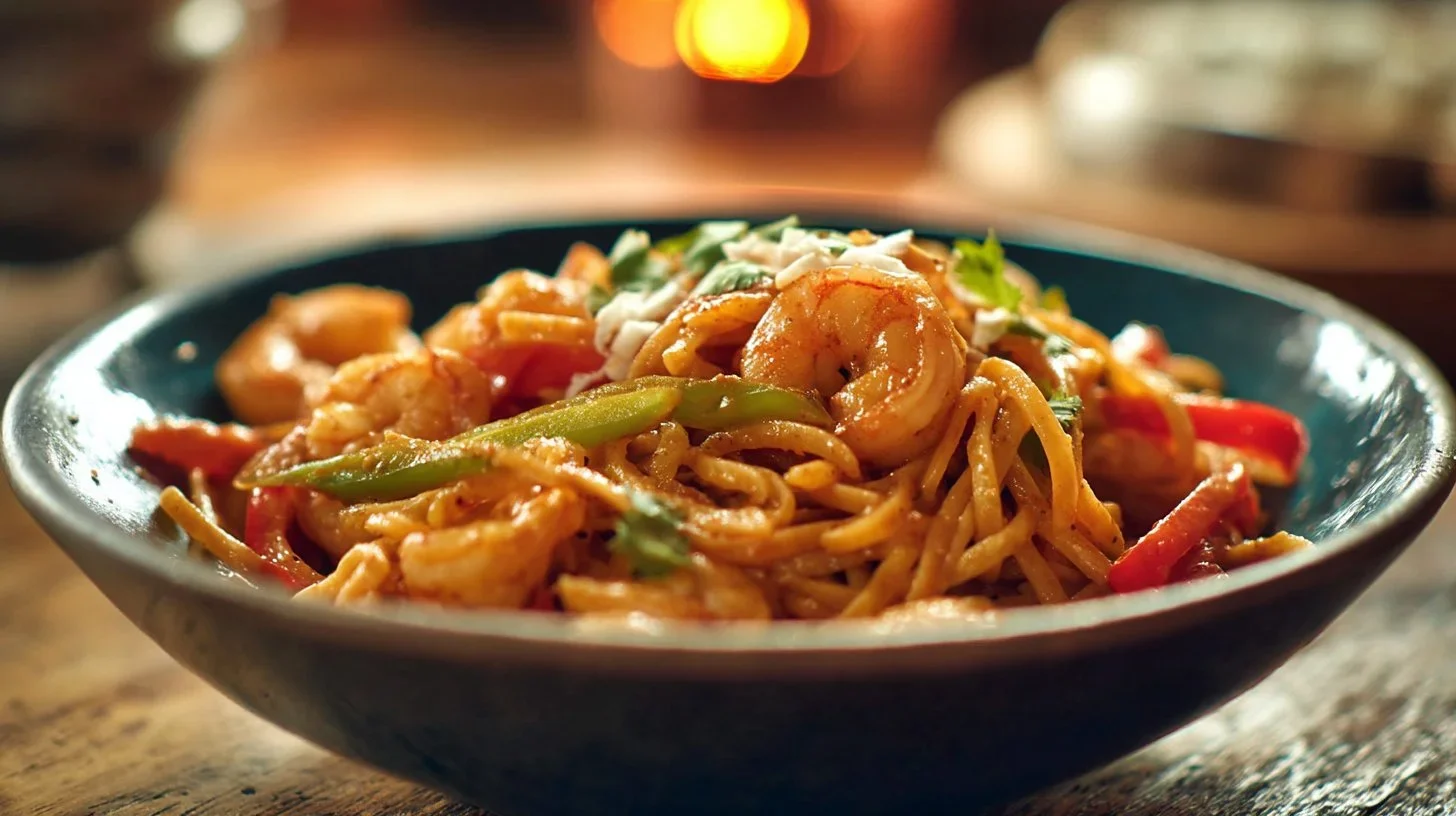
Fajita Shrimp Pasta is a quick, satisfying skillet dinner that balances spicy and creamy flavors. The dish pairs seasoned shrimp, sautéed peppers and onions, and whole wheat pasta in a tangy enchilada-cream sauce.
This recipe is popular because it uses pantry-friendly ingredients and comes together fast on busy nights. It solves the need for a protein-forward pasta that feels bold without heavy prep or long cook times.
Why Make This Recipe
You can make this meal in about 25–30 minutes from start to finish. The steps are straightforward and rely on familiar techniques like boiling pasta and searing shrimp.
Most ingredients are common grocery items: whole wheat pasta, bell peppers, an onion, shrimp, enchilada sauce and a touch of cream cheese. That makes it useful for weeknight dinners or casual gatherings.
The recipe scales easily if you need more servings, and it holds well for next-day lunches. You can also swap ingredients to match what you have on hand.
How to Make Fajita Shrimp Pasta
The approach is to cook components separately so textures stay distinct. Pasta is boiled and set aside while peppers and onions brown to add caramelized flavor.
Shrimp are cooked quickly on high heat to avoid rubberiness. Finishing the dish by melting light cream cheese into enchilada sauce creates a smoother, creamier coating that clings to the pasta and peppers.
Ingredients
- 2 cups whole wheat pasta
- 9 ounces raw shrimp
- 1 tablespoon butter
- 2 cloves garlic, minced
- 3/4 tablespoon Mexican seasoning
- 2 bell peppers, sliced thinly
- 1 onion, sliced thinly
- 2 ounces light cream cheese
- 6 ounces enchilada sauce
Directions
- Cook the pasta according to package instructions.
- Drain the pasta and set it aside.
- Place peppers and onions in a heavy duty skillet over medium-high heat.
- Stir occasionally and cook until the peppers and onions are browned.
- Melt the butter in a large saucepan over high heat.
- Add the minced garlic and shrimp to the pan.
- Season the shrimp with Mexican seasoning and salt and pepper.
- Cook the shrimp until they are no longer translucent, about 4 to 6 minutes.
- Add the enchilada sauce and stir to combine with the shrimp.
- Add the cooked pasta and the browned peppers and onions; stir well.
- Reduce to low heat and add the light cream cheese.
- Stir until the cream cheese melts and the sauce is smooth, adjusting thickness with more sauce or cream cheese as needed.
- Season with additional Mexican seasoning if desired.
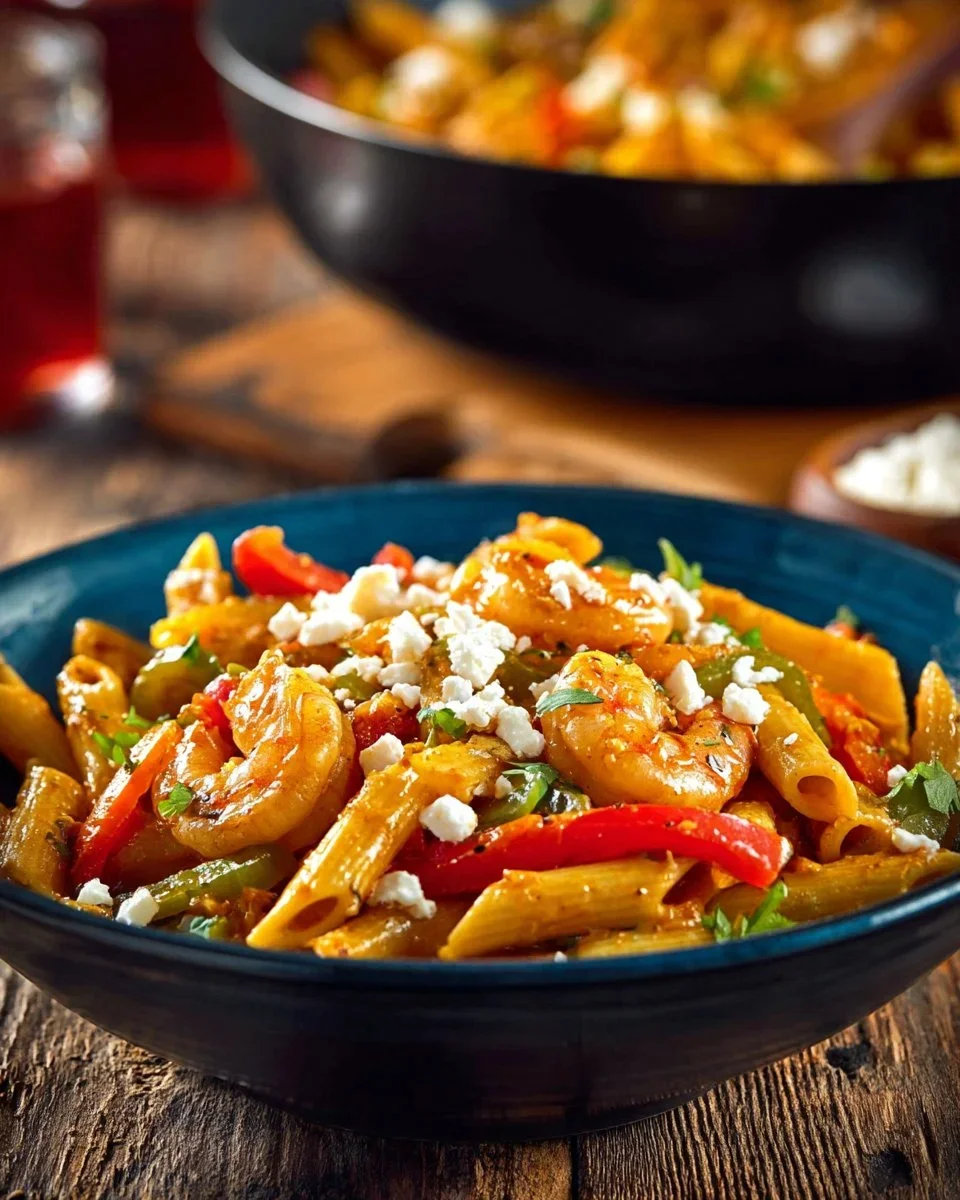
How to Serve Fajita Shrimp Pasta
Serve this pasta warm straight from the pan to keep the cream sauce smooth. Garnish with chopped cilantro or a squeeze of lime for brightness.
Pair it with a simple green salad or charred corn for a balanced plate. A cold beer or a citrus-forward white wine complements the Mexican seasoning and enchilada sauce.
For a lighter finish, serve with fresh tomato slices and avocado on the side. Keep garnishes minimal so the shrimp and peppers remain the focus.
How to Store Fajita Shrimp Pasta
Let the pasta cool to room temperature before refrigerating. Store in an airtight container in the refrigerator for up to 3 days.
To reheat, warm gently in a skillet over low heat with a splash of water or extra enchilada sauce to restore creaminess. Avoid microwaving at high heat, which can toughen the shrimp.
Do not freeze cream-based versions; the texture of the sauce and cream cheese can degrade when frozen and thawed.
Tips to Make Fajita Shrimp Pasta
Use peeled, deveined shrimp of uniform size for even cooking.
Pat shrimp dry to ensure a good sear and avoid steaming.
Brown peppers and onions well for sweeter, deeper flavor.
Cook shrimp on high heat and remove as soon as they are opaque.
Heat the enchilada sauce before adding cream cheese to help it integrate smoothly.
Use a little reserved pasta water to loosen the sauce if it gets too thick.
Taste and adjust Mexican seasoning at the end rather than over-salting early.
Choose whole wheat pasta for extra fiber and a nuttier mouthfeel.
Common Mistakes to Avoid
One common mistake is overcooking the shrimp, which leads to a rubbery texture. Cook shrimp just until opaque and pull them off the heat quickly.
Another issue is adding cream cheese to a cold sauce, which can create lumps. Reduce heat to low and stir until the cream cheese melts fully. If needed, whisk a small amount of warm enchilada sauce into the cream cheese first, then return it to the pan.
Variations
For a creamier result, swap light cream cheese for full-fat cream cheese or a splash of heavy cream. For a lighter version, use a non-dairy cream substitute.
Swap bell peppers for poblano or roasted red peppers for different heat and flavor profiles. You can also use chicken breasts or tofu as a non-seafood alternative.
FAQs
Can I use frozen shrimp?
Yes. Thaw frozen shrimp fully and pat dry before cooking to avoid excess moisture.
Can I make this gluten-free?
Yes. Use a gluten-free pasta to replace whole wheat pasta.
Is enchilada sauce very spicy?
Enchilada sauce heat varies by brand. Choose a mild variety if you prefer less spice.
Can I make this ahead for meal prep?
You can prepare components in advance. Store pasta and sauce separately and combine when reheating.
What type of pasta works best?
Short pastas like penne or fusilli hold the sauce well, but any shape will work.
How do I keep the sauce from separating?
Keep the heat low when adding cream cheese and stir until smooth; avoid boiling once cream has been added.
Conclusion
This Fajita Shrimp Pasta is a reliable weeknight option when you want bold flavor with minimal fuss. If you’re in the mood for another shrimp-and-pasta dinner, try this light garlic shrimp baked penne next. For a simple, trusted reference on safe refrigerator timelines for leftovers, the FoodKeeper guide from FoodSafety.gov is a helpful resource.