From breakfast to dinner, from wholesome meals to indulgent desserts, Nexa Recipes offers quick, easy, and delicious ideas for every occasion and every moment.



 This Recipe
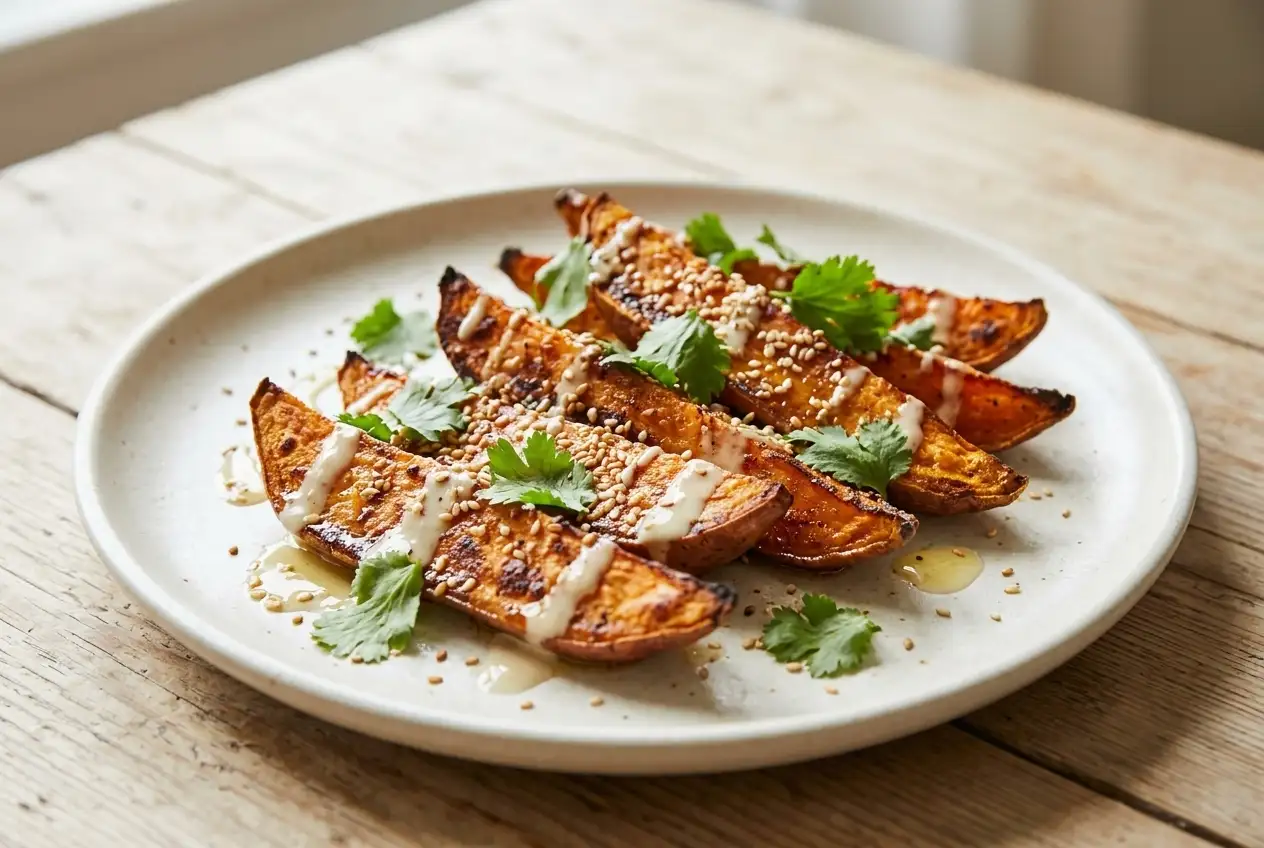
Sesame roasted sweet potatoes turn simple roasted wedges into a dish built around contrast. The natural sweetness of the potatoes meets smoky chili seasoning, nutty sesame flavors, and fresh cilantro for a side dish that feels both comforting and bright. The combination works because each finishing element is added with a clear purpose: roasted sesame oil and tahini create richness, while sesame seeds add texture.
Prepared with a short ingredient list, these sesame roasted sweet potatoes rely on careful roasting and thoughtful finishing touches. The wedges need enough heat to develop golden edges while staying tender inside, and the sesame additions are best used after roasting so their delicate flavors remain noticeable.
Sesame roasted sweet potatoes balance sweet heat and savory sesame
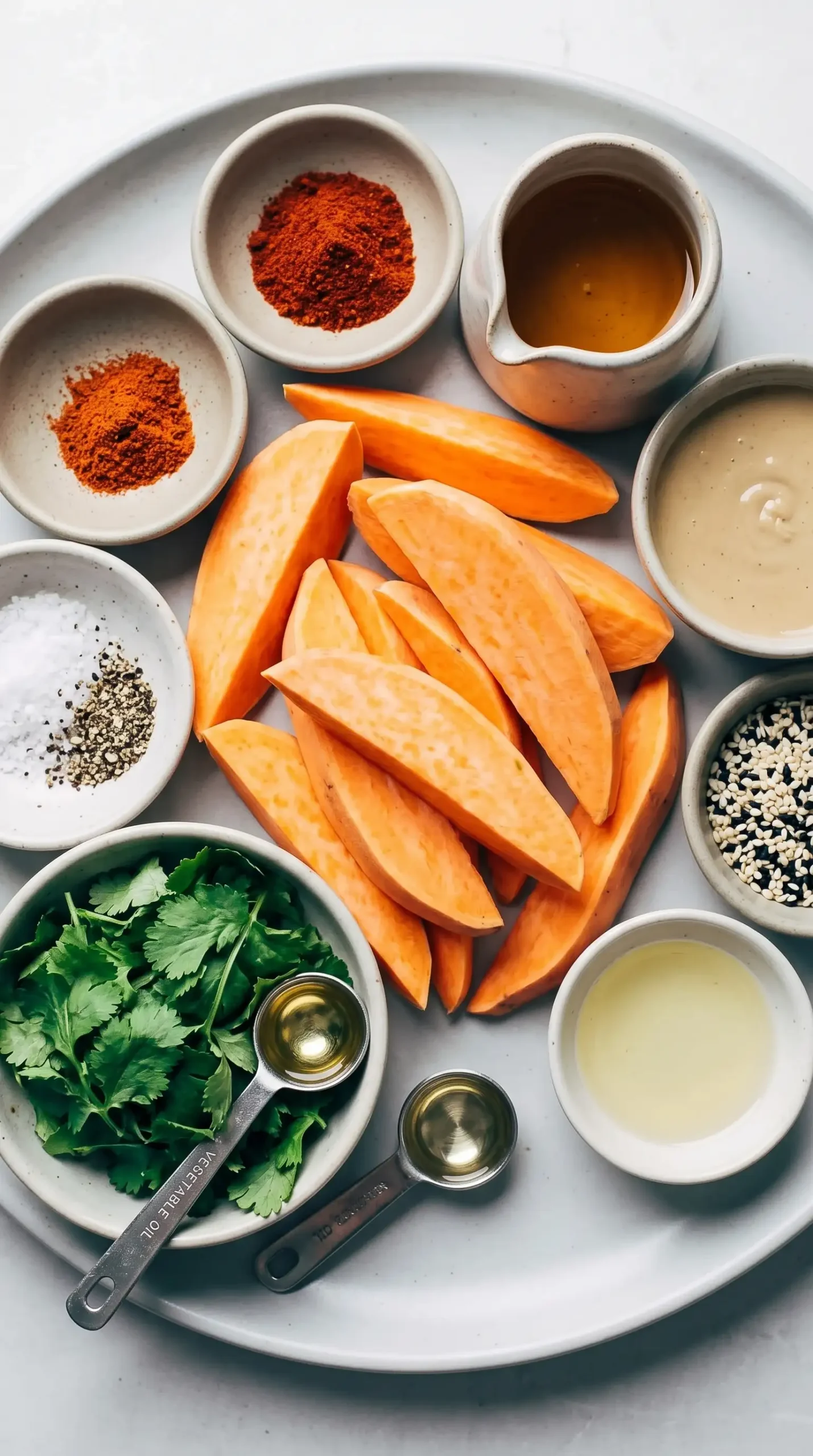
Sweet potatoes provide the foundation for this dish because their naturally sweet flavor pairs well with warm spices. Chili powder and cayenne bring a gentle level of heat that keeps the wedges from tasting one-dimensional, especially when combined with the deeper notes from roasted sesame oil and tahini.
The balance comes from layering flavors at different stages. Seasoning before roasting allows the chili mixture to coat the surface, while the sesame components are added after the oven work is complete. That separation keeps the roasted character of the wedges clear and prevents the finishing flavors from being muted.
Sweet potato wedges need a coating strategy for browning
Cutting the sweet potatoes into wedges creates broad surfaces that can develop color during roasting. A light coating of vegetable oil helps the seasonings cling to the potatoes and supports the browning that gives roasted wedges their appealing texture.
Even coating matters because exposed areas can darken faster than sections covered with seasoning. Tossing the wedges thoroughly before they reach the baking sheet helps distribute the chili powder, cayenne, salt, and pepper across the surface.
| Roasting stage | What to watch | Why it matters |
|---|---|---|
| Initial roasting | Wedges are cooking through and beginning to color | Creates a tender interior with developing flavor |
| Higher heat finish | Edges become golden without excessive darkening | Adds roasted texture and deeper flavor |
| Resting before finishing | Surface is slightly cooler before toppings are added | Helps preserve sesame and tahini flavors |
Roasted sesame oil and tahini shape the finishing flavor
Roasted sesame oil gives the wedges a concentrated nutty aroma, while tahini contributes a creamy sesame character. Together, they create the signature style of sesame tahini sweet potatoes without overwhelming the natural flavor of the roasted vegetable.
Adding these ingredients after roasting is an important choice. The oven develops the sweet potato texture, but the sesame finish remains more recognizable when it is drizzled onto the warm wedges after they leave the heat.
- Roasted sesame oil: Adds a deep toasted sesame aroma with a small amount of finishing drizzle.
- Tahini: Creates a smooth coating that connects the spice and sweetness.
- Sesame seeds: Provide a light crunch that contrasts with the tender wedges.
Cayenne and chili powder create controlled spicy roasted sweet potato wedges
Spice plays a supporting role in spicy roasted sweet potato wedges. Chili powder brings a savory warmth throughout the coating, while cayenne adds a sharper heat that can be adjusted according to personal preference.
The seasoning approach works best when the heat remains connected to the sweetness of the potatoes. A small amount of cayenne allows the sesame flavors and fresh cilantro to remain noticeable instead of disappearing behind spice.
Oven temperature changes protect the roasted sweet potato texture
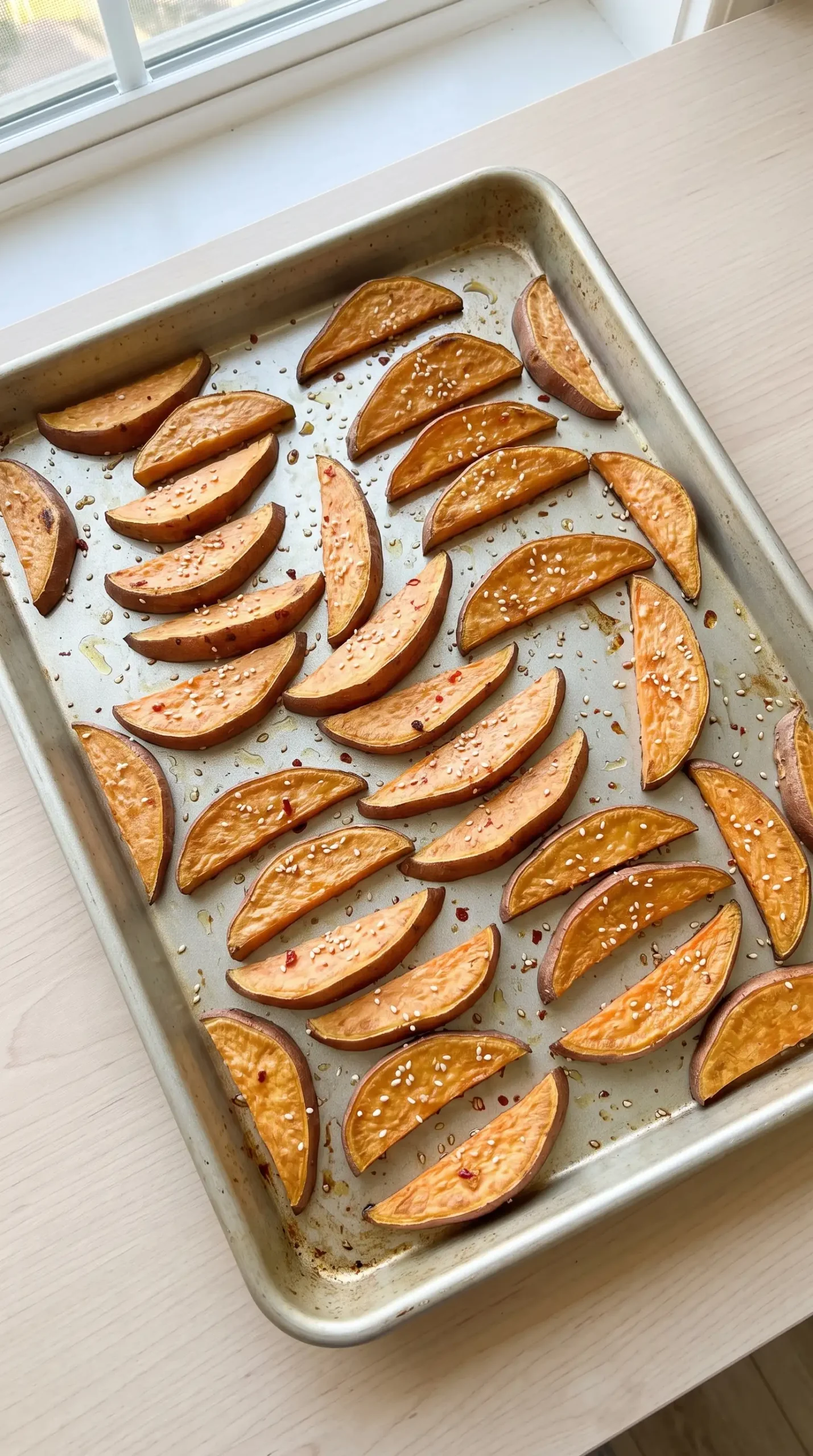
The roasting process uses two temperature stages to develop the right texture. Starting at a moderate oven temperature allows the wedges to cook evenly, while the increase in heat encourages additional browning toward the end.
Stirring the wedges during roasting helps expose different surfaces to the hot baking sheet. Gentle movement is useful because sweet potatoes soften as they cook and can break apart if handled too aggressively.
Cutting the sweet potatoes into similarly sized pieces helps them cook at a more consistent rate during roasting, making it easier to balance tender centers with browned edges.
Color provides one of the best visual cues for doneness. The wedges should show golden areas while still holding their shape, creating a contrast between caramelized edges and a soft center.
Sesame roasted sweet potatoes avoid these common mistakes
Small preparation choices have a noticeable effect on the finished dish. Sesame roasted sweet potatoes are simple to prepare, but a few avoidable problems can change the texture or flavor balance.
| Common issue | Visible sign | Helpful adjustment |
|---|---|---|
| Too much surface moisture | Wedges soften without enough browning | Use an even oil coating and allow space for roasting |
| Over-browning | Dark spots appear before the wedges are tender | Stir gently and monitor during the hotter finish |
| Muted sesame flavor | Finishing flavors are difficult to notice | Add sesame oil and tahini after roasting |
Tahini drizzle choices change the serving style
Tahini gives the roasted wedges a richer finish and can be distributed in different ways depending on how the dish is served. A light drizzle keeps the roasted surfaces visible, while a more generous coating creates a creamier presentation. For a fuller vegetable meal, roasted vegetable bowls with green tahini sauce pair roasted ingredients with a tahini-based topping for a satisfying serving style.
The texture of tahini also helps connect the other toppings. Sesame seeds add contrast, and cilantro brings freshness that keeps the finished plate from feeling too heavy.
Cilantro and sesame seeds sharpen the finished plate
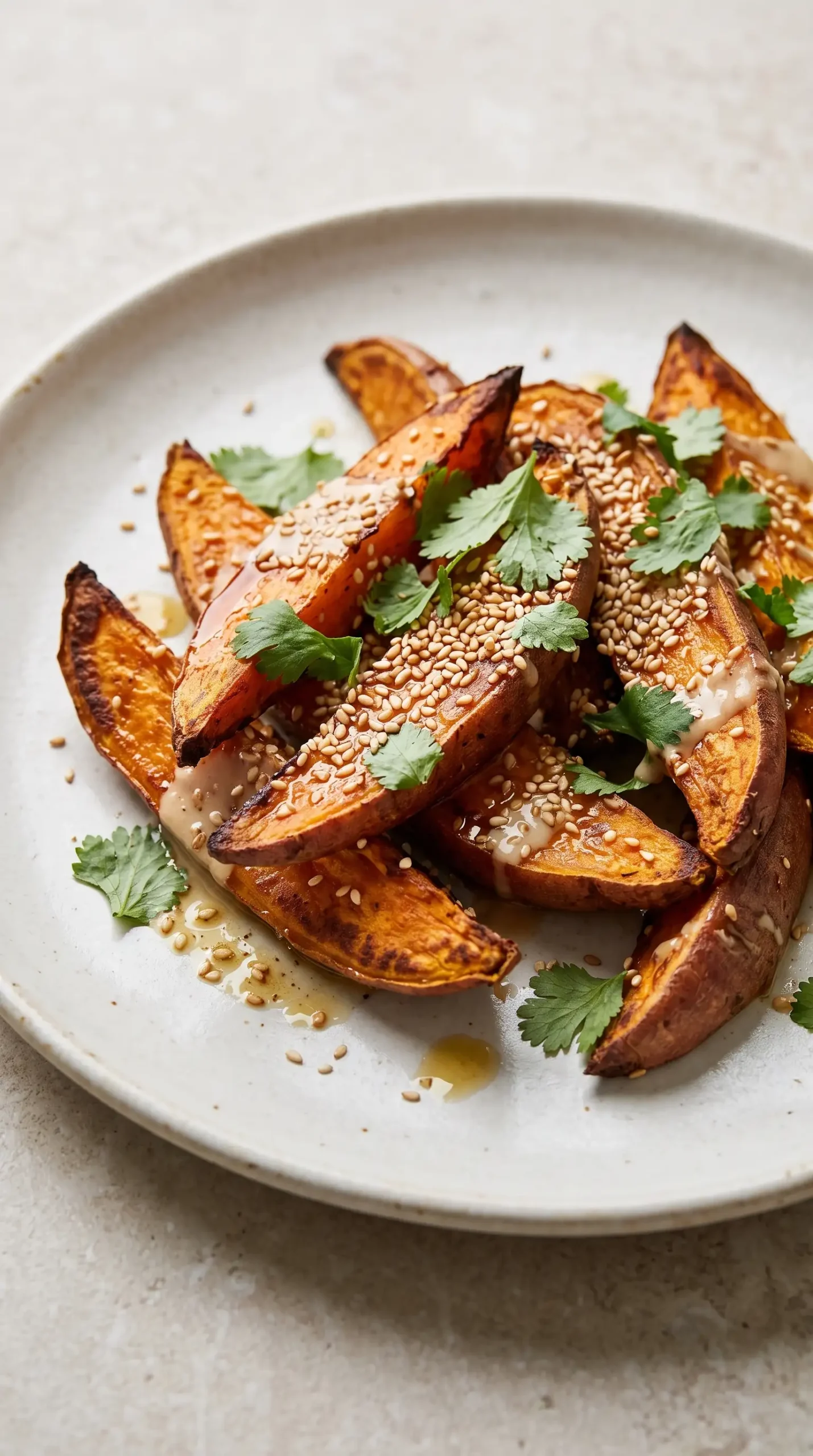
Fresh cilantro provides a bright herbal note that complements the warm spices and toasted sesame flavors. Adding it at the end preserves its fresh character and creates a visual contrast against the orange sweet potatoes.
Sesame seeds contribute a small but important textural element. Their crunch stands out against the soft roasted wedges and reinforces the sesame theme already established by the oil and tahini.
Roasted sweet potato wedges fit flexible meal pairings
The flavor profile allows these wedges to work in several settings without changing their preparation. They can sit beside a main dish, become part of a vegetable-focused plate, or add variety to a spread of roasted foods.
Serving temperature also affects the experience. Warm wedges highlight the contrast between the tender potato and the cool, fresh finishing ingredients added after roasting.
Sesame tahini sweet potatoes gain value from simple adjustments
Small changes can personalize the dish while keeping its central flavors intact. The amount of cayenne can be reduced for a milder version, while extra sesame seeds can increase the nutty texture.
Different sweet potatoes may vary slightly in size and shape, so wedge thickness can influence roasting time. Keeping pieces similar helps them finish at a similar stage.
- For less heat: Reduce the cayenne while keeping the chili powder for flavor.
- For more sesame character: Add sesame seeds after drizzling the tahini and oil.
- For balanced portions: Cut wedges evenly so each piece develops a similar texture.
Roasting decisions define the character of these sesame wedges
The most important choices in sesame roasted sweet potatoes happen before serving. Even seasoning, careful roasting, and adding sesame flavors at the right moment create the difference between plain roasted vegetables and a dish with layered character.
The wedges succeed because the cooking process protects each element’s role. Sweetness from the potatoes, warmth from the spices, richness from sesame, and freshness from cilantro remain distinct while working together on the plate.
Sesame roasted sweet potatoes finish with balanced texture and flavor
Golden sweet potato wedges carry the strongest impact of this dish when their roasted edges, tender centers, and sesame toppings remain in balance. The roasting process builds depth, while the finishing ingredients provide richness and freshness without covering the potato flavor.
Careful timing with the sesame oil, tahini, and toppings keeps every part of the dish noticeable. The result is a roasted vegetable preparation where simple ingredients create a clear combination of sweet, spicy, nutty, and fresh flavors.
Can I adjust the heat in sesame roasted sweet potatoes?
How can I make the wedges less spicy?
Reduce or omit the cayenne pepper while keeping the chili powder for a milder seasoning profile. The sweet potatoes and sesame toppings will still provide plenty of flavor without the extra heat.
Why should sesame oil and tahini be added after roasting?
Adding the sesame finish after roasting keeps the nutty flavors more noticeable and prevents the delicate sesame character from being lost during the longer oven cooking stage.
Can I prepare the sweet potato wedges ahead of serving?
The wedges can be roasted ahead when needed, but the sesame oil, tahini, sesame seeds, and cilantro are best added closer to serving so their textures and aromas stay fresh.
What should I look for when the sweet potatoes are ready?
Ready wedges should have golden areas from roasting, a tender interior, and enough structure to hold their shape when moved or served.
Sesame Roasted Sweet Potatoes with Tahini and Cilantro
Sesame roasted sweet potatoes are tender, golden wedges with a creamy, nutty sesame finish and fresh flavor. This easy side dish is perfect when you want a flavorful roasted vegetable option with a balance of sweet, spicy, and savory notes.
Ingredients
Method
Preparation
- Preheat the oven to 375°F (190°C). Toss the sweet potato wedges with vegetable oil, chili powder, cayenne pepper, and salt and pepper until evenly coated.
- Arrange the coated sweet potatoes on a baking sheet and roast for 20 minutes, gently stirring every 5-10 minutes.
Cooking
- Raise the oven temperature to 400°F (204°C) and continue roasting for another 5-10 minutes, stirring the wedges as needed to keep them from over-browning.
- Remove the sweet potatoes from the oven and allow them to cool slightly.
Assembly
- Transfer the sweet potatoes to a platter or finish them directly on the baking sheet. Drizzle with roasted sesame oil and tahini, then add sesame seeds and cilantro leaves.
- Serve immediately.
Notes
Add the sesame oil, tahini, sesame seeds, and cilantro after roasting to keep the finishing flavors distinct.