From breakfast to dinner, from wholesome meals to indulgent desserts, Nexa Recipes offers quick, easy, and delicious ideas for every occasion and every moment.



 This Recipe
Baked Rigatoni Builds a Creamy Squash Sauce Foundation
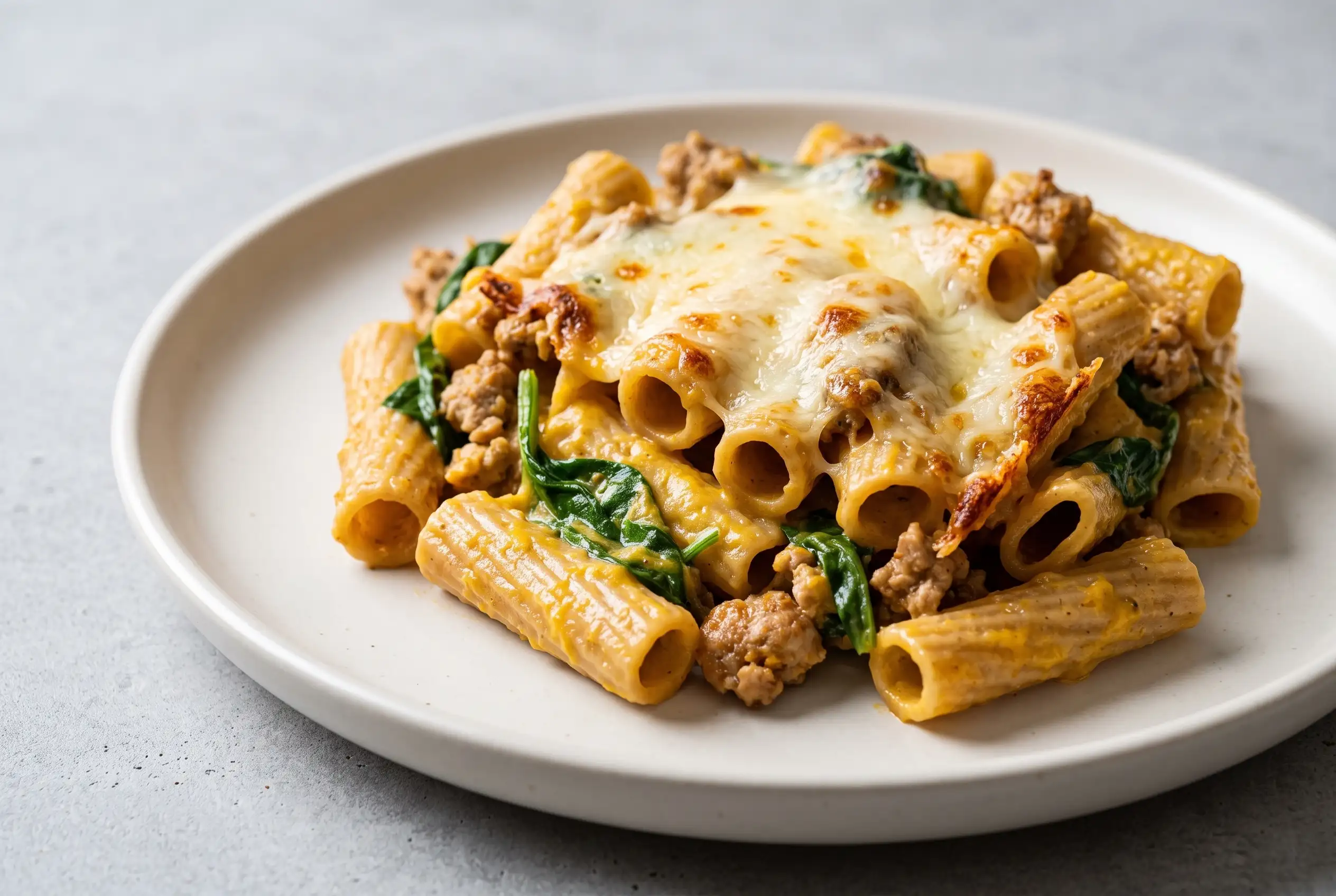
Baked rigatoni with spinach and turkey creates a layered pasta dinner where a smooth squash sauce, browned meat, greens, and melted cheese work together in one baking dish. The pureed kabocha or butternut squash gives the pasta a naturally creamy coating that carries the flavors of onion, garlic, oregano, and cream through every portion.
The sauce structure matters because the rigatoni needs enough moisture to finish cooking in the oven without becoming loose or watery. Cooking the squash with vegetable broth allows the vegetables to soften before blending, creating a smooth base that can cling to the pasta tubes.
A well-balanced spinach turkey rigatoni casserole depends on how the components meet before baking. The sauce coats the noodles, the turkey provides a browned savory layer, and the Provolone melts between the pasta pieces to create a unified finish instead of separate ingredients sitting apart.
Squash and Provolone Shape the Rigatoni Bake’s Balance
The ingredient choices most likely to change the character of this dish are the squash and cheese. A medium kabocha or butternut squash creates a velvety sauce after blending, while grated Provolone contributes a smooth melt and a mild, savory flavor that works with the turkey and spinach.
Provolone is especially useful in a rigatoni bake with provolone cheese because it can soften throughout the casserole while still creating a noticeable cheese layer. Dividing the cheese inside the pasta and across the surface helps distribute its flavor instead of concentrating it only on top.
The combination of squash, cream, and cheese requires balance. The cream or half-and-half enriches the blended sauce, but the squash remains the foundation that keeps the pasta coating flavorful without making the finished dish feel overly heavy.
Turkey Browning Sets the Savory Base for the Casserole
Ground turkey develops deeper flavor when it is cooked with the remaining onion and garlic mixture until excess liquid is removed. Creating a browned surface gives the meat a stronger presence after it is combined with the creamy sauce and baked rigatoni.
Rigatoni Size Helps Hold the Finished Sauce
Rigatoni works well in this baked pasta because its large tubes capture sauce and small pieces of turkey as the dish comes together. The shape creates pockets where the squash-based mixture can settle, making each serving more consistent.
Slightly undercooking the pasta before baking is an important texture decision. The noodles continue to soften in the oven as they absorb the sauce, so stopping before they reach full tenderness helps them maintain structure after the cheese melts and the casserole heats through. When pasta will continue cooking as part of a finished dish, it can be useful to undercook the pasta before further cooking so it retains a better texture.
Whole wheat rigatoni also brings a firmer bite that pairs well with the creamy elements. Its texture gives the finished baked rigatoni more contrast, especially when the top develops light browning during the oven finish.
Spinach Keeps the Baked Pasta Finish Balanced
Fresh spinach folds into the pasta mixture before baking and softens from the heat of the sauce and noodles. The greens add a fresh element that cuts through the richness of squash, cream, turkey, and cheese without changing the casserole’s comforting character.
Baked Rigatoni Cooking Controls Prevent Soft Pasta
The most important execution choices happen before the baking dish reaches the oven. The pasta should enter the casserole slightly firm, because the sauce and heat continue working together during the bake. Paying attention to baked pasta texture helps maintain a balanced result where the noodles, sauce, and cheese finish together without becoming overly soft.
One useful control is keeping the sauce smooth but not overly thin. The blended squash mixture already contains moisture from the broth, so adding only the specified cream amount maintains a coating texture that supports the pasta instead of pooling around it.
Oven placement and timing also influence the finished surface. A moderate baking temperature allows the cheese to melt, the center to heat through, and the top layer to begin browning without requiring excessive exposure that could dry the pasta edges.
Layering Provolone Creates a Better Rigatoni Bake Finish
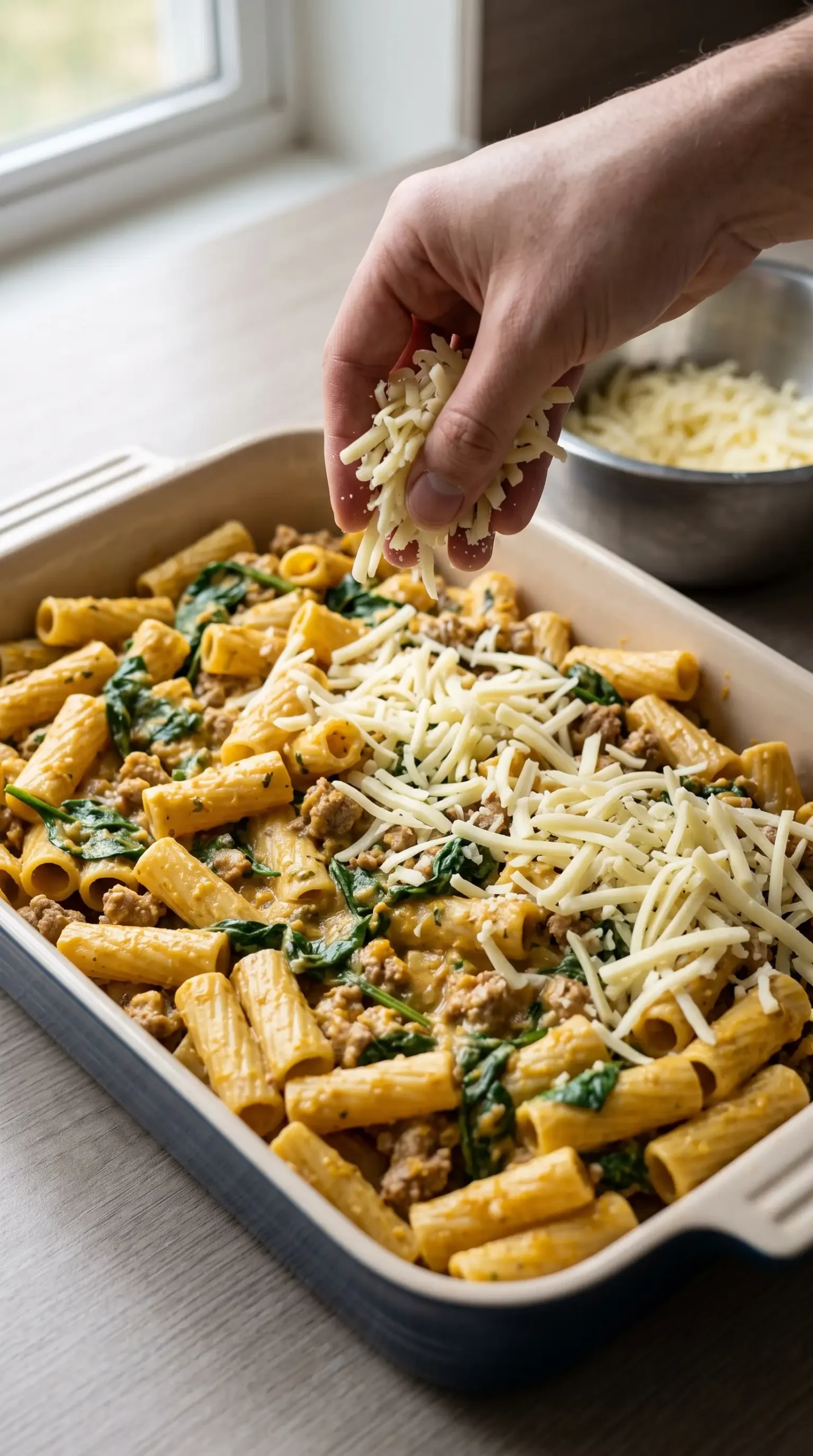
Adding cheese through the middle of the baking dish changes how the casserole eats from the first serving to the last. A hidden layer melts into the pasta mixture, while the upper layer creates the browned finish associated with a satisfying baked pasta.
Common Mistakes That Affect Baked Rigatoni with Spinach and Turkey
Several small choices can change the texture of baked rigatoni. The most common problems come from pasta preparation, turkey handling, and sauce consistency, all of which can be corrected by paying attention to the cooking stage where they occur.
- Overcooked noodles: Boiling the rigatoni too long before baking can leave the pasta soft after it absorbs the sauce in the oven. Keeping the initial cook shorter preserves a firmer bite.
- Wet turkey mixture: Leaving excess liquid in the browned turkey can prevent the meat from developing a deeper color and can make the casserole less cohesive.
- Uneven sauce coverage: Adding the sauce without fully combining it with the pasta can leave some noodles dry while others contain too much moisture.
The spinach should also be distributed throughout the pasta mixture before baking. Concentrating the greens in one area creates uneven bites and prevents the fresh flavor from balancing the richer ingredients.
Choosing Squash Changes the Sauce Texture
Kabocha and butternut squash both work because they can be cooked until tender and blended into a smooth sauce. The choice between them may slightly change the finished texture and sweetness, but both provide the creamy base needed for the pasta.
Storage and Reheating Protect the Pasta Texture
Once cooled and stored properly, baked rigatoni can maintain its flavor and texture for another meal. Keeping portions covered helps protect the pasta from drying out and keeps the sauce coating the noodles.
Reheating works best when gentle heat allows the sauce to loosen again. Adding a small amount of moisture during reheating can help restore the creamy consistency that develops when the pasta has absorbed some of the sauce.
| Storage choice | Best practice | Texture consideration |
|---|---|---|
| Refrigerated portions | Cover tightly after cooling | Keeps the sauce attached to the pasta |
| Individual servings | Reheat smaller amounts as needed | Reduces repeated heating of the casserole |
| Frozen portions | Protect from air exposure | Helps preserve the creamy pasta finish |
The cheese and squash sauce make this pasta suitable for planned meals because the flavors continue to work together after baking. Careful reheating helps the rigatoni remain tender while keeping the creamy texture noticeable.
Serving Ideas for a Spinach Turkey Rigatoni Casserole
The finished spinach turkey rigatoni casserole already contains pasta, protein, vegetables, and a creamy sauce, so simple sides work best. A crisp salad or lightly prepared vegetable side can add contrast without competing with the baked pasta.
Oregano and Seasoning Guide the Flavor Direction
Dried oregano has an important role because it connects the sweet squash sauce with the savory turkey and cheese. Adding it while seasoning the blended sauce and browned meat creates a consistent herbal note throughout the dish.
Salt and pepper also need attention at different stages. Seasoning the squash puree and turkey separately allows each part of the casserole to develop its own flavor before everything is combined.
Garlic and onion provide the aromatic base for both the sauce and turkey mixture. Dividing the minced mixture between the two parts creates a shared flavor foundation that ties the casserole together without overwhelming the squash or cheese.
Baked Rigatoni With Spinach, Provolone, and Turkey Holds Together Through Careful Texture Control
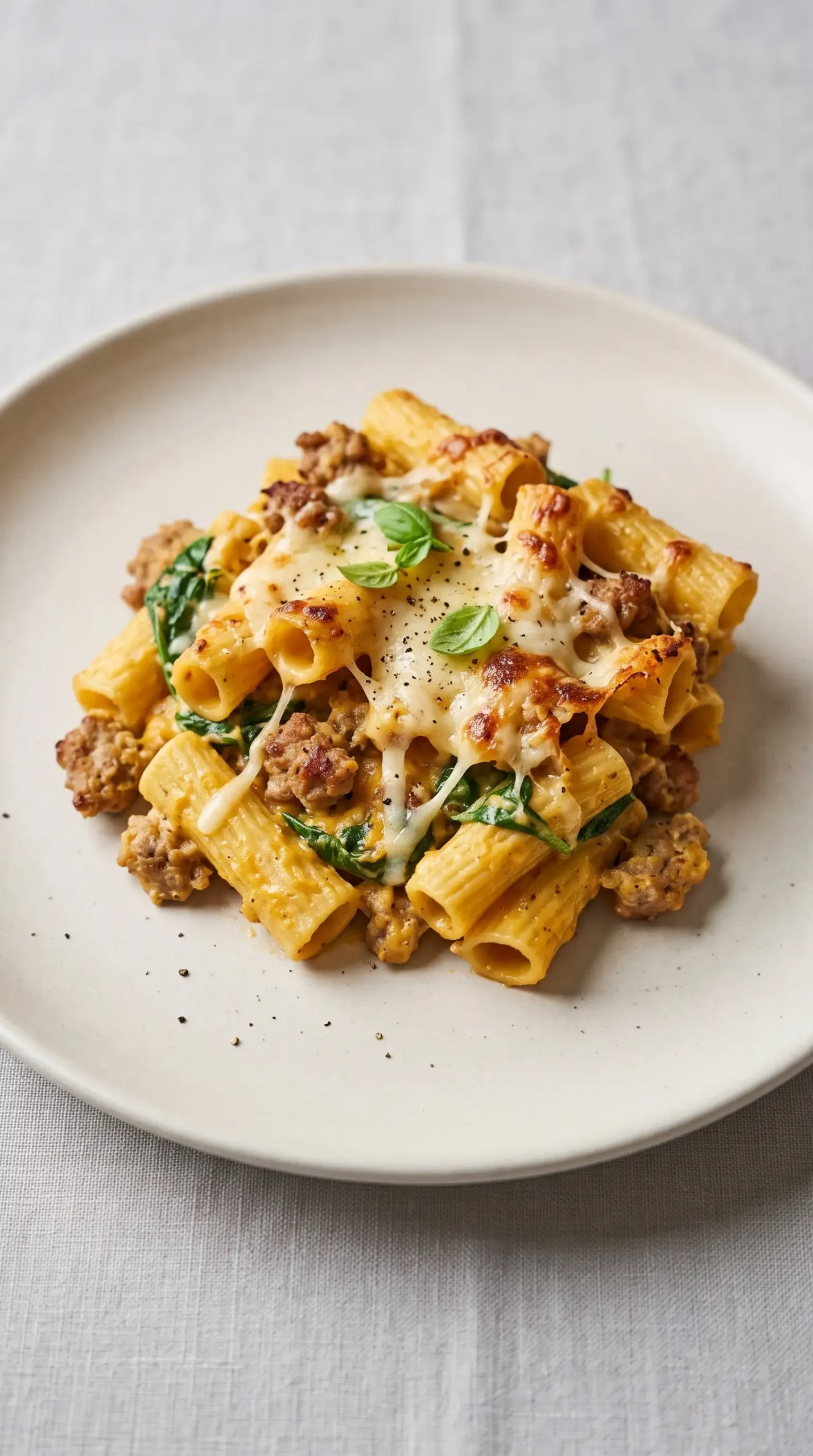
Baked rigatoni succeeds when each texture is protected: the pasta stays structured, the squash sauce remains creamy, the turkey develops savory depth, and the Provolone creates a melted finish. The most important judgment is recognizing that every component continues cooking after it enters the baking dish.
The finished casserole reflects the balance created before baking. Slightly firm rigatoni, well-browned turkey, and evenly distributed sauce allow the dish to deliver a cohesive result with spinach, Provolone, and squash working together in every serving.
Baked Rigatoni Questions About Pasta Texture and Storage
How can I keep baked rigatoni from becoming too soft?
Keep the pasta slightly undercooked before combining it with the sauce. The rigatoni will continue absorbing moisture while it bakes, so starting with a firmer noodle helps preserve the final texture.
Can I use a different squash for the sauce?
Yes, another winter squash with a similar texture can work if it becomes tender enough to blend smoothly. Kabocha and butternut squash are suitable because they create the creamy base used in the casserole.
Why should the turkey be browned before adding it to the pasta?
Browning removes excess moisture and develops a deeper savory flavor. That extra step helps the turkey remain noticeable alongside the creamy sauce and melted cheese.
What causes a baked rigatoni sauce to seem too thin?
A thin result can happen when the pasta mixture contains more moisture than it can absorb. Maintaining the intended squash puree consistency and draining excess liquid from the turkey helps keep the sauce balanced.
How should leftovers be reheated without drying the pasta?
Warm portions gently and add a small amount of moisture if the sauce has tightened after chilling. Gradual reheating helps the noodles soften evenly while keeping the creamy coating intact.
Baked Rigatoni with Spinach, Provolone, and Turkey
Baked Rigatoni with Spinach, Provolone, and Turkey is a creamy, comforting pasta bake with a hearty blend of squash sauce, browned turkey, spinach, and melted cheese. It is a satisfying choice for weeknight dinners or gatherings when you want a cozy baked pasta dish.
Ingredients
Method
Preparation
- Mince the onions and garlic, then place them together in a small bowl and set aside.
Cooking
- Bring the vegetable broth to a boil. Add half of the onion and garlic mixture along with the prepared squash, then cook for 10 minutes or until the squash, onion, and garlic are tender when pierced with a fork.
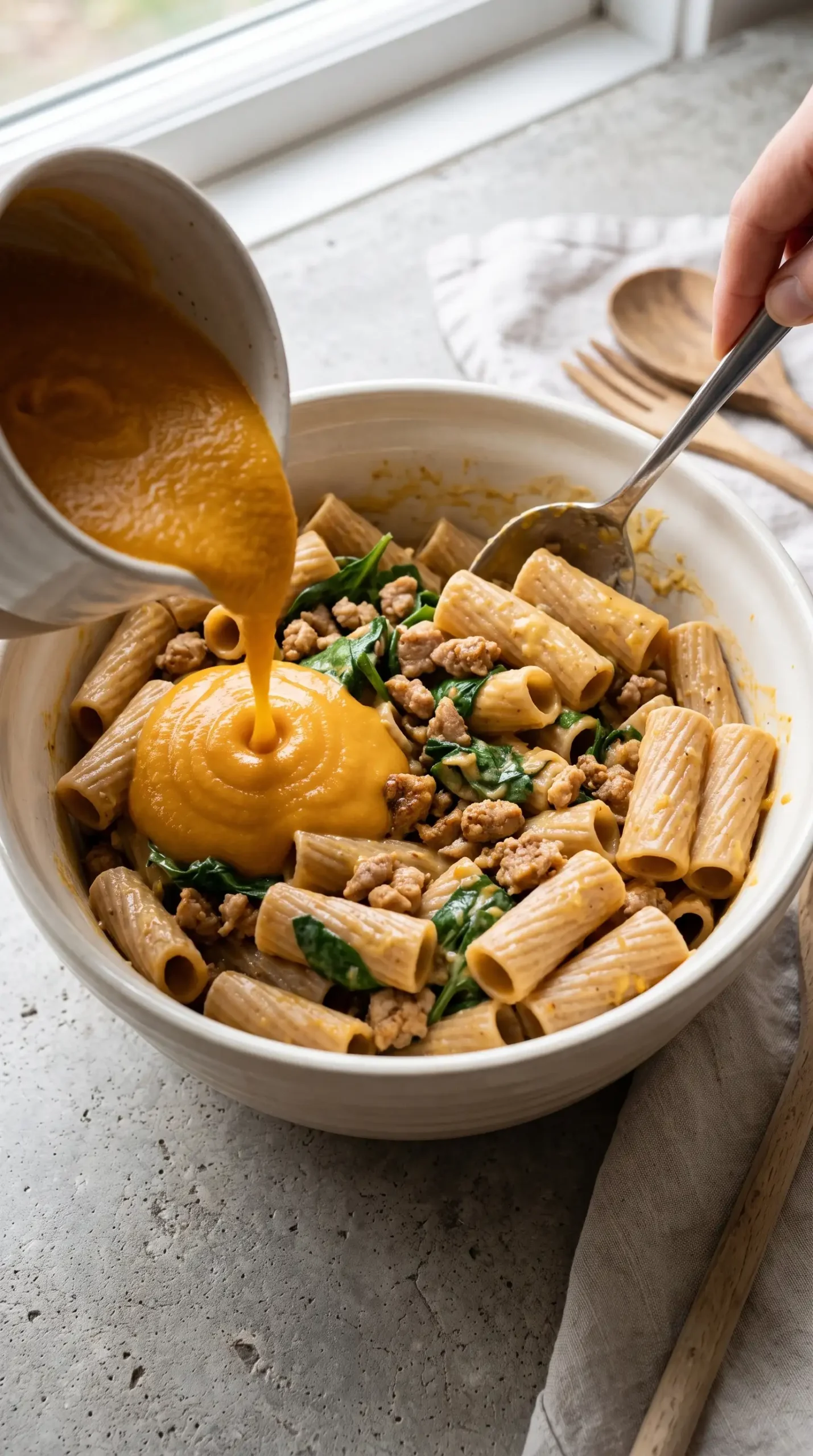
- Transfer the cooked squash mixture and 1/2 cup of the broth from the pot to a blender. Blend until smooth, seasoning with salt, pepper, and dried oregano to taste. Mix in the cream and set the sauce aside.
- Cook the ground turkey over medium-high heat with the remaining onion and garlic mixture. Season with salt, pepper, and oregano, then drain excess liquid so the turkey browns well.
- Cook the rigatoni in a large pot for about 6 minutes so it remains slightly undercooked. Drain the pasta.
Assembly
- Add the squash sauce, turkey, and spinach to the drained rigatoni and stir until evenly combined.
- Transfer half of the pasta mixture to a large baking dish, add about 1/2 cup of the Provolone cheese as a middle layer, then add the remaining pasta mixture. Sprinkle the remaining 1/2 cup of cheese over the top.
Baking
- Bake at 375°F (190°C) for 20 minutes or until the top begins to brown and the casserole is heated through.
Notes
Keep the rigatoni slightly undercooked before baking so the pasta maintains its texture as it finishes cooking in the oven.