From breakfast to dinner, from wholesome meals to indulgent desserts, Nexa Recipes offers quick, easy, and delicious ideas for every occasion and every moment.



 This Recipe
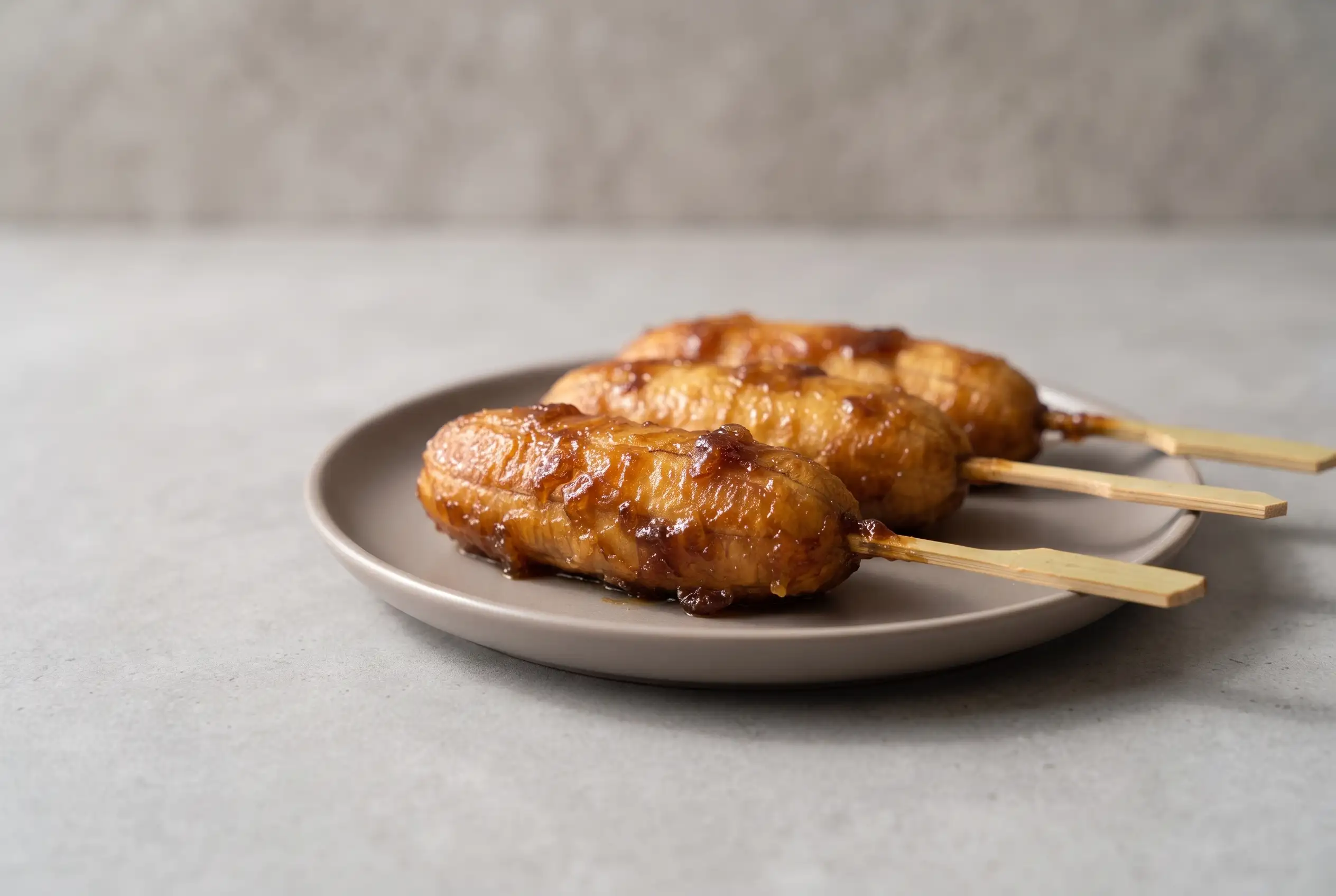
Banana cue is a beloved Filipino street snack built around sturdy saba bananas coated in a glossy layer of caramelized brown sugar. The appeal comes from the contrast between the tender fruit inside and the sticky, deep golden coating that forms during frying. A well-prepared Filipino banana cue recipe depends on choosing fruit that can withstand heat while still becoming soft and sweet.
Banana Cue Brings Filipino Street Food Flavor
Across Filipino food culture, banana cue represents a simple preparation that transforms a few ingredients into a recognizable snack. The combination of bananas, caramelized sugar, and a crisp outer coating creates a treat often enjoyed on skewers for easy serving and sharing.
Unlike many desserts that rely on multiple layers of flavor, banana cue focuses on careful handling of a small group of ingredients. The brown sugar must coat the fruit evenly, and the bananas must remain intact enough to hold their shape after frying.
Saba Bananas Shape the Caramelized Texture
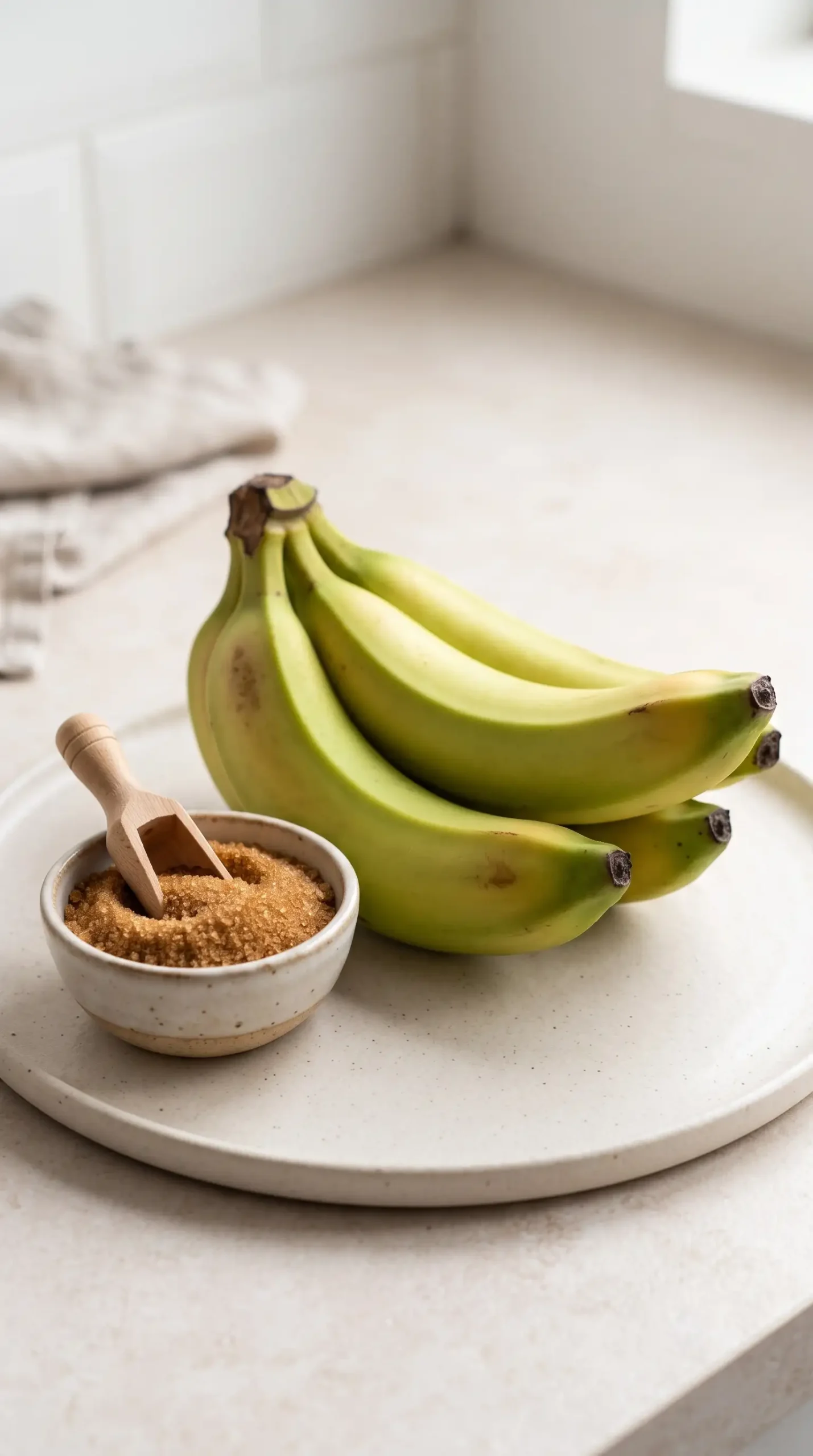
Saba bananas provide the structure that makes this snack work. Their firmer texture allows them to stay together while they cook in hot oil and become covered with the caramelized sugar coating.
Firm cooking bananas are especially useful because the fruit needs to support a sticky exterior without collapsing immediately. The sturdy quality of saba bananas separates them from softer varieties that may become difficult to handle during frying.
Readers using a Filipino banana cue recipe often notice that the banana variety affects the finished texture more than the amount of sweetness. The fruit choice determines whether each bite has a defined center beneath the caramel layer.
Choosing Fruit Determines the Frying Result
Fresh banana selection influences how smoothly the frying process develops. Saba bananas are the traditional choice, but alternatives can work when their texture is considered before cooking.
| Fruit choice | Texture during frying | Coating result |
|---|---|---|
| Saba bananas | Firm and sturdy | Holds caramelized sugar well |
| Regular grocery store bananas | Softer and more delicate | May become mushier |
| Plantains | Firm when suitable for cooking | Can provide a sturdy alternative |
Careful cooks can judge the fruit before heating by looking for enough firmness to move and handle without breaking apart. Softer fruit is not unusable, but it requires more attention because the caramel coating can become harder to manage.
Brown Sugar Creates the Signature Coating
Brown sugar is responsible for the recognizable appearance of banana cue. As the sugar caramelizes through heat, it changes from loose granules into a sticky coating that clings to the bananas and develops the golden color associated with caramel.
Heat control matters because sugar changes quickly once it begins to melt. A steady cooking environment helps the coating develop gradually so the bananas become covered in a deep golden layer instead of uneven patches.
- Even coating: Moving the bananas through the caramelized sugar helps distribute the sticky layer.
- Golden color: Watching the sugar closely helps maintain the desired caramel appearance.
- Firm fruit: Choosing bananas with structure keeps the coating attached to recognizable pieces.
Caramelization Controls the Cooking Process
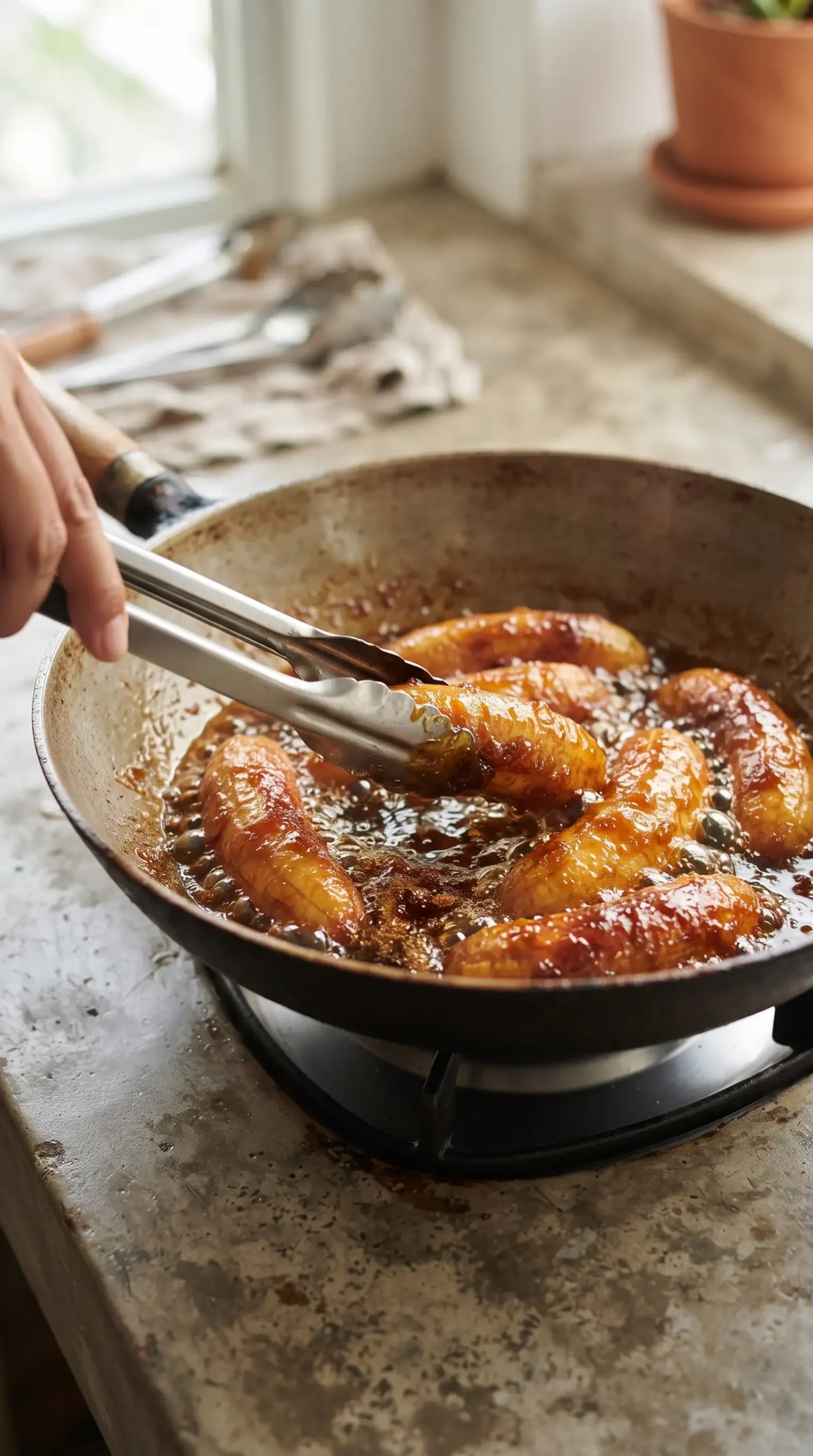
Successful frying depends on the relationship between oil temperature and sugar behavior. The oil needs enough heat to cook the bananas while allowing the brown sugar to melt and cling around the fruit.
During preparation, attention should remain on visual changes. The coating becomes the main signal, showing when the sugar has transformed into the glossy caramel layer associated with fried caramelized bananas.
Small adjustments during cooking can protect the texture. Gentle handling prevents the bananas from breaking while the sticky coating is still forming and warm.
Banana Cue Mistakes That Ruin the Coating
Common banana cue mistakes usually involve problems with fruit choice, sugar handling, or attention during frying. Each issue changes the appearance and texture of the finished snack.
- Soft bananas: Very tender fruit may lose its shape before the coating develops fully.
- Uneven sugar contact: Poor coating distribution can leave some areas without the signature caramel layer.
- Rough handling: Moving the fruit too aggressively can damage the bananas while they are coated.
Fixing these problems starts with identifying the cause. Firmer bananas help create stability, careful movement protects the surface, and watching the sugar helps produce a more consistent finish.
Serving Skewers Keep the Snack Authentic
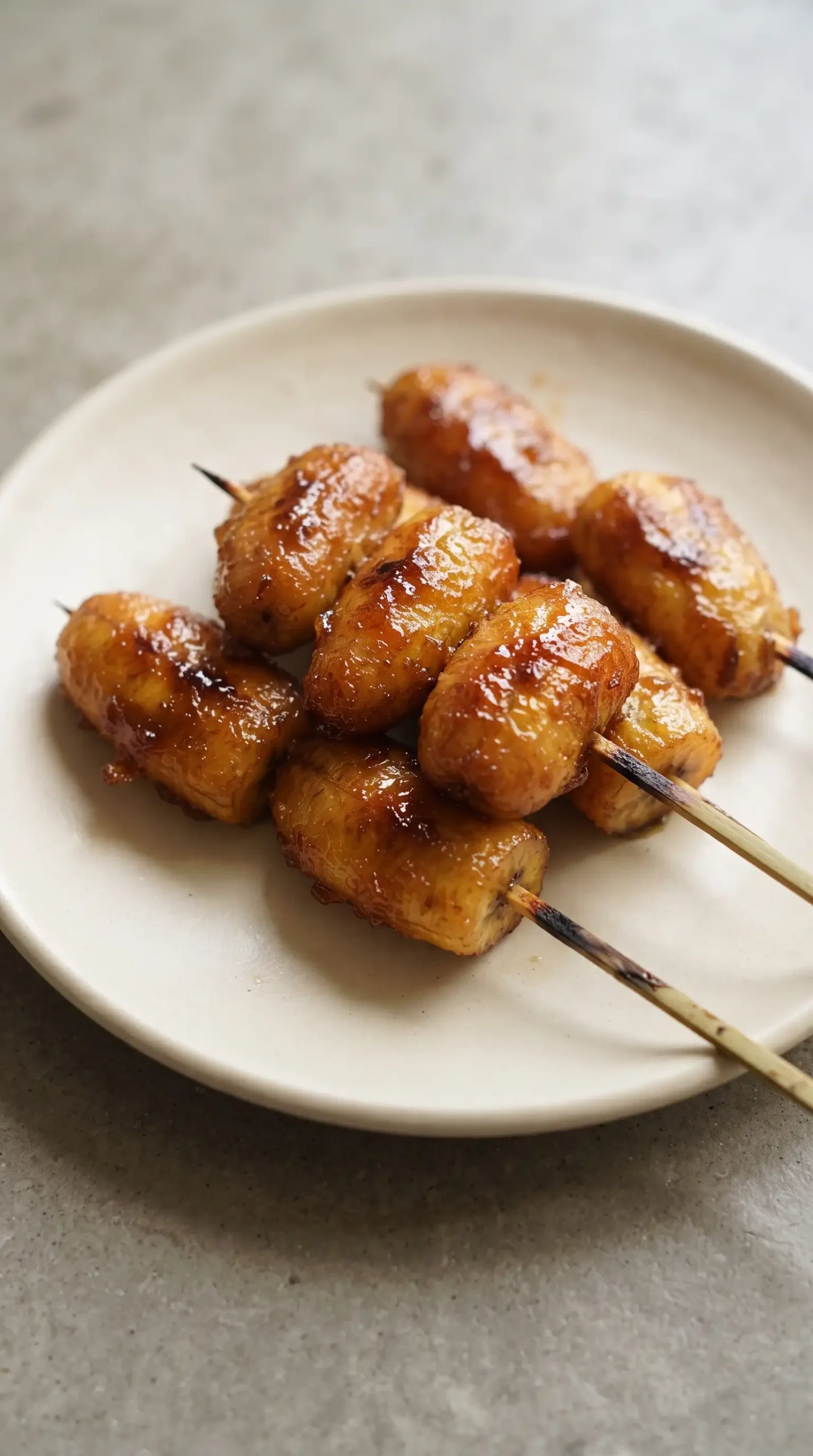
Traditional presentation adds to the appeal of banana cue. Individual skewers make the snack easy to pick up and highlight the caramelized fruit as a street-food style treat.
Serving sweet fried snacks on skewers makes them easy to enjoy at gatherings and casual meals. A Filipino fried fruit snack can pair well with banana cue when creating a dessert spread centered on caramelized flavors and handheld treats.
Simple serving choices also protect the texture. Allowing excess oil to drain before serving keeps the outside focused on the sticky sugar coating instead of an oily surface.
Plantain Alternatives Change the Final Bite
Plantains can serve as an alternative when saba bananas are unavailable. Their usefulness depends on selecting a variety and ripeness level that can handle frying without becoming too fragile.
Substitutions work best when the cook understands that the result may not exactly match traditional banana cue. The firmness, sweetness, and texture of the fruit influence the experience after caramelization.
Preparation Choices Keep Banana Cue Consistent
Simple preparation decisions have a strong effect on the finished snack. Organizing the frying area, handling the fruit carefully, and observing the sugar transformation all support a better result.
Many successful cooks focus on what they can see during cooking. The color of the sugar and the condition of the bananas provide useful information as the coating develops.
Caramelized Saba Bananas Connect Sweet and Savory Traditions
Filipino snacks often highlight practical cooking methods that make everyday ingredients memorable. Banana cue reflects that approach by turning bananas and sugar into a treat with a distinct texture and recognizable appearance.
Street food traditions surrounding banana cue show how caramelization can create a completely different experience from simply eating fresh fruit. The process gives the bananas a richer surface while keeping the soft fruit center.
Fried Caramelized Bananas Need Careful Handling
Texture remains the defining feature of fried caramelized bananas. The outside should carry the sticky sweetness from the sugar while the inside keeps enough structure to create a satisfying bite.
Balanced handling matters from the moment the fruit meets the caramelized sugar. A careful cook preserves the contrast that makes this snack distinctive instead of allowing the coating or fruit to become compromised.
Caramelized Saba Bananas Deliver the Key Banana Cue Balance
Bananas become the centerpiece of this snack when sturdy saba fruit meets properly developed brown sugar caramel. The most important judgment comes from protecting the relationship between the firm fruit and the sticky coating, because each part depends on the other during frying.
Successful banana cue comes from recognizing the visual signs of caramelization and choosing fruit that can carry the coating. When those choices align, the simple combination creates a snack with a clear texture, color, and flavor identity.
Banana Cue Questions About Banana Texture and Cooking
Can I use regular bananas for banana cue?
Regular grocery store bananas can work, but they are usually softer than saba bananas. The softer texture may create a mushier result, so careful handling becomes more important while frying.
Why are saba bananas preferred for this snack?
Saba bananas are preferred because their firmer structure helps them remain intact while the brown sugar coating develops. They provide a stronger base for the sticky caramel layer.
What makes the sugar coating stick to the bananas?
The coating forms when brown sugar caramelizes during frying and comes into contact with the bananas. Proper heat and gentle movement help the melted sugar cover the fruit.
Can plantains replace saba bananas?
Plantains can be used as an alternative when their texture suits frying. The finished snack may have a different flavor and texture because plantains are not identical to saba bananas.
Banana Cue Filipino Street Food with Brown Sugar Recipe
Banana cue is a Filipino street food treat featuring tender bananas with a sticky caramelized brown sugar coating. This simple sweet snack is perfect when you want a quick dessert with a rich, satisfying texture.
Ingredients
Method
Preparation
- Heat the frying oil over medium-low heat. Add the brown sugar and allow it to begin caramelizing.
- Add the bananas to the oil and cook them with the caramelizing sugar, turning as needed, until they are coated with the sticky brown sugar mixture and reach a deep golden color.
- Transfer the cooked bananas to paper towels to drain excess oil, then place them on individual skewers for serving.
Notes
Regular American grocery store bananas can also be used, although they may become softer during cooking. Saba bananas are the traditional choice because their firmer texture holds up well while frying. Plantains have also been suggested as an alternative.