From breakfast to dinner, from wholesome meals to indulgent desserts, Nexa Recipes offers quick, easy, and delicious ideas for every occasion and every moment.



 This Recipe
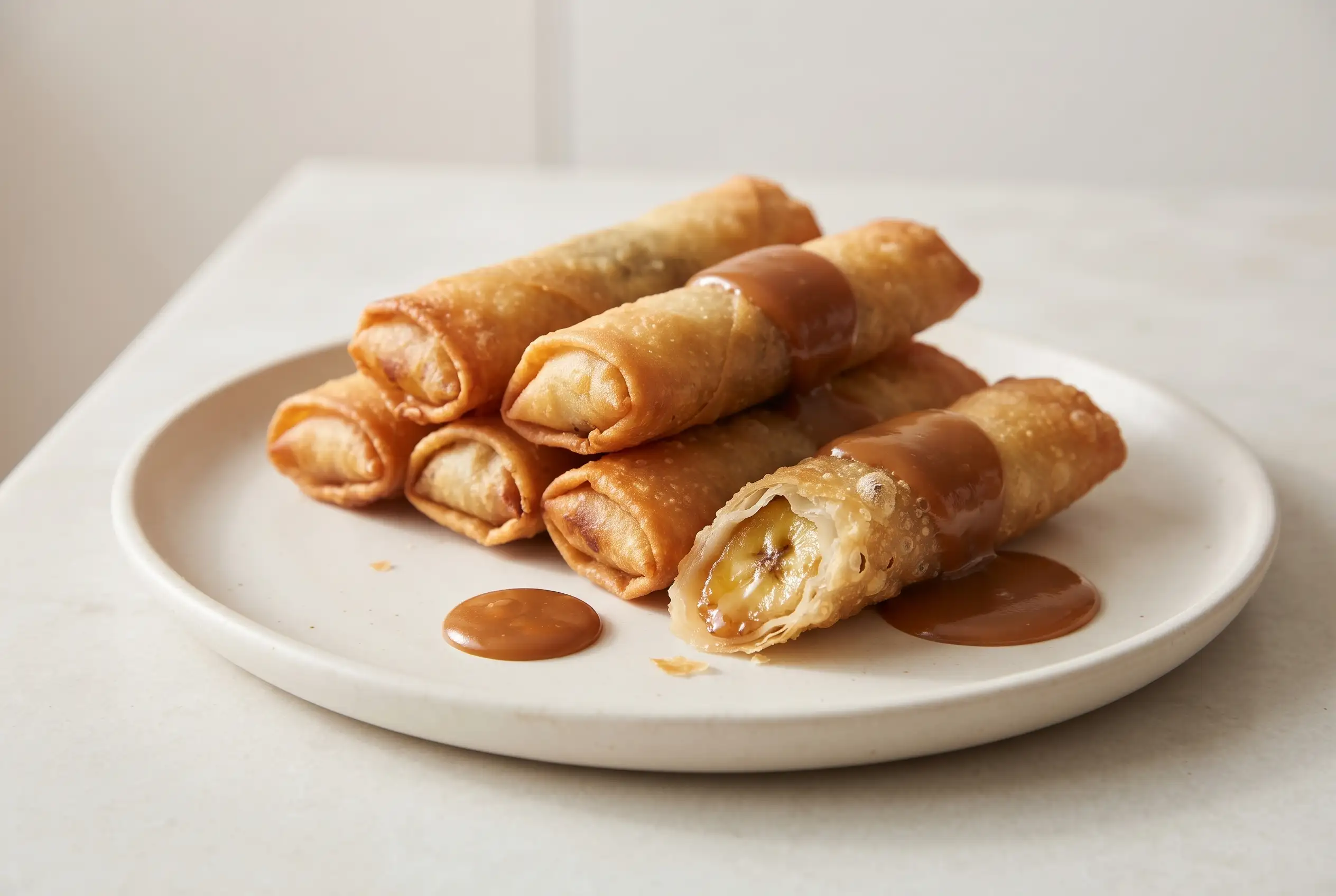
Banana lumpia brings together soft banana filling, a crisp wrapper, and a rich coconut caramel sauce for a Filipino-inspired dessert with contrasting textures. Known as turon in many Filipino kitchens, this fried treat turns simple ingredients into a snack where careful handling makes every layer more enjoyable. The wrapper should stay delicate and golden, the fruit should remain tender, and the sauce should provide a smooth sweetness that complements the fried exterior.
Banana Lumpia Brings Filipino-Inspired Crisp Sweet Layers
Banana lumpia is a version of turon built around the relationship between a warm fruit center and a thin fried wrapper. The appeal comes from the contrast created during cooking: the outside develops a crisp surface while the banana inside becomes soft and naturally sweet.
The name turon is often associated with Filipino-style banana lumpia, and the preparation reflects the balance common in many Filipino street food desserts. A carefully wrapped banana creates a neat package that can hold together during frying and provide a satisfying bite once served. Another classic preparation using caramelized fruit flavors is a Filipino-style banana snack made with brown sugar coating, highlighting how simple ingredients can create memorable sweet treats.
Each part of the dessert has a clear role. The banana supplies the tender center, the wrapper creates the crunchy shell, and the coconut caramel sauce adds a creamy finish that brings the flavors together without covering the texture of the fried pastry.
Ripe Banana Choices Shape the Turon Texture
The bananas selected for banana lumpia have the greatest influence on the finished bite. Small bananas work well because their size makes them easier to fit inside the wrappers and creates a balanced filling-to-wrapper ratio.
Firm ripe bananas are useful because they can be peeled, cut, and wrapped without falling apart. A banana that is too soft may be more difficult to handle during assembly, while a banana with enough structure will keep its shape until the wrapper becomes crisp.
- Size matters: Smaller bananas fit neatly inside fresh lumpia wrappers and reduce the need for excessive trimming.
- Texture matters: Bananas with a firm center are easier to fold around and fry evenly.
- Sweetness matters: Naturally sweet fruit pairs with the brown sugar-based coconut caramel sauce.
Wrappers and Coconut Caramel Sauce Create the Signature Finish
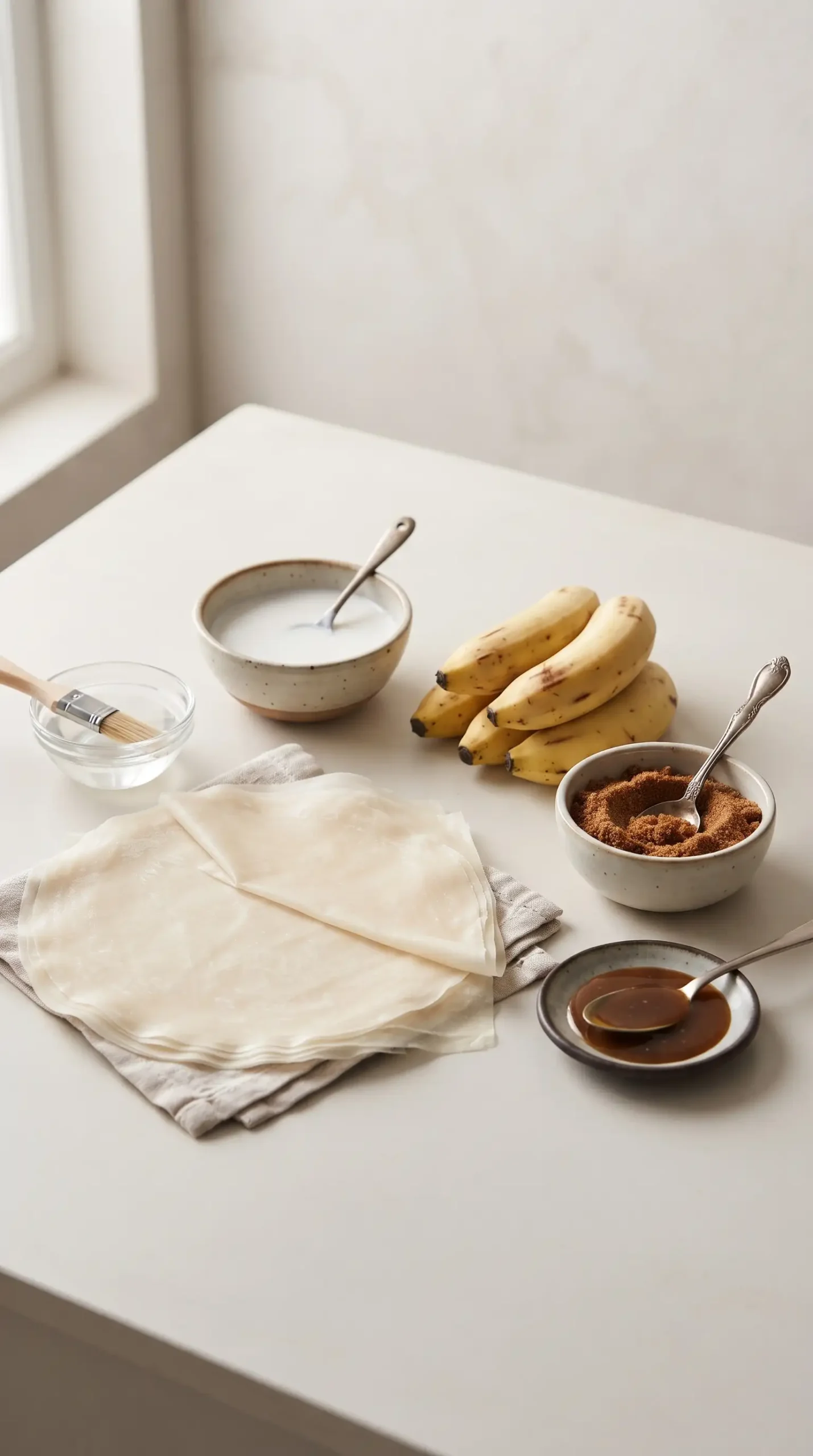
Fresh lumpia wrappers provide the thin exterior that defines a good turon recipe. Their delicate texture allows the banana filling to remain the focus while creating the crisp surface expected from fried lumpia-style desserts.
Softening the wrappers before assembly helps prevent tearing during folding. A flexible wrapper can be shaped around the banana more easily, and lightly moisten the wrapper edge before sealing to create a compact roll that stays closed during cooking.
Coconut caramel sauce adds another layer of flavor through the combination of coconut milk and brown sugar. Gentle heating allows the mixture to become smoother and thicker, creating a dipping sauce that clings lightly to each piece of banana lumpia.
The sauce consistency depends on patience during cooking. Frequent stirring while the mixture gently reduces helps it develop a thicker texture, and the sauce continues to thicken slightly as it cools.
Folding Control Keeps Banana Lumpia Secure
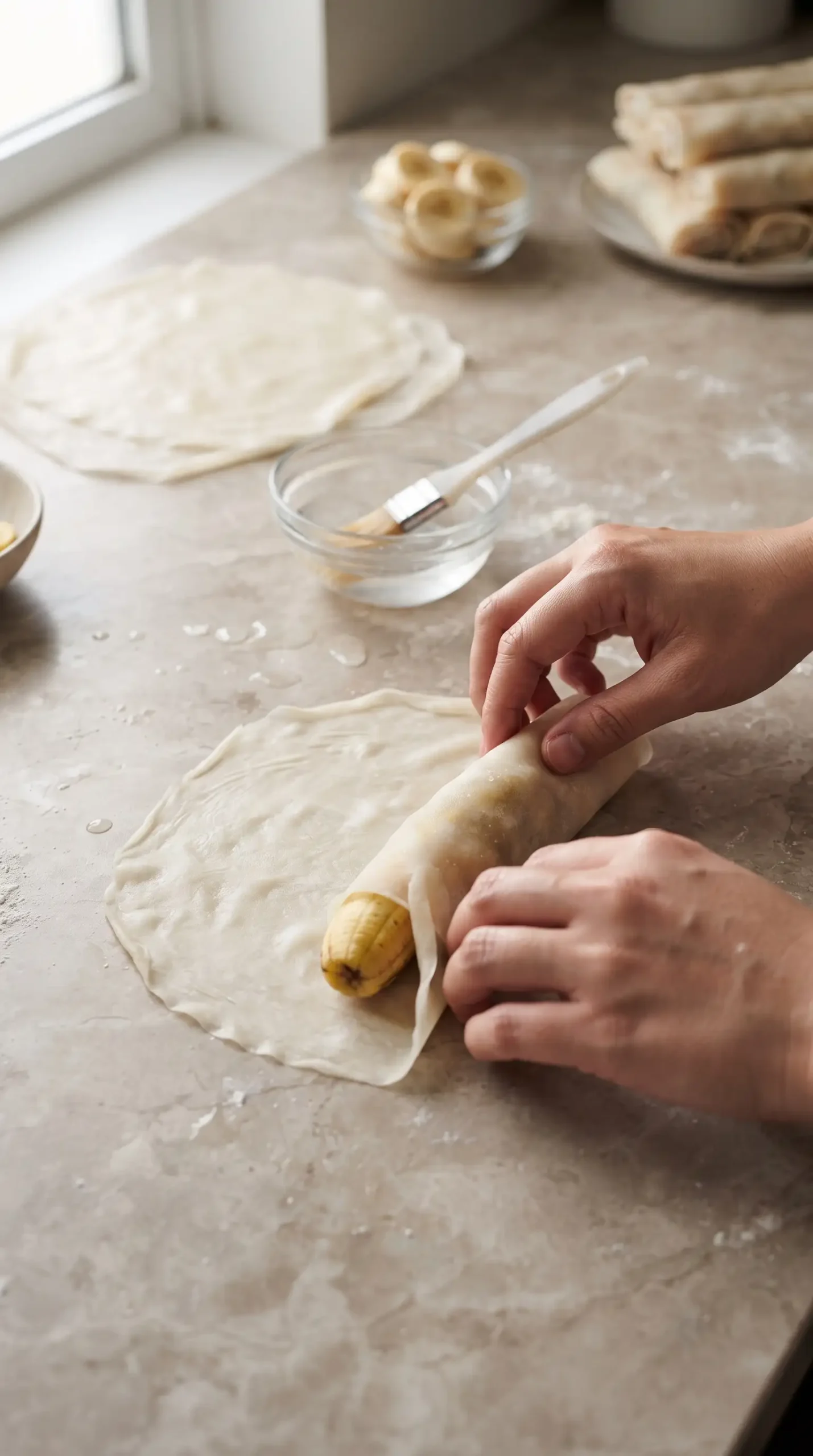
The wrapping process determines whether banana lumpia stays intact during frying. A wrapper that fits closely around the banana creates fewer loose areas where oil can enter or where the pastry can separate.
Moistening the wrapper edge with water helps create a seal that holds the roll together. Pressing the edge gently after rolling gives the wrapper a better chance of staying closed while it cooks.
Frying Conditions Define the Golden Exterior
Oil temperature and batch size influence the texture of fried banana lumpia. Adding too many pieces at once can affect the cooking environment, while smaller batches allow each roll to develop an even golden exterior.
Low heat management during frying helps the wrapper become crisp while giving the banana enough time to warm through. The surface should become golden and crunchy before the rolls are removed from the pan.
| Cooking observation | What it indicates | Helpful response |
|---|---|---|
| Wrapper turns golden | The exterior is developing crispness | Remove when evenly browned |
| Rolls separate during frying | The seal may not have held | Check wrapper edges during assembly |
| Surface remains pale | More cooking time may be needed | Continue until the wrapper is crisp |
Common Banana Lumpia Mistakes That Affect Crisp Results
Several banana lumpia mistakes happen during preparation, and most are connected to wrapper handling or sauce consistency. Recognizing these issues before cooking can make the process smoother.
- Torn wrappers: Wrappers that are too stiff may split during folding, so softening them first makes shaping easier.
- Loose rolls: Poorly sealed edges can allow the banana to shift inside the wrapper, so a secure fold is important.
- Overly thin sauce: Coconut caramel sauce needs enough reduction time to reach a texture that works well for dipping.
Another common issue is rushing the cooling period after frying. Allowing the rolls to rest briefly helps the wrapper settle into its crisp texture while making them easier to serve.
Coconut Caramel Sauce Gains Its Best Consistency
The coconut caramel sauce deserves attention because it changes from a thin mixture into a richer accompaniment through gentle cooking. Coconut milk and brown sugar create the base, while steady stirring helps the texture become smooth.
Heating the sauce slowly prevents the mixture from being treated like a quick topping. The texture should become visibly thicker during cooking, and the consistency will continue changing as the sauce cools.
A well-prepared coconut caramel sauce gives banana lumpia an extra dimension. The sweetness of brown sugar supports the banana flavor, while the coconut milk creates a creamy contrast against the crisp wrapper.
Serving Ideas Highlight the Turon Experience
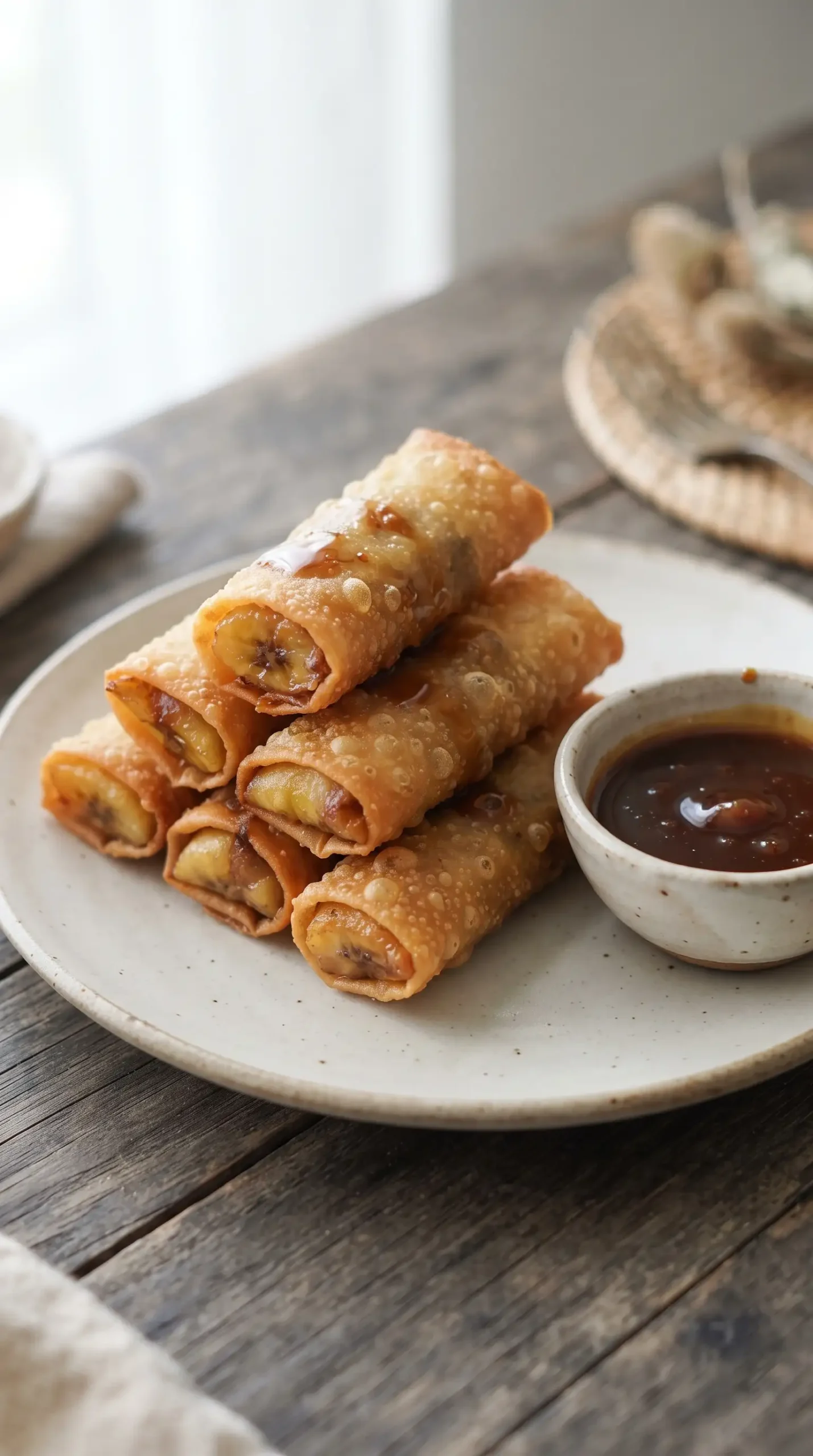
Banana lumpia can be served warm with coconut caramel sauce on the side for dipping. The combination allows each person to add as much sauce as desired while keeping the wrapper texture noticeable.
Storage Choices Protect the Crisp Wrapper
Freshly fried banana lumpia has its best texture close to serving because the wrapper is crispest soon after cooking. Keeping the rolls uncovered for too long can affect the contrast between the crunchy outside and soft filling.
Turon Recipe Details Bring Simple Ingredients Together
A traditional turon recipe shows how a small number of ingredients can create a memorable dessert when each step receives attention. The banana, wrapper, and sauce do not compete; they create different sensations in the same bite.
Preparation choices matter because the ingredients have different textures before cooking. The banana needs gentle handling, the wrapper needs flexibility, and the sauce needs controlled thickening to achieve the intended result.
Banana lumpia demonstrates that successful desserts often rely on texture management. The crisp wrapper, tender fruit, and smooth coconut caramel sauce create a combination that feels complete without requiring complicated ingredients.
Banana Lumpia Variations Follow the Core Texture Balance
Small adjustments can change the presentation of banana lumpia while keeping the essential idea intact. The most successful variations respect the relationship between the soft filling, crisp wrapper, and sweet finishing sauce.
Serving styles may change depending on preference, but the important elements remain consistent. The wrapper should stay delicate, the banana should remain the center of attention, and the coconut caramel sauce should complement the dessert.
Banana Lumpia Preparation Rewards Careful Timing
Timing influences both the sauce and the fried wrapper. The sauce needs enough attention to become smooth and thick, while the wrapped bananas need careful frying to reach a crisp exterior.
Small details during preparation have a noticeable effect. Softening wrappers, sealing edges, and monitoring browning all support a finished dessert that feels balanced from the first bite.
Banana Lumpia Delivers Its Best Texture Through Balanced Cooking
Banana lumpia succeeds when the wrapper, filling, and coconut caramel sauce each reach the right condition. A crisp shell depends on careful frying, while a satisfying center depends on choosing bananas that can handle wrapping and cooking.
The dessert’s strongest quality comes from contrast. Warm banana filling, delicate crunch, and creamy coconut sweetness work together when each stage of preparation receives the attention it needs.
Banana Lumpia Crispness Questions and Answers
How do you keep banana lumpia crispy?
Keeping banana lumpia crisp starts with properly softened but intact wrappers and careful frying. Serving the rolls after draining excess oil helps preserve the texture of the exterior.
Can the coconut caramel sauce be made thicker?
The coconut caramel sauce can become thicker by continuing gentle cooking and stirring frequently until the desired consistency appears. It will also thicken slightly as it cools.
What makes a turon recipe different from other banana desserts?
A turon recipe focuses on the combination of a wrapped banana filling and a fried wrapper, creating a dessert with a crisp outside and tender center instead of a soft baked or spoonable texture.
Why do lumpia wrappers need softening before folding?
Lumpia wrappers need flexibility so they can bend around the banana without cracking. A softer wrapper makes it easier to create a sealed roll before frying.
How should banana lumpia be served?
Banana lumpia is best served with the coconut caramel sauce available for dipping, allowing the crisp wrapper and sweet sauce to remain distinct with each serving.
Banana Lumpia Turon with Coconut Caramel Sauce Fried Treat
Banana lumpia is a crispy fried turon dessert featuring a tender banana center and creamy coconut caramel sauce. This sweet treat is perfect when you want a simple dessert with contrasting textures and rich flavor.
Ingredients
Method
Coconut Caramel Sauce
- Pour the coconut milk into a medium saucepan and warm over low heat until it begins to bubble slightly, about 5 minutes.
- Add the brown sugar and stir until the mixture is smooth.
- Continue cooking the sauce at a low boil, stirring very frequently, until it reaches your preferred thickness. The sauce will thicken slightly as it cools.
Preparation
- Steam the lumpia wrappers for a few minutes to soften them and make them easier to separate.
- Peel the bananas and slice each one in half lengthwise. Trim or cut again if needed so they fit inside the wrappers.
- Place a banana piece on a wrapper. Moisten the wrapper edge with water, fold the top and bottom over the banana, then roll sideways to enclose it. Use additional water to seal the wrapper.
Frying
- Heat the oil in a large skillet or frying pan over low heat.
- When water sizzles across the oil surface, add the wrapped bananas in small batches and fry for 3-5 minutes on each side until golden brown and crispy.
- Transfer the fried lumpia to paper towels to drain and allow them to cool for 10 minutes.
Serving
- Serve the banana lumpia with the coconut caramel sauce for dipping.
Notes
The coconut caramel sauce thickens slightly as it cools, so allow it to rest briefly after cooking for the desired consistency.