From breakfast to dinner, from wholesome meals to indulgent desserts, Nexa Recipes offers quick, easy, and delicious ideas for every occasion and every moment.



 This Recipe
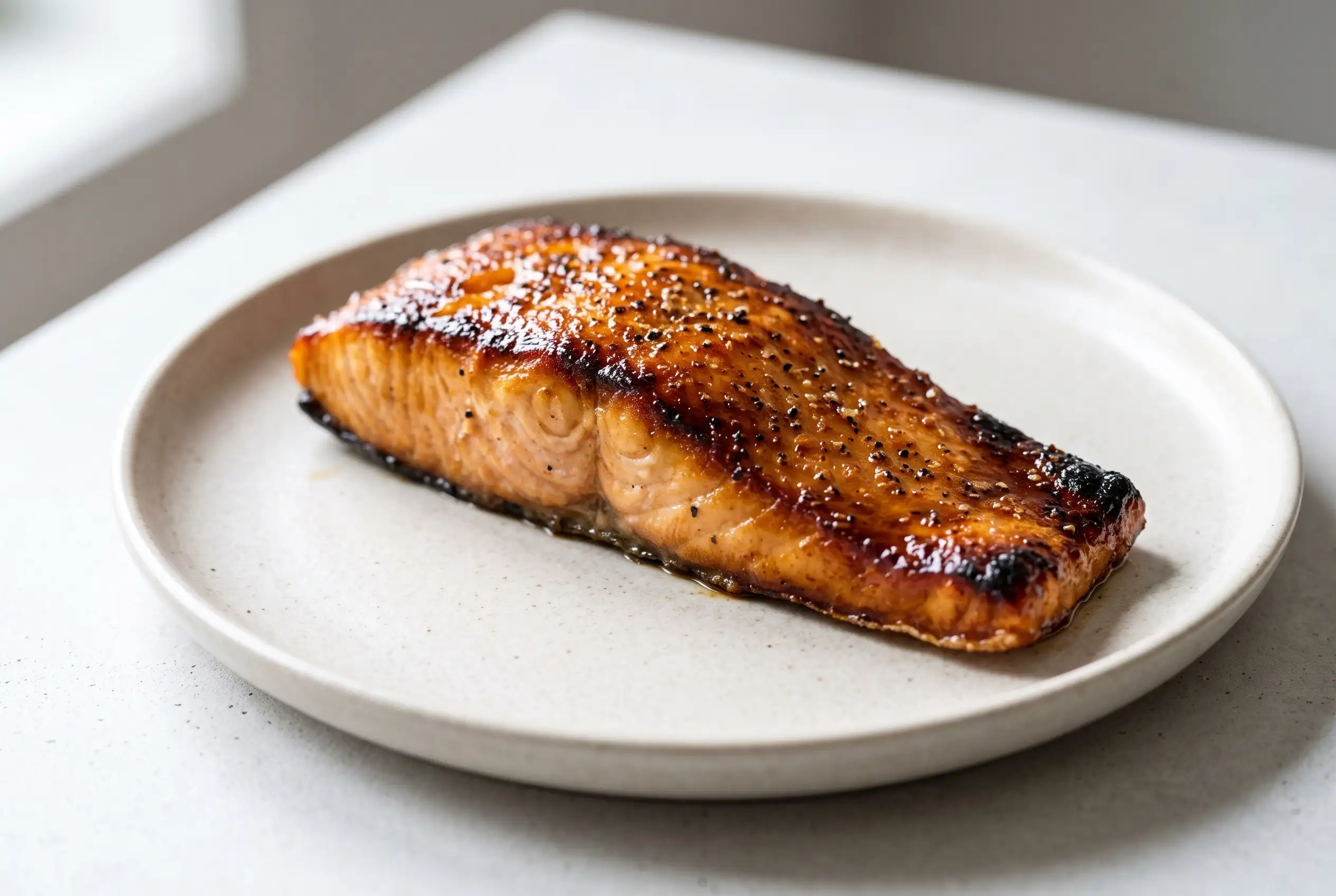
Caramelized salmon brings a dramatic sweet-savory crust to a simple fish dinner by using sugar, salt, pepper, and careful heat to create a deeply browned surface. The appeal of this dish comes from the contrast between the rich salmon underneath and the crisp, almost candied exterior that develops during cooking.
A successful caramelized salmon recipe depends less on complicated preparation and more on controlling how sugar reacts with heat. The coating needs enough time to darken and flavor the fish, but it also requires attention because sugar can move quickly from golden to overly dark when temperatures climb too high.
Caramelized Salmon Creates a Sweet Savory Crust
The character of caramelized salmon comes from the interaction between the seasoning coating and the natural richness of the fish. Sugar creates the base for browning, while salt and pepper keep the flavor balanced so the crust does not taste one-dimensional.
The skin-on salmon fillets provide structural support while cooking in the skillet. As the fish cooks, the skin helps hold the delicate flesh together, making it easier to flip and finish without breaking apart.
Unlike many salmon preparations that focus only on herbs, sauces, or marinades, this approach highlights a surface transformation. The browned coating becomes the defining feature, creating a texture that makes each bite feel more layered.
Sugar Coating Defines the Salmon’s Caramelized Finish
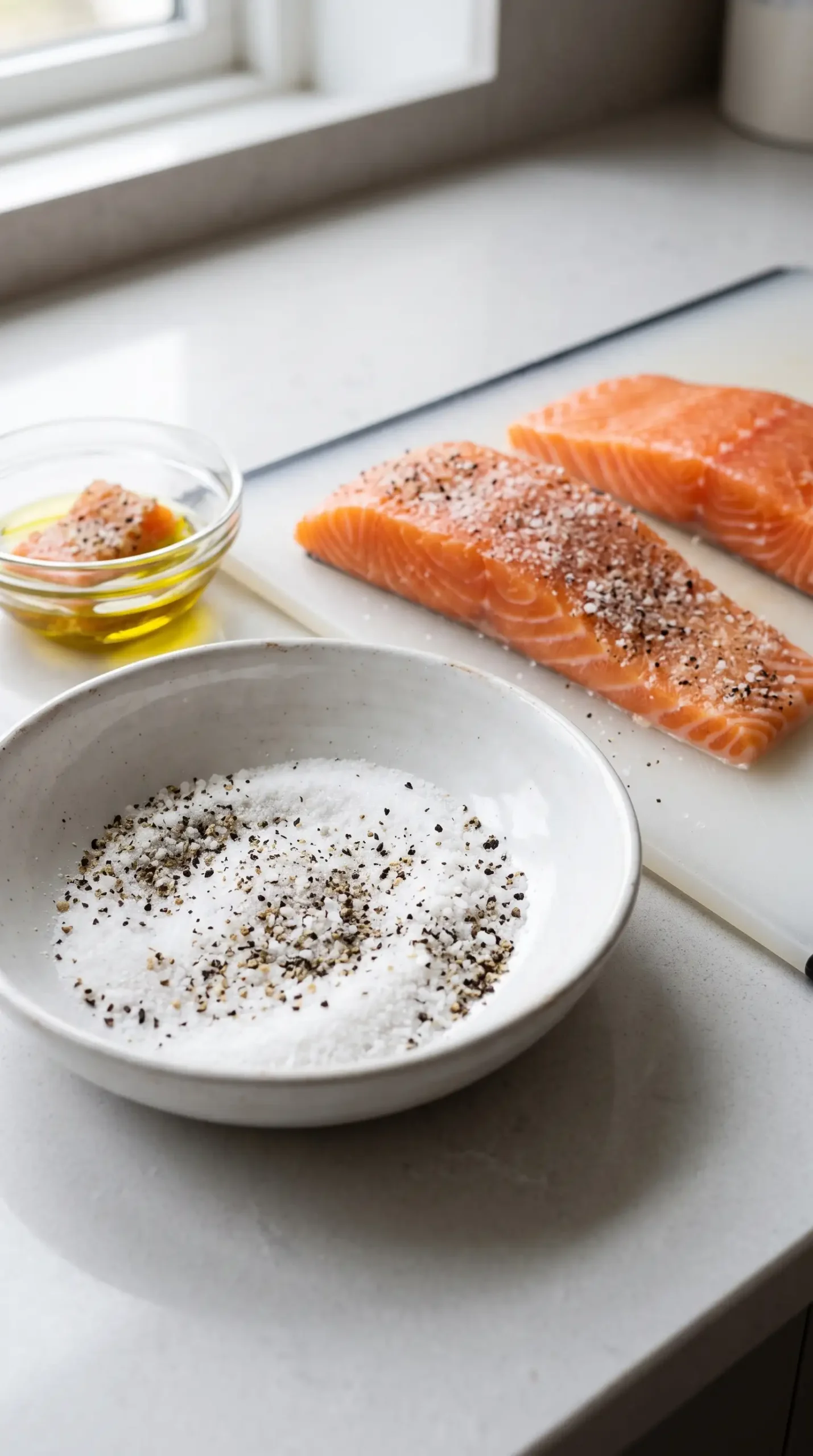
The ingredient decision that most affects the outcome is the sugar coating. A shallow layer of sugar mixed with seasoning creates the foundation for the sugar crusted salmon effect, allowing the exterior to develop a glossy brown appearance as heat changes the sugar.
Salt plays an equally important role because it prevents the sweetness from becoming overwhelming. The balance between sugar and salt lets the salmon keep its savory identity while gaining a caramelized surface.
Freshly crushed black pepper adds small bursts of sharp flavor that cut through the richness of the fish. The seasoning mixture works best when it covers the exposed surfaces evenly, giving each portion a consistent crust.
- Sugar coverage: A light, even coating encourages browning across the salmon surface.
- Salt balance: The seasoning keeps the sweet crust connected to the fish’s natural flavor.
- Pepper texture: Freshly crushed pieces provide noticeable seasoning without creating a heavy spice layer.
Salmon Skin Supports Better Handling During Browning
Keeping the skin attached during cooking helps the fillets maintain their shape when they move from skillet to broiler. The skin also creates a protective barrier between the fish and the hot pan surface.
During cooking, the skin becomes deeply dark because the sugar mixture reaches high heat near the pan. Its appearance can look intense, but it serves as part of the caramelization process and can be removed easily after the fish rests.
Heat Management Prevents Sugar from Burning
Sugar changes quickly under heat, which makes temperature control the central challenge of this dish. Moderate stovetop heat allows the salmon to brown while reducing the chance that the coating scorches before the fish cooks through.
The crust develops its color and flavor as how sugar caramelizes under heat changes the surface of the salmon. Understanding this reaction helps explain why steady temperatures are important when creating a browned coating without scorching it.
| Cooking area | Main purpose | Important observation |
|---|---|---|
| Skillet | Builds the browned exterior | Oil should be hot but heat should remain controlled |
| Broiler | Deepens the top crust | The salmon surface needs frequent checking |
| Resting period | Allows handling after high heat | The sugar coating remains extremely hot |
Managing excess oil or darkened sugar in the pan also improves control. Removing extra liquid can prevent splattering and helps the cooking surface stay focused on browning.
Pan Seared Caramelized Salmon Needs Careful Surface Control
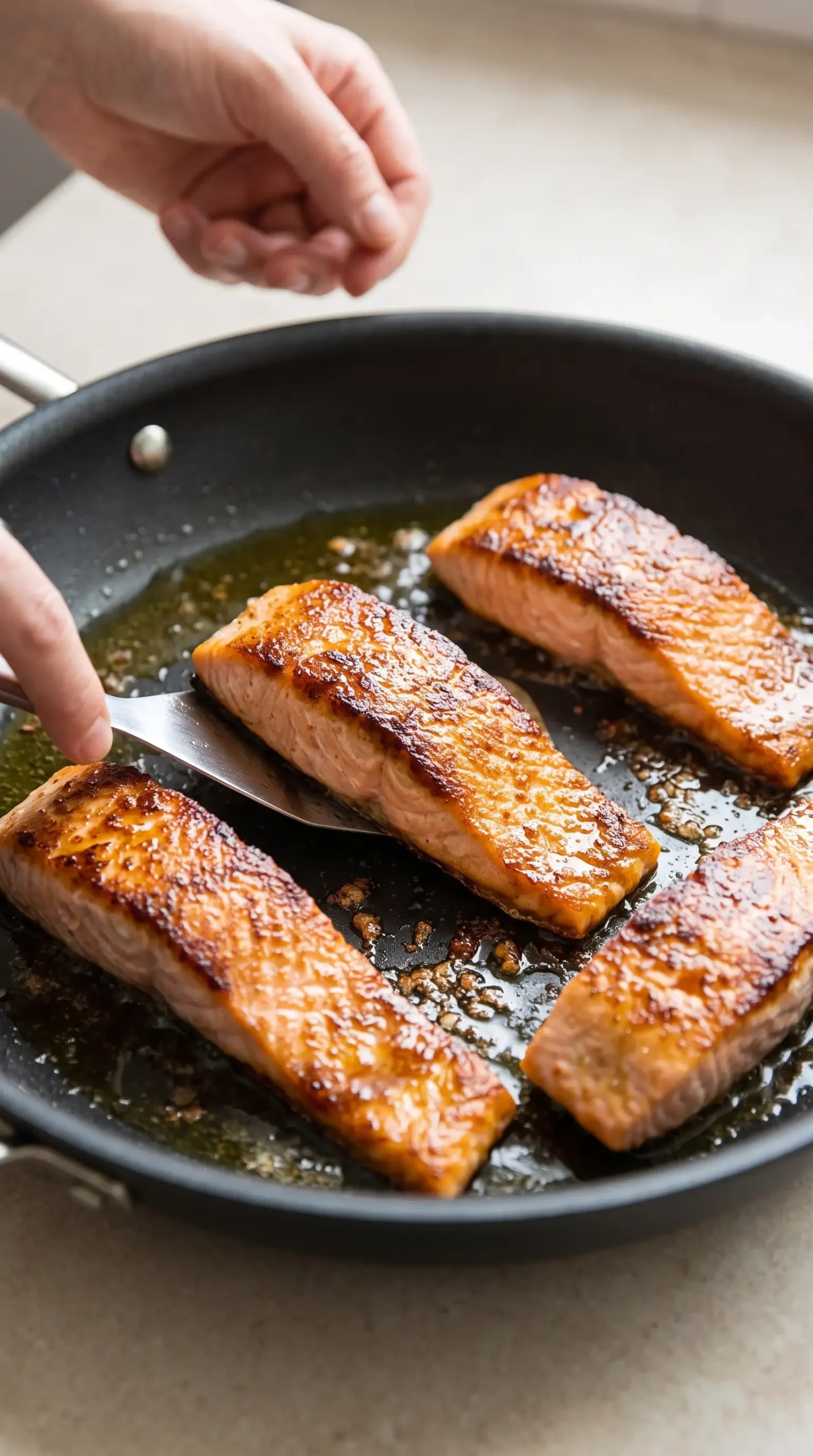
Pan seared caramelized salmon succeeds when the fish has steady contact with the skillet while avoiding aggressive heat. The crust forms through gradual browning, so rushing the process can damage the coating before the salmon texture is ready.
The skillet stage is also where flipping technique matters most. Moving the fillets carefully protects the caramelized layer and keeps the skin attached until serving.
A thick fillet may benefit from additional attention around the sides because the edges can develop color and flavor too. Turning the fish gently allows more of the surface to participate in the browning process.
Common Caramelized Salmon Mistakes That Affect the Crust
Caramelized salmon has a small margin between beautifully browned and overly dark because sugar reacts quickly. Recognizing common problems helps preserve the sweet crust without losing the fish’s quality.
- Excessive heat: Higher temperatures can darken the sugar before the salmon finishes cooking.
- Rough flipping: Forceful handling can separate the skin or disturb the crust.
- Uneven coating: Missing areas create inconsistent flavor and browning.
- Ignoring the broiler: The final heating stage requires attention because the topping can change quickly.
The pan may look very dark after cooking because caramelized sugar remains behind. The important visual cue is the salmon surface, which should appear golden brown instead of relying only on the color of the skillet.
Salt Selection Changes the Seasoning Balance
The type of salt used can influence how evenly the seasoning spreads. Fine table salt is more concentrated by volume, while coarse salt takes up more space and may need adjustment before mixing with sugar.
| Salt style | Coating behavior | Practical approach |
|---|---|---|
| Fine table salt | Distributes quickly through the mixture | Use a careful amount because the crystals are compact |
| Coarse salt | Creates larger seasoning pieces | Pulse briefly to make the texture more suitable |
| Freshly crushed seasoning mix | Spreads across the fish surface | Combine before coating fillets |
Adjusting salt texture helps the crust taste balanced from edge to edge. The seasoning should support the caramelized flavor without creating salty spots on individual bites.
Broiling Adds the Signature Golden Top Layer
The broiler stage intensifies the surface color and completes the caramelized appearance. This short burst of high heat encourages additional browning on the top of the salmon.
Careful observation matters during this step because the sugar mixture can darken rapidly. The crust should look golden and developed, while any sugar remaining in the pan does not necessarily represent the condition of the fish surface.
Serving Choices Emphasize the Sweet Savory Contrast
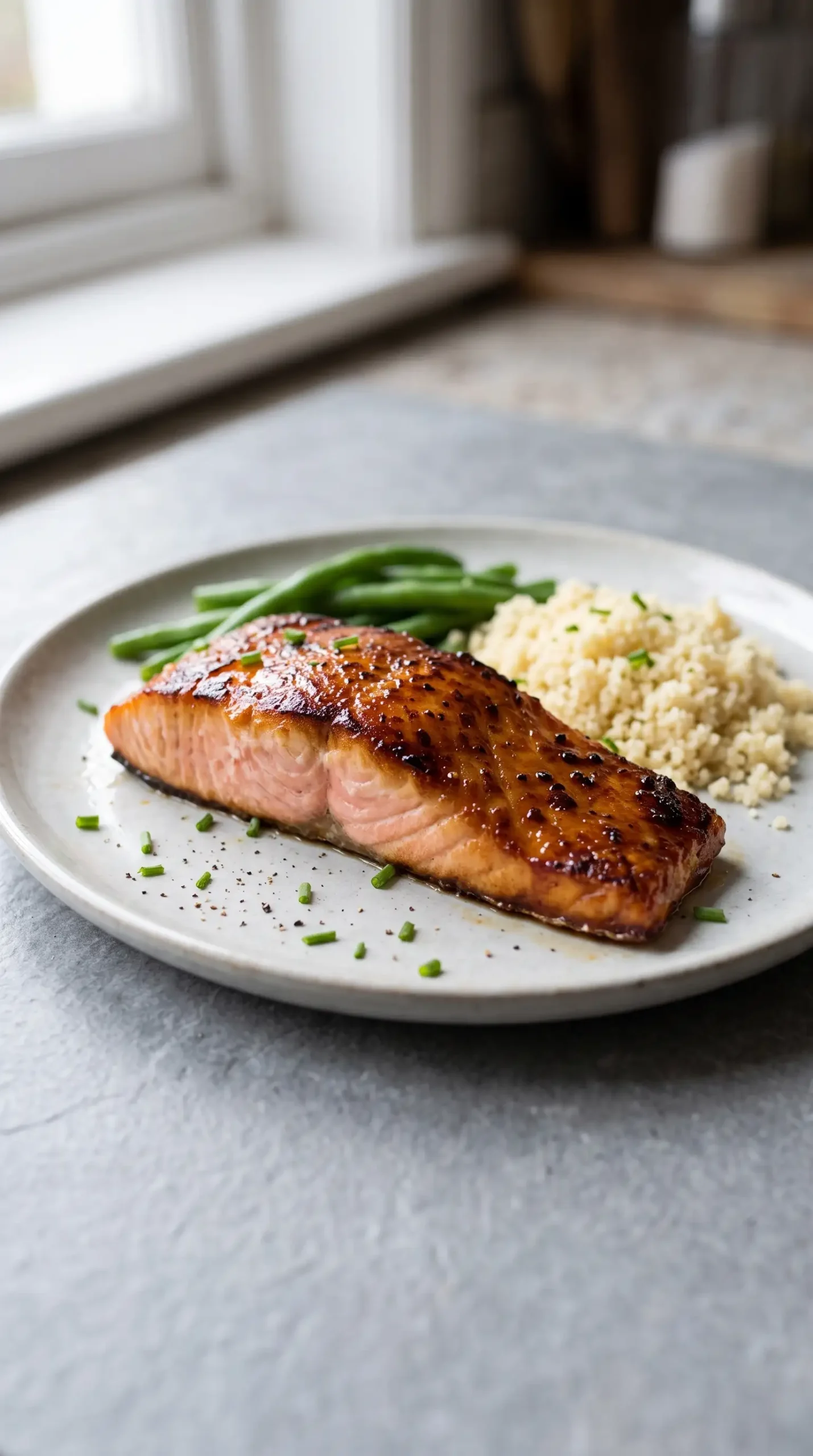
The strong flavor of caramelized salmon pairs well with simple sides that allow the crust to remain noticeable. Fresh vegetables, grains, or lightly seasoned accompaniments can provide balance without competing with the browned exterior.
The fish can also work as the centerpiece of a meal where texture matters. The crisp coating, tender interior, and savory seasoning create enough contrast that additional sauces are often unnecessary.
Adjustments Keep the Salmon Method Flexible
Small changes can adapt the preparation while preserving its main character. The seasoning balance remains the foundation, so additions should complement the sweet and salty crust instead of covering it.
- Flavor additions: Mild spices can be combined with the sugar mixture when a different seasoning profile is desired.
- Fish preparation: Similar salmon portions can be used as long as the surface remains suitable for coating and browning.
- Serving style: Individual fillets make the caramelized exterior easy to portion and present.
Storage Steps Preserve the Caramelized Salmon Texture
Cooked salmon is best handled carefully after serving because moisture can soften the browned coating over time. Cooling and storing the fish properly helps maintain as much texture as possible.
When reheating, gentle heat is preferable because intense reheating can dry the salmon and alter the crust. The caramelized surface may not remain as crisp as when freshly cooked, but careful warming protects the fish inside.
Doneness Checks Protect the Salmon’s Tender Interior
The browned exterior does not always reveal the condition of the center, so checking the thickest part of the fillet remains important. Moisture and texture depend on careful cooking, a principle reflected in Baked Salmon preparations where tenderness remains a central focus.
Thickness affects how quickly the fish cooks, which is why thicker portions may need attention along the sides as well as the top. The cooking process should preserve the contrast between a flavorful crust and moist salmon flesh.
Caramelized Salmon Recipe Delivers Contrast Through Simplicity
Caramelized salmon relies on a focused combination of sugar, seasoning, and controlled heat to create its distinctive finish. The browned coating works because the salmon remains the center of the dish while the crust adds texture and complexity.
The careful balance between skillet browning and finishing heat determines whether the sugar becomes a flavorful caramelized layer. When the surface is watched closely and handled gently, the dish achieves the sweet-savory contrast that defines this preparation.
Caramelized Salmon Questions About Burning, Skin, and Storage
Why can the sugar coating look burnt while cooking?
The sugar left in the pan can become very dark as it caramelizes, but the appearance of the pan does not always match the salmon surface. The fish should be judged by the color and condition of its crust, which should develop a golden brown finish.
Can the skin stay on caramelized salmon while cooking?
Yes, keeping the skin attached during cooking helps support the fillets during flipping and movement. After cooking, the darkened skin can be removed easily before eating because the caramelized surface has changed its texture.
How can the crust stay balanced instead of too sweet?
The seasoning mixture depends on salt and pepper to balance the sugar. Using the appropriate salt texture and spreading the coating evenly helps the sweetness remain part of a savory salmon dish.
What is the best way to reheat leftover caramelized salmon?
Warm leftover salmon gently to protect the interior texture. Very high reheating temperatures can dry the fish and make the crust harder, so slower warming helps maintain a better eating experience.
Caramelized Salmon with Sweet Savory Crust and Salt
Caramelized salmon features tender fillets beneath a deeply browned sweet-savory crust of sugar, salt, and black pepper. It is a quick, flavorful salmon dinner with a crisp caramelized finish.
Ingredients
Method
Preparation
- Mix the sugar, salt, and black pepper in a shallow bowl. Coat all exposed surfaces of each salmon filet with the sugar mixture.
Cooking
- Heat a small amount of olive oil in a large nonstick skillet over medium heat. Once hot, place the salmon in the skillet skin-side down and cook for about 5 minutes. Spoon or drain off excess oil, liquid, or heavily darkened sugar if needed. Reduce the heat if the oil begins to splatter heavily, and do not raise the heat above medium.
- Carefully turn each filet, keeping the skin attached, and cook for another 2-3 minutes. If the filets are thick enough, turn them onto each side and cook each side for another 2-3 minutes.
Broiling
- Preheat the broiler to 450°F (232°C). Sprinkle 1-2 teaspoons of additional sugar-salt mixture over the top of each salmon filet.
- Transfer the skillet to the oven and broil for 5-10 minutes, checking periodically so the salmon does not burn. The sugar remaining in the skillet may become very dark, but the tops of the filets should develop a golden-brown crust.
Serving
- Remove the salmon from the oven and let it cool for a few minutes. Carefully peel away the dark caramelized skin before eating.
Notes
If using regular table salt, begin with 1 tablespoon and add more salt only as needed.