From breakfast to dinner, from wholesome meals to indulgent desserts, Nexa Recipes offers quick, easy, and delicious ideas for every occasion and every moment.



 This Recipe
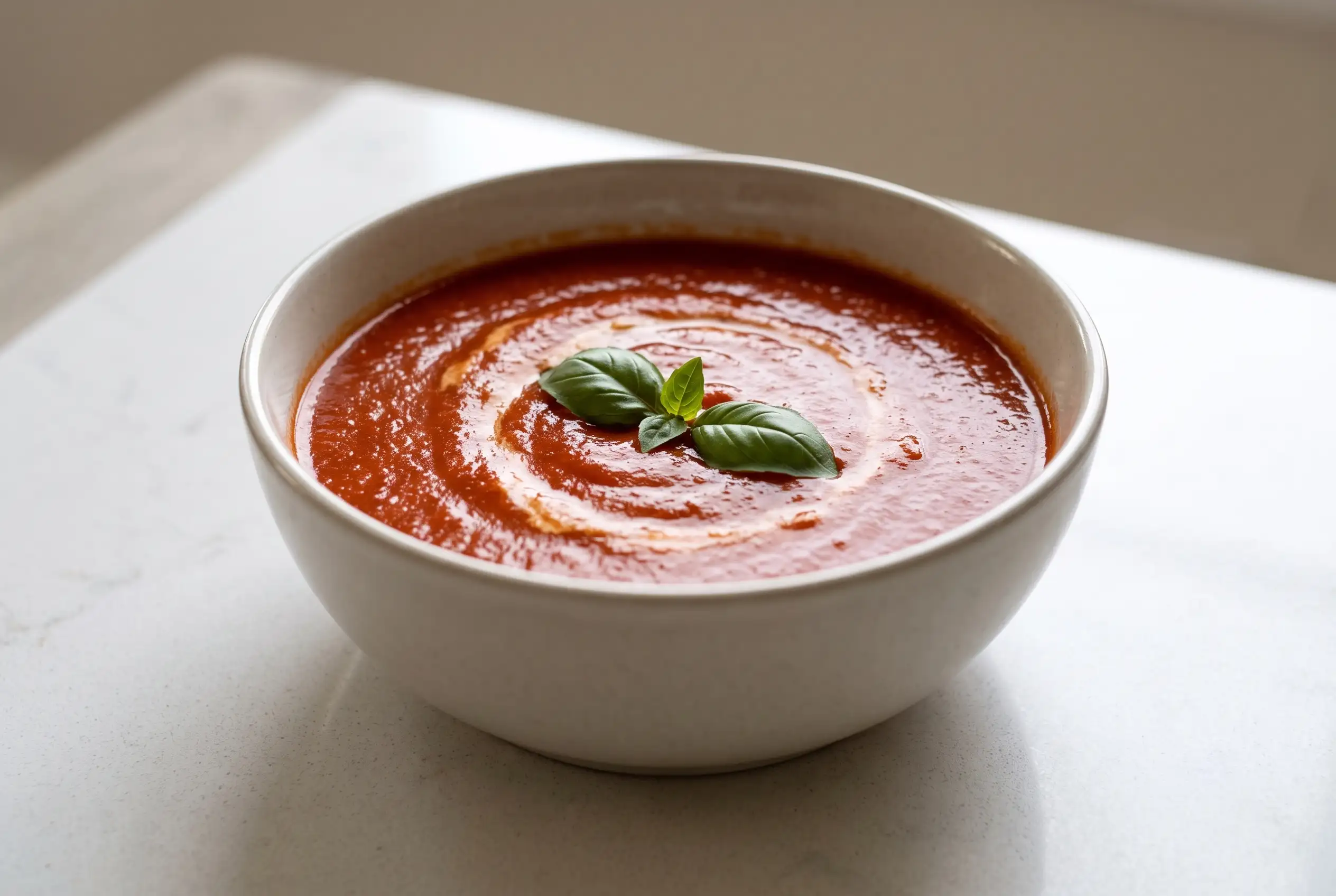
Tomato soup brings together simple pantry ingredients with a cooking approach that lets each choice matter. The combination of San Marzano tomatoes, butter, onion, optional garlic, and careful blending creates a smooth bowl with a rich tomato character. A 5 ingredient tomato soup works because the preparation focuses on developing flavor from a short ingredient list instead of relying on many additions.
Tomato soup builds flavor through simple ingredient decisions
Few dishes demonstrate how basic ingredients can change during cooking as clearly as tomato soup. The tomatoes begin with bright acidity, but simmering allows their flavor to become rounder and more balanced. Butter softens the sharper edges and helps create a smooth texture that carries through each spoonful.
Kitchen choices influence the finished result at every stage. Using whole tomatoes can give the blender more control over texture, while crushed tomatoes offer a quicker starting point. The onion pieces slowly release their flavor while cooking, then are removed before serving for a cleaner texture.
San Marzano tomatoes shape the character of this soup
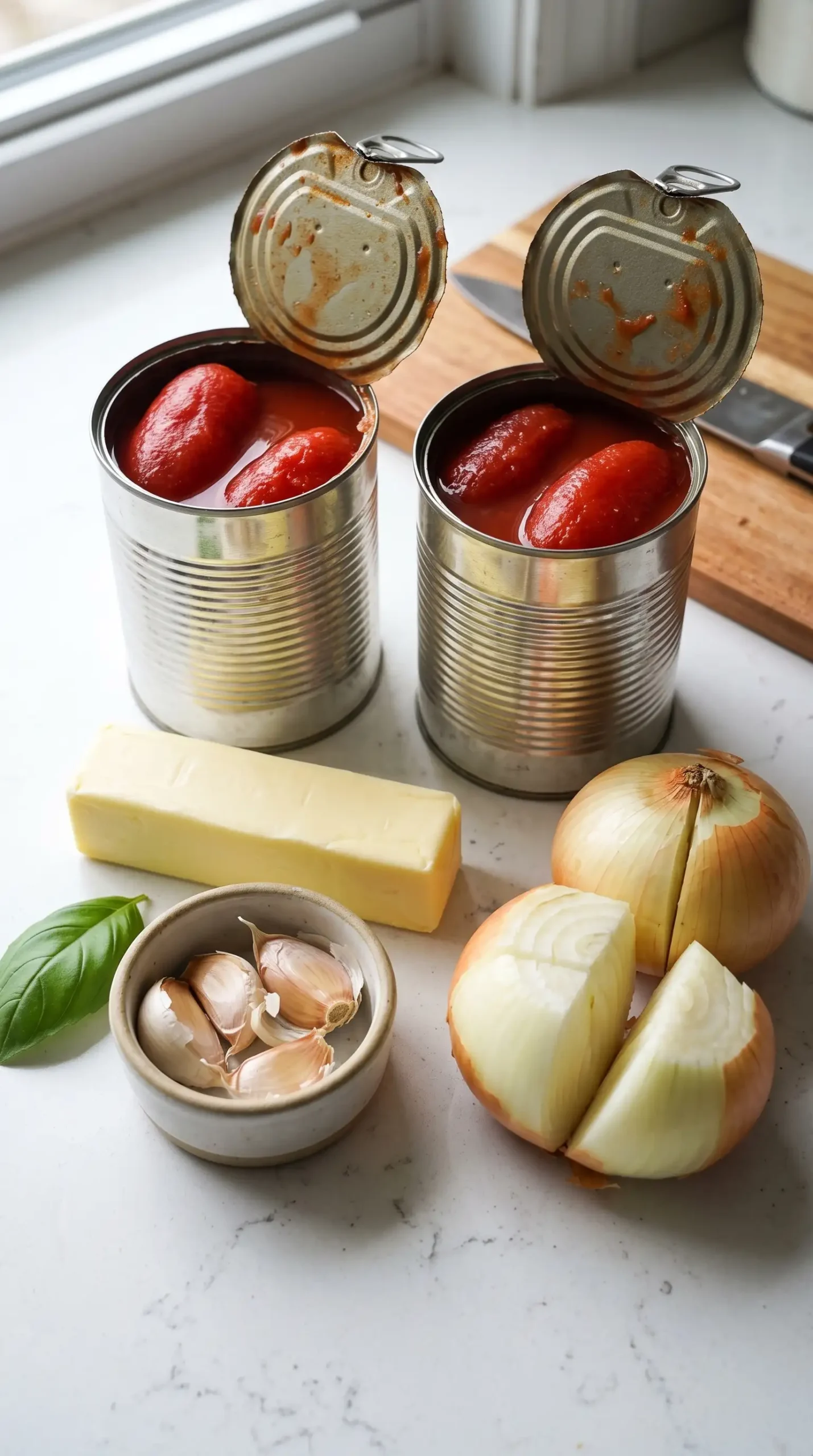
San Marzano tomatoes are the ingredient choice that most directly defines the flavor direction of this soup. Their naturally tomato-forward taste works well in a recipe where there are only a few elements competing for attention. Choosing quality canned tomatoes helps create the foundation for a homemade tomato soup with a balanced flavor.
For readers interested in the ingredient’s background, D.O.P. San Marzano tomatoes are associated with specific production standards and the Agro Sarnese-Nocerino area of Italy, giving this tomato variety a distinct identity beyond its flavor.
Whole peeled tomatoes and crushed tomatoes can both work in this preparation. Whole tomatoes allow the cook to decide the final texture during blending, while crushed tomatoes begin with a more uniform consistency. Either option should be combined with enough cooking time for the flavors to come together.
| Tomato choice | Texture before blending | Cooking consideration |
|---|---|---|
| Whole San Marzano tomatoes | Larger pieces that break down during simmering | Provides more control during blending |
| Crushed tomatoes | Already reduced into smaller pieces | Creates a smoother starting base |
| Different canned tomatoes | Varies by brand and preparation | May change the final flavor balance |
Butter and aromatics guide the soup’s richness
Butter changes the mouthfeel of tomato soup by adding richness without requiring a long ingredient list. Since the recipe uses salted butter, the seasoning level should be considered before adding more salt at the end.
Garlic remains optional because the tomato and butter base already carries plenty of flavor. When included, smashed garlic can stay in the soup during blending for a stronger savory note. Removing the onion creates a smoother finished texture while keeping the flavor it contributed during cooking.
Texture choices define each bowl of tomato soup
Blending creates the texture that makes this tomato soup distinct from a chunky tomato preparation. The soup can be processed until completely smooth or blended less for a slightly thicker feel.
Stovetop control protects the soup’s developing flavor
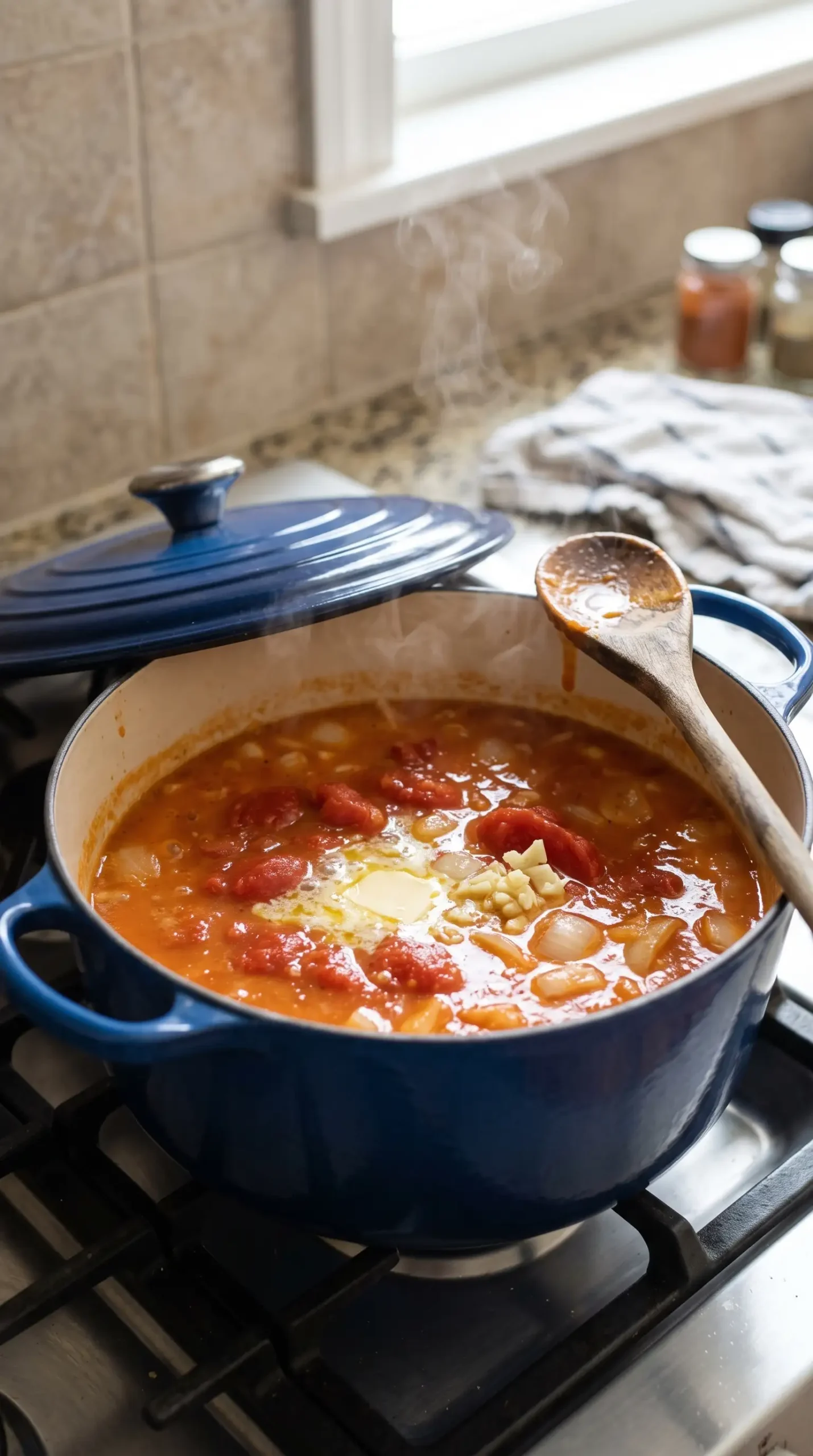
Gentle cooking is the main skill that improves execution here. A low bubble and partially covered pot allow the tomatoes, butter, and aromatics to cook together without rushing the process. Stirring occasionally helps prevent the bottom from catching as the mixture thickens.
Heat management matters because tomato mixtures can concentrate as moisture leaves the pot. A steady simmer encourages deeper flavor development while keeping the texture easy to blend. The cook should watch the surface activity and adjust the heat if the soup begins cooking too aggressively.
Small observations during cooking are more useful than strict visual expectations. The tomatoes should soften into the surrounding butter and onion mixture, creating a base that blends easily. Attention to the pot during this stage makes the later blending step simpler.
- Gentle heat: Keeps the tomato mixture cooking evenly and helps avoid scorching.
- Occasional stirring: Moves thicker portions away from the bottom of the pan.
- Partial covering: Allows simmering while limiting unnecessary moisture loss.
Blending decisions create the finished tomato soup texture
Immersion blending gives direct control over the consistency of tomato soup. A longer blend creates a smoother result, while a shorter blend can leave more texture from the cooked tomatoes.
Serving ideas change how tomato soup fits a meal
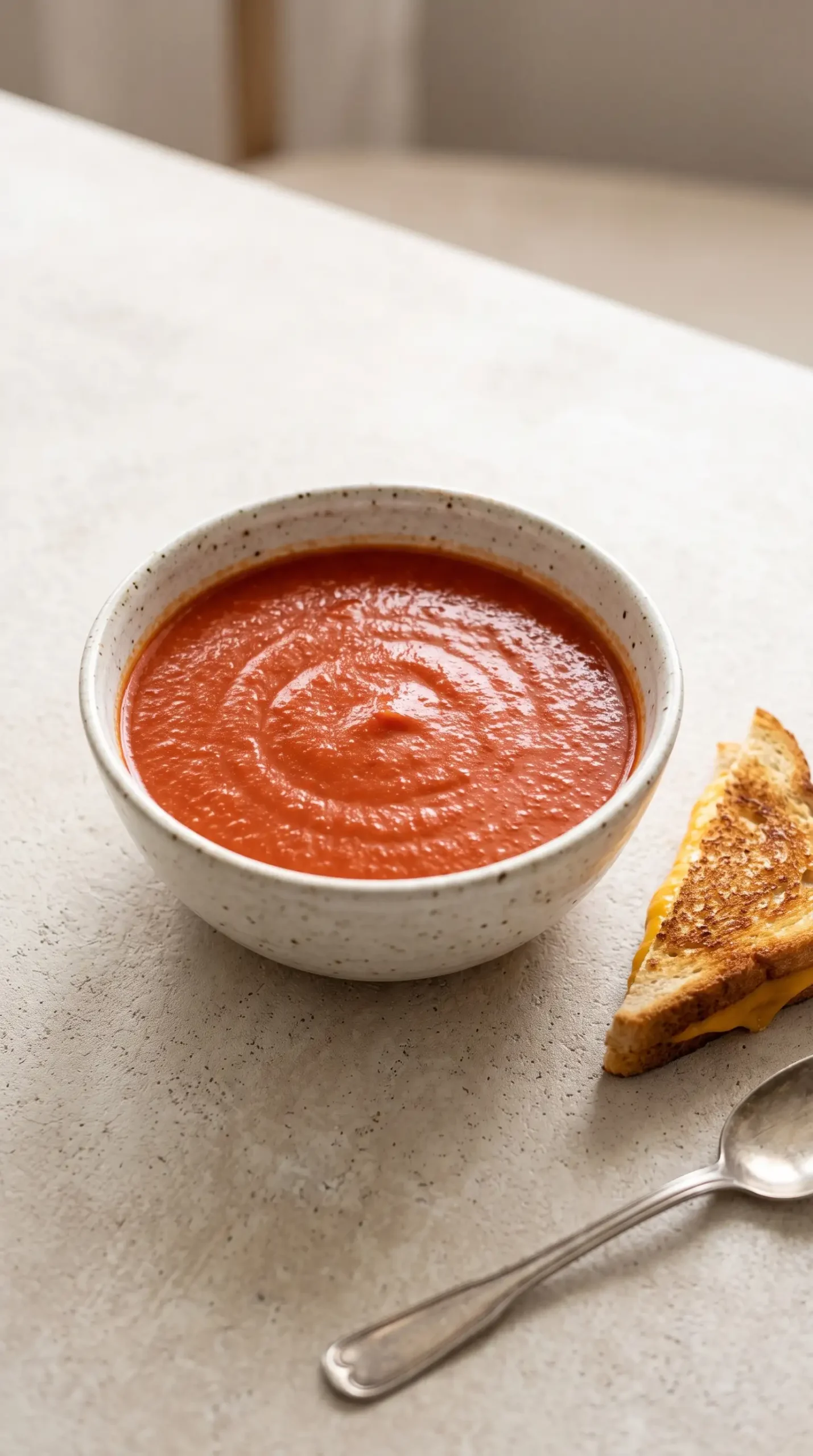
Tomato soup pairs naturally with foods that add contrast in texture and flavor. Garlic bread, grilled cheese sandwich, croutons, crackers, and pesto can each provide a different finishing approach without changing the soup itself.
Warm accompaniments work especially well because the soup has a smooth texture. Crisp toppings create contrast, while creamy or toasted sides complement the buttery tomato base. Simple additions can adjust the meal depending on what is available.
Storage choices preserve homemade tomato soup quality
Homemade tomato soup can be prepared ahead when convenient, making it useful for future meals. Cooling and storing the soup properly helps maintain its texture and flavor before reheating.
Reheating should be gentle so the smooth consistency remains intact. If the soup becomes thicker after resting, a small amount of milk, water, broth, or cream can be stirred in to adjust the texture.
Instant Pot preparation changes the cooking approach
The Instant Pot version follows the same ingredient combination while changing the way heat is applied. Everything can be cooked together under pressure, followed by removing the onion pieces and blending the soup.
This method reduces the need for active attention during cooking. The stovetop approach can develop slightly different flavor characteristics because of the way the ingredients cook uncovered or partially covered over heat, while pressure cooking offers a more hands-off process.
Common tomato soup mistakes come from rushed cooking choices
Tomato soup is simple, but a few preparation errors can affect the finished bowl. Understanding the cause behind each problem helps the cook make adjustments before serving.
| Problem | Possible cause | Helpful adjustment |
|---|---|---|
| Scorched flavor | Heat too high or bottom not stirred | Lower the heat and stir during simmering |
| Uneven texture | Blending stopped before desired smoothness | Continue blending until the texture matches preference |
| Over-seasoned soup | Extra salt added before tasting | Taste after cooking before making changes |
Small adjustments personalize the finished bowl
Simple changes can adapt tomato soup while keeping the core recipe recognizable. A splash of dairy or broth can loosen the texture, while additional seasonings can be added after tasting.
Individual preferences often determine the ideal thickness. Some cooks prefer a very smooth soup, while others enjoy a texture with more tomato presence. The blending stage provides the opportunity to make that decision.
Five ingredient tomato soup fits flexible kitchen routines
The short ingredient list makes this soup approachable when a cook wants a meal built around pantry staples. The process depends on attention to texture and heat more than complicated preparation.
Homemade tomato soup highlights careful preparation
Simple ingredients become more expressive when the cooking process respects their individual roles. Tomato soup shows how simmering, seasoning, and blending decisions shape the final result without requiring many additions.
Cooking from a short list also makes it easier to notice small changes. Tomato quality, blending preference, and serving choices all have a visible effect on the bowl that reaches the table.
Tomato soup reaches its best balance through controlled simplicity
San Marzano tomatoes develop their deepest character when they have time to cook with butter and aromatics before blending. The finished tomato soup depends on recognizing when the texture, seasoning, and richness have reached the balance you prefer.
A careful simmer and thoughtful blending create a soup where every ingredient has a clear purpose. The recipe succeeds because the cook can focus on a few important decisions that shape the entire bowl.
Tomato Soup Questions About Blending and Storage
Can tomato soup be made smoother after blending?
Yes, tomato soup can be blended again if the first pass leaves the texture coarser than desired. Using an immersion blender for additional time or working in batches with another blender can create a finer consistency.
Why does tomato soup taste better after simmering?
Simmering allows the tomato flavor to combine with the butter and aromatics while reducing some of the sharper acidity. The cooking time gives the ingredients a chance to become more unified.
Can the onion stay in tomato soup?
The onion can remain if a stronger onion presence and slightly different texture are preferred. Removing the pieces creates a smoother soup, while leaving blended onion changes the body of the finished bowl.
How can tomato soup be made less thick?
Tomato soup can be thinned by stirring in milk, water, broth, or cream until the consistency matches your preference. Adding liquid gradually makes it easier to control the final texture.
What makes San Marzano tomato soup different?
San Marzano tomato soup uses those tomatoes as the main flavor foundation, which can create a more focused tomato taste when paired with a small number of supporting ingredients.
5 Ingredient Tomato Soup with San Marzano Tomatoes
This 5 ingredient tomato soup is a creamy, smooth blended soup with rich tomato flavor and a comforting homemade appeal. It is an easy choice when you want a simple, flavorful bowl made with a short ingredient list.
Ingredients
Method
Cooking
- Add the tomatoes, butter, and onion to a large saucepan or Dutch oven. Bring the mixture to a low bubble, then reduce the heat to medium low. Partially cover with a lid and simmer for 45 minutes, stirring about every 15 minutes to keep the bottom from scorching.
- Use tongs to remove the onion pieces from the soup. Keep the garlic in the pot if desired.
- Blend the soup with an immersion blender until it reaches your preferred smooth texture. Taste and adjust as needed; thin with milk, water, broth, or cream if you want a looser consistency.
- Serve the tomato soup with your preferred accompaniment such as garlic bread, grilled cheese, croutons, crackers, or pesto.
Notes
To prepare this in the Instant Pot, add all ingredients to the pot, cook for 20 minutes, then release the pressure. Remove the onion pieces and blend the soup. This method requires less active attention, while the stovetop version may develop a slightly sweeter and richer flavor from additional caramelization. Both methods produce excellent results.